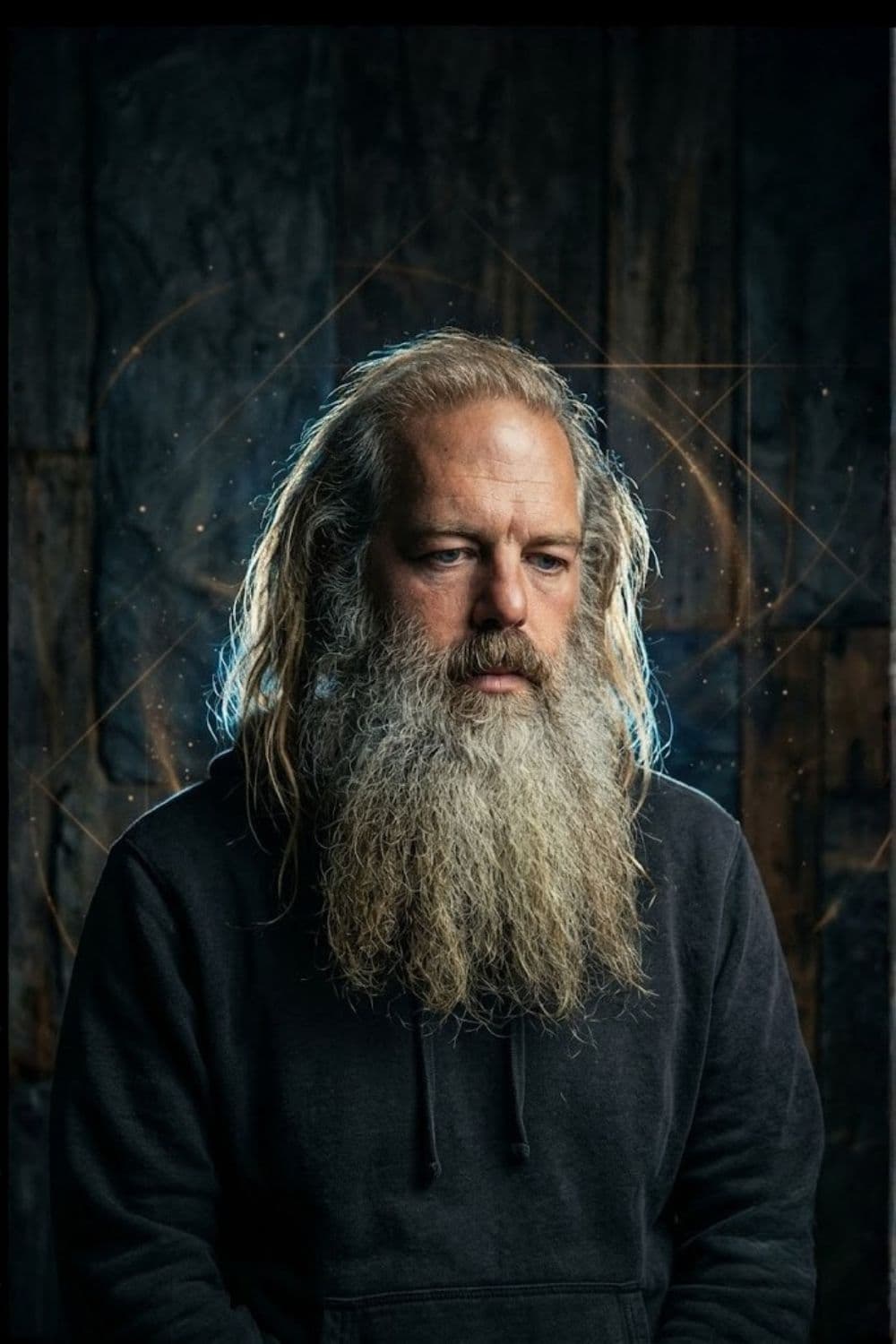
Rick Rubin
Creativity is not a rare talent reserved for a chosen few but a fundamental human birthright. It goes beyond the traditional arts to encompass how we perceive and interact with reality itself. By simply existing, processing sensory data, and making choices, every person actively curates a unique experience of the world. To live as an artist is to adopt a specific way of being, one focused on refining sensitivity and paying close attention to the subtle rhythms of daily life.
Inspiration does not originate entirely from within the individual mind. Instead, it is drawn from a vast, external, and inexhaustible collective wisdom known as the Source. The artist acts as a vessel, receiving fragments of this universal transmission. This raw data must pass through the artist's unique internal filter, which consists of their accumulated memories, beliefs, and sensory limitations. By recognizing that ideas are harvested rather than generated, creators can relieve themselves of the pressure of pure invention and focus on becoming more receptive conduits.
To capture the subtle energetic signals broadcast by the universe, the artist must develop a practice of detached noticing. This form of awareness requires experiencing the present moment without immediately analyzing, judging, or attaching a story to it. Nature serves as the ultimate teacher in this regard, offering infinite variations, harmony, and profound beauty that transcend human classification. By immersing themselves in the natural world and practicing patient observation, creators learn to see the extraordinary hidden within the mundane, widening the aperture of what they can absorb.
Experience and accumulated wisdom can inadvertently harden into limiting beliefs. To innovate, an artist must cultivate a childlike innocence, a state of pure not knowing that strips away accepted cultural norms and established traditions. When a creator approaches a problem without preconceived expectations of what is possible, they open themselves to solutions that experts might blindly ignore. Innocence invites magic, proving that a lack of conventional knowledge is often the exact prerequisite needed to break entirely new ground.
The formal creative process begins with gathering raw starting points, which act as seeds of potential. During this initial stage, the objective is sheer accumulation without judgment or immediate critical evaluation. A creator must cast a wide net, collecting phrases, melodies, or concepts while resisting the urge to force them into a predetermined shape. Because it is impossible to know which idea will ultimately bear fruit, the artist simply plants these seeds, waters them with attention, and waits patiently to see which ones naturally begin to take root.
Once a collection of seeds has been gathered, the artist enters a period of uninhibited play. This phase requires testing countless directions, combinations, and environments to see how the raw material reacts. The guiding compass during this exploration is not intellectual logic but a visceral, bodily response often felt as a sudden rush of excitement or awe. By following this energetic charge and embracing perceived failures as necessary data points, the creator discovers the underlying life force of the work and determines its true direction.
After discovering the project's core direction, the unbounded joy of play transitions into the focused labor of construction. Here, the artist builds the foundation, applying their technical skills to manifest the abstract idea into the physical world. This stage requires a delicate balance of maintaining forward momentum while avoiding the trap of premature attachment to an unfinished draft. By working steadily and stepping away frequently to refresh their perspective, the creator prevents their vision from becoming stale and ensures the work's internal architecture remains sound.
The final stage of the creative cycle demands a ruthless refinement, paring the work down to its absolute essence. This is a subtractive process where the artist acts as a detached editor, removing any element that does not strictly serve the whole. Completing a project also requires overcoming the fear of permanence and the paralyzing desire for perfection. The creator must accept that the finished piece is not a definitive statement of their entire being, but merely a diary entry reflecting who they were at a specific moment in time.
Artists often fall into the trap of hoarding their best ideas, fearing that their creative well will eventually run dry. This scarcity mentality stifles the natural flow of inspiration and leads to endless, anxious revisions of a single project. Adopting an abundant mindset means recognizing that the universe provides an infinite stream of material. By freely releasing finished work into the world, the creator clears the internal space necessary for new, entirely different ideas to arrive, ensuring a continuous cycle of artistic regeneration.
The conventions of any genre or medium are merely historical assumptions masquerading as absolute laws. While these templates can provide a helpful starting structure, adhering to them too strictly guarantees an average, predictable outcome. To uncover deeply original work, artists must recognize their unconscious rules and actively challenge them, sometimes by deliberately applying the exact opposite logic to their process. By setting their own temporary limitations or altering the context of a piece, creators force themselves out of familiar rhythms and spark novel solutions.
Creative collaboration thrives not on polite compromise, but on the dynamic friction of intersecting perspectives. When multiple unique viewpoints converge, the goal is never for one ego to win or for participants to settle on a diluted middle ground. Instead, true cooperation requires pushing through disagreements until a third, entirely unexpected solution emerges that elevates the work beyond any individual's original vision. The project itself becomes the ultimate authority, demanding that all participants detach from personal ownership to serve the highest possible artistic outcome.
External metrics like commerce, critical acclaim, and popularity are entirely disconnected from the true value of art. An artist has no control over the cultural timing, market conditions, or audience reception that dictate commercial triumph. Genuine success occurs privately, at the exact moment the creator realizes they have manifested their vision to the best of their current ability and feels ready to let it go. The ultimate purpose of creating is not to achieve fame or perfection, but to offer a sincere translation of one's inner landscape, contributing a unique reflection to the unfolding universe.
Jump into the ideas before you finish the whole summary.