
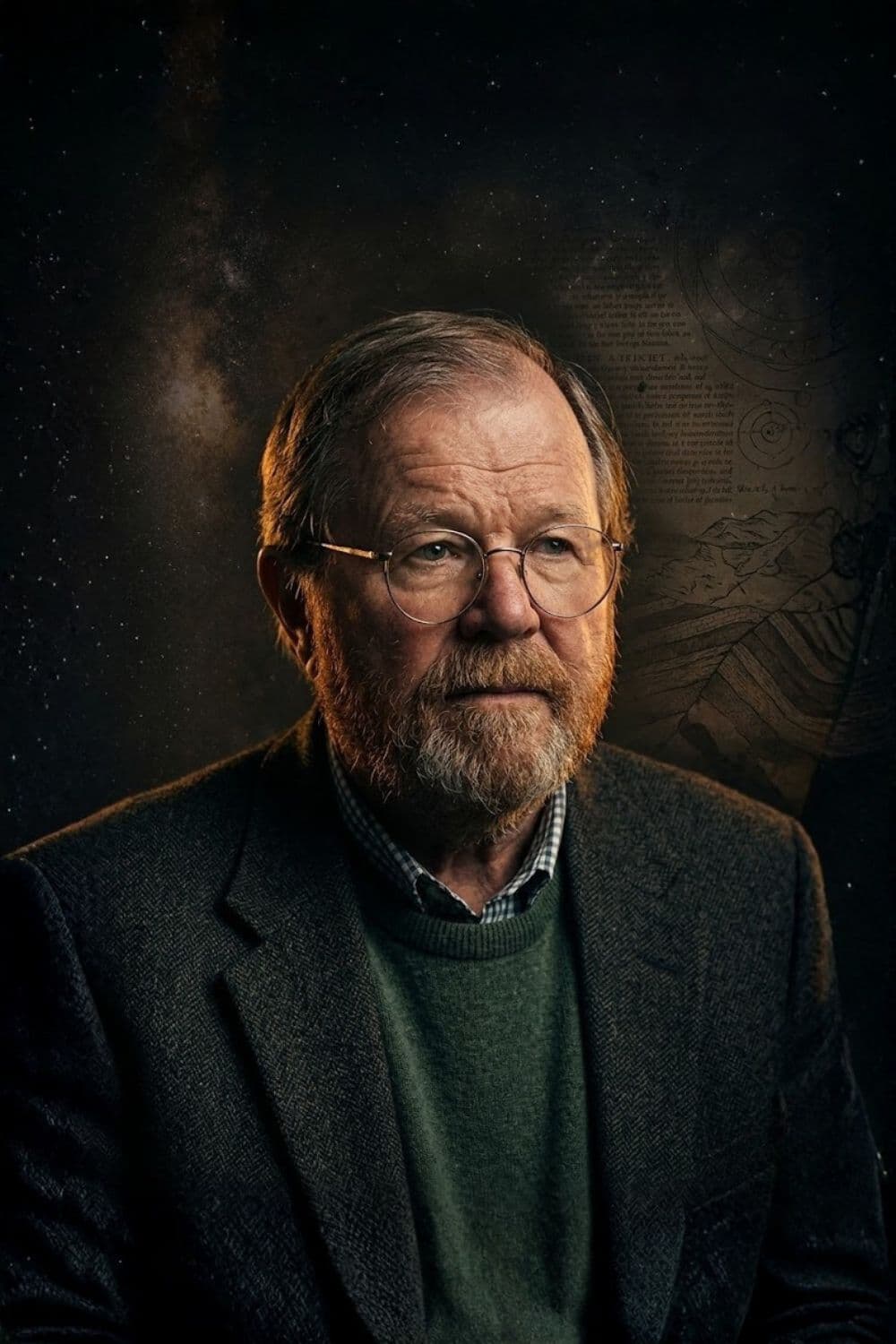
Bill Bryson
The universe originated from a dimensionless singularity lacking both space and time. This infinitely dense point underwent a rapid expansion that physically created all existing space. In the first few fractions of a second during this expansion, fundamental building blocks like protons formed, leading to the creation of light elements such as hydrogen and helium.
Heavier elements essential for biological life, including carbon and iron, required completely different conditions to form. These elements were forged much later in the extreme heat and pressure of exploding stars known as supernovae. When these massive stars collapsed and exploded, they scattered these complex elements across the cosmos, eventually providing the raw materials needed to form planets and living organisms.
All matter consists of atoms, which are practically indestructible and frequently recycled throughout planetary history. The carbon and oxygen atoms that make up human bodies have existed for billions of years, passing through stars and ancient organisms before assembling into their current forms.
The behavior of these subatomic particles completely defies classical physics and operates under the strict rules of quantum mechanics. For instance, determining both the exact position and the trajectory of an electron simultaneously is physically impossible. This inherent unpredictability dictates that the microscopic foundation of the universe operates on highly counterintuitive principles compared to the macroscopic world.
Determining the actual age of the Earth required analyzing the decay of lead isotopes in ancient rocks and meteorites. Scientist Clair Patterson successfully calculated this age but faced severe contamination issues during his research due to the widespread industrial use of tetraethyl lead.
This lead additive, invented by Thomas Midgley to reduce engine knocking in automobiles, saturated the global atmosphere and tainted Patterson's laboratory samples. Patterson's subsequent campaign against lead pollution revealed the profound physiological dangers of the substance, ultimately prompting significant environmental legislation to remove lead from consumer products and protect public health.
The surface of the Earth is not static but consists of tectonic plates that constantly shift and collide. Early proponents of continental drift faced intense skepticism from the scientific community before the discovery of mid ocean ridges proved that new planetary crust continuously forms from magma.
This continuous upwelling of magma pushes existing landmasses apart and drives the movement of the continents. This constant geological activity directly causes earthquakes and builds mountain ranges, acting as a major driver for extreme environmental change and forcing biological adaptation over millions of years.
Earth's geological and biological history is punctuated by catastrophic impacts from massive extraterrestrial bodies. Asteroids and meteors frequently cross our planetary orbital path, and substantial strikes have triggered rapid global climate shifts and mass extinction events.
The impact at the Cretaceous boundary eradicated the dinosaurs and wiped out a massive percentage of all living species. These abrupt environmental upheavals drastically alter the trajectory of evolution by destroying dominant predators and opening vast ecological niches for surviving organisms like early mammals to exploit and diversify.
Microscopic organisms like bacteria are the most abundant and resilient life forms on the planet. They thrive in extreme environments ranging from deep ocean vents to boiling hot springs, playing an essential role in processing biological waste and cycling nutrients through the ecosystem.
Despite their lack of complex cellular structures, their sheer volume and rapid reproductive cycles ensure their continuous survival. These microbes easily endure cataclysms that destroy larger animals, demonstrating that the planet fundamentally belongs to the microscopic world.
Complex life depends entirely on the coordinated actions of trillions of microscopic cells, each containing a complete genetic instruction manual. Deoxyribonucleic acid dictates the synthesis of highly specific proteins, guiding cellular division and specialized bodily functions without any conscious oversight from the host organism.
A significant portion of this genetic material appears to serve no functional purpose other than to replicate itself. Yet the fundamental genetic mechanisms and the reliance on amino acids are shared across all known species on Earth, proving a single unified biological lineage for all living things.
The evolutionary path leading to modern humans required highly specific environmental pressures and unique biological adaptations, such as the development of unusually large brains. While this intellectual capacity allowed early humans to invent tools and dominate the planet, these brains devour a massive percentage of the body's energy and make human survival highly precarious.
Human expansion and resource exploitation have directly caused the extinction of numerous species across the globe. From the complete eradication of the dodo to the destruction of the Steller's sea cow, human activity continuously disrupts ecological balance and threatens the planetary biodiversity that allows complex life to thrive.
Jump into the ideas before you finish the whole summary.