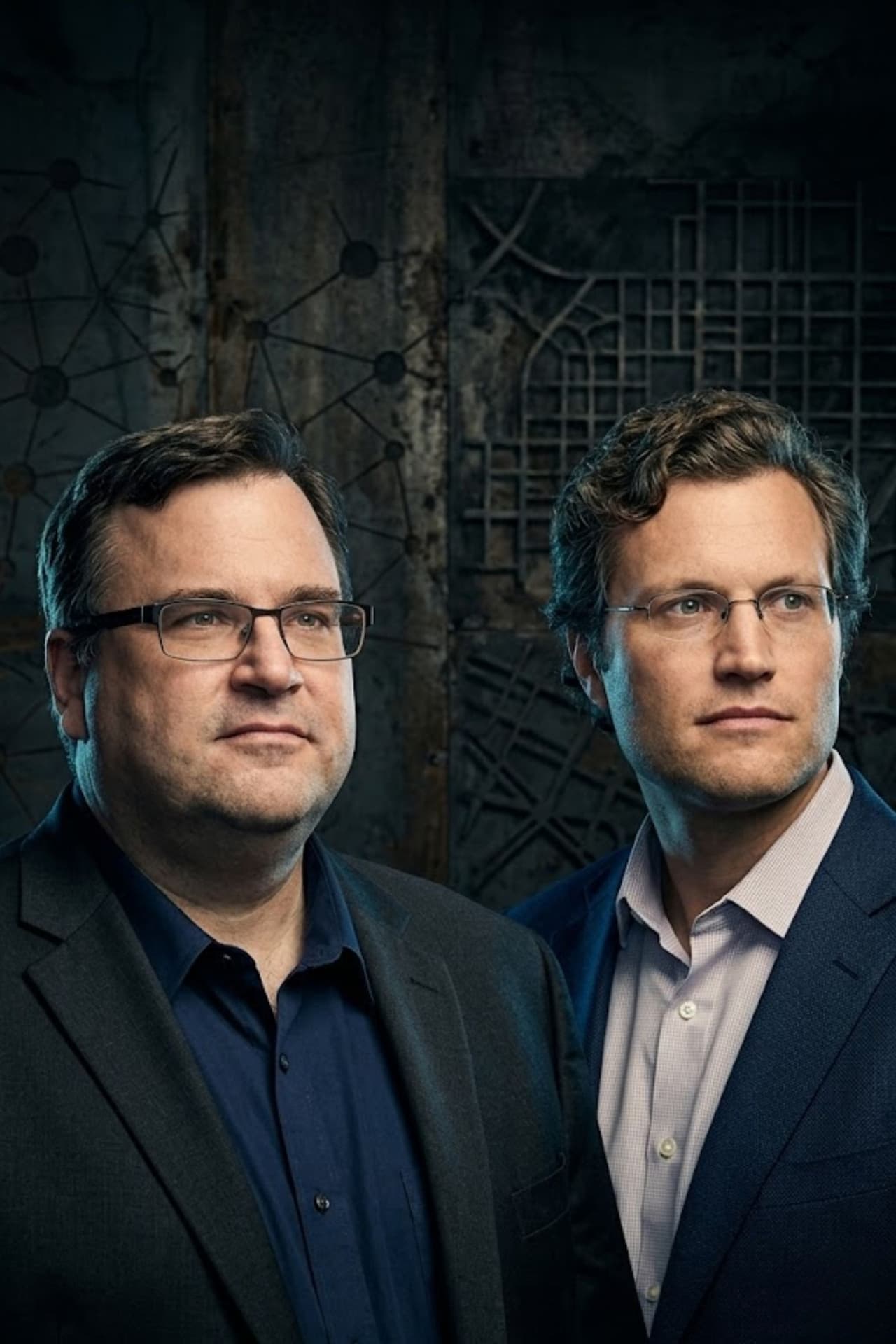
Reid Hoffman and Ben Casnocha
For decades, the job market functioned like an escalator where basic competence and steady effort guaranteed upward progression. That system is now permanently jammed. Globalization and technological disruption have dismantled traditional career paths, replacing them with a highly unpredictable landscape. To survive and thrive in this environment, individuals must adopt the mindset and skillset of a venture founder. This does not mean everyone must build a company, but rather that every person must treat their own career as a startup, taking ownership of their trajectory, adapting to market shifts, and actively generating their own opportunities.
Software companies release products in beta to acknowledge they are imperfect and require continuous iteration based on real user feedback. Professionals must adopt this exact mindset, operating in a state of permanent beta. This requires viewing oneself as an unfinished product, constantly acquiring new skills, and adjusting to the evolving demands of the economy. Complacency is the silent destroyer of a modern career. By committing to continuous learning and treating every day as day one, individuals maintain the adaptability necessary to secure long-term relevance.
A successful startup survives by offering a clear differentiator, and professionals must do the same to stand out in a global talent pool. This competitive advantage is formed at the dynamic intersection of three moving gears: assets, aspirations, and market realities. Assets include both soft elements like skills and connections, and hard elements like cash reserves. Aspirations are the deeper goals and values that provide sustained motivation. Market realities represent the harsh truth of what the economy actually needs and is willing to pay for. A career stalls if any one of these gears is ignored, as passion alone cannot override a lack of market demand, and lucrative skills will lead to burnout without underlying aspiration.
Rather than attempting the nearly impossible feat of becoming the absolute best in the world at one specific thing, professionals achieve a stronger competitive edge through skill stacking. By combining two or three distinct skills where one is merely in the top ten percent, an individual creates a unique and highly valuable profile. Furthermore, these skills must be deployed in the right environment. Career growth accelerates significantly when individuals position themselves in rapidly expanding industries rather than stagnant ones. Riding the wave of a growing sector magnifies the value of an individual's accumulated skills.
Traditional career advice advocates creating rigid ten-year plans, which fail completely when the market shifts unexpectedly. The entrepreneurial alternative is ABZ planning, a framework designed for flexible persistence. Plan A is your current strategy and implementation of your competitive advantage. Plan B represents the adjacent pivots you make when Plan A stops working or when a better opportunity arises, allowing you to alter your route without abandoning your overarching goals. Plan Z is your reliable lifeboat, a secure fallback position that guarantees survival if everything goes wrong.
The defining feature of ABZ planning is that Plan Z is not a passive safety net, but an active enabler of bold action. Knowing exactly what you will do if your current venture collapses, such as moving back in with family or taking a temporary job to pay the bills, removes the paralyzing fear of failure. This certainty at the bottom is precisely what allows an individual to take on high uncertainty and aggressively pursue ambitious goals in Plans A and B. Financial discipline, like minimizing debt and building savings, acts as the structural integrity of Plan Z, giving professionals the freedom to choose learning over immediate earning.
The myth of the lone professional is fundamentally flawed, as career success relies heavily on the integration of personal capabilities and external amplification. This shift from seeing the career as an isolated pursuit to understanding it as a team sport is critical. Opportunities do not exist in a vacuum; they are attached to people. The fastest way to change your own trajectory is to associate with individuals who already operate where you want to be. A career is effectively scaled exponentially by the quality and depth of the professional's relationships.
A robust professional network consists of distinct layers, primarily divided into professional allies and friendlies. Allies are a small circle of trusted confidants with whom you actively collaborate, share opportunities, and advocate for mutual success. Friendlies are the much larger group of weak ties and acquaintances who reside in different social circles and industries. Sociological research consistently demonstrates that weak ties are uniquely valuable because they act as bridges to entirely new information, diverse perspectives, and novel opportunities that strong ties, who usually possess the same information you do, cannot provide.
In an era where information changes rapidly, static knowledge memorized from books is insufficient. The most accurate and actionable insights come from network intelligence, which is the process of tapping into the collective brainpower of your connections. When evaluating a career move or an industry shift, public data only reveals part of the picture. The network provides private observations, personalized advice, and crucial context. By consulting domain experts for technical realities, personal experts for alignment with your identity, and free-range thinkers for broad wisdom, professionals can navigate complex decisions with a massive informational advantage.
Linear career progression is largely a myth; real professional growth occurs through sharp, exponential spikes triggered by breakout opportunities. While luck plays a significant role in these moments, individuals can actively control their likelihood of encountering good fortune by practicing strategic serendipity. This involves remaining in constant motion, engaging with diverse groups, and deliberately courting randomness. By taking actions that increase opportunity flow and keeping an open mind to unexpected possibilities, professionals position themselves to catch the right wave when it finally swells.
The desire to avoid all career risk is a dangerous illusion. This dynamic is explained by the volatility paradox, which states that systems entirely protected from short-term fluctuations become incredibly fragile and susceptible to catastrophic collapse in the long run. By insulating oneself in a supposedly secure job, a professional loses the ability to adapt to sudden industry disruptions. True stability requires deliberately injecting intelligent, calculated risks into a career. Taking risks where the potential upside is massive and the worst-case scenario is merely tolerable acts as an inoculation, building the resilience required to survive massive economic shifts.
Jump into the ideas before you finish the whole summary.