
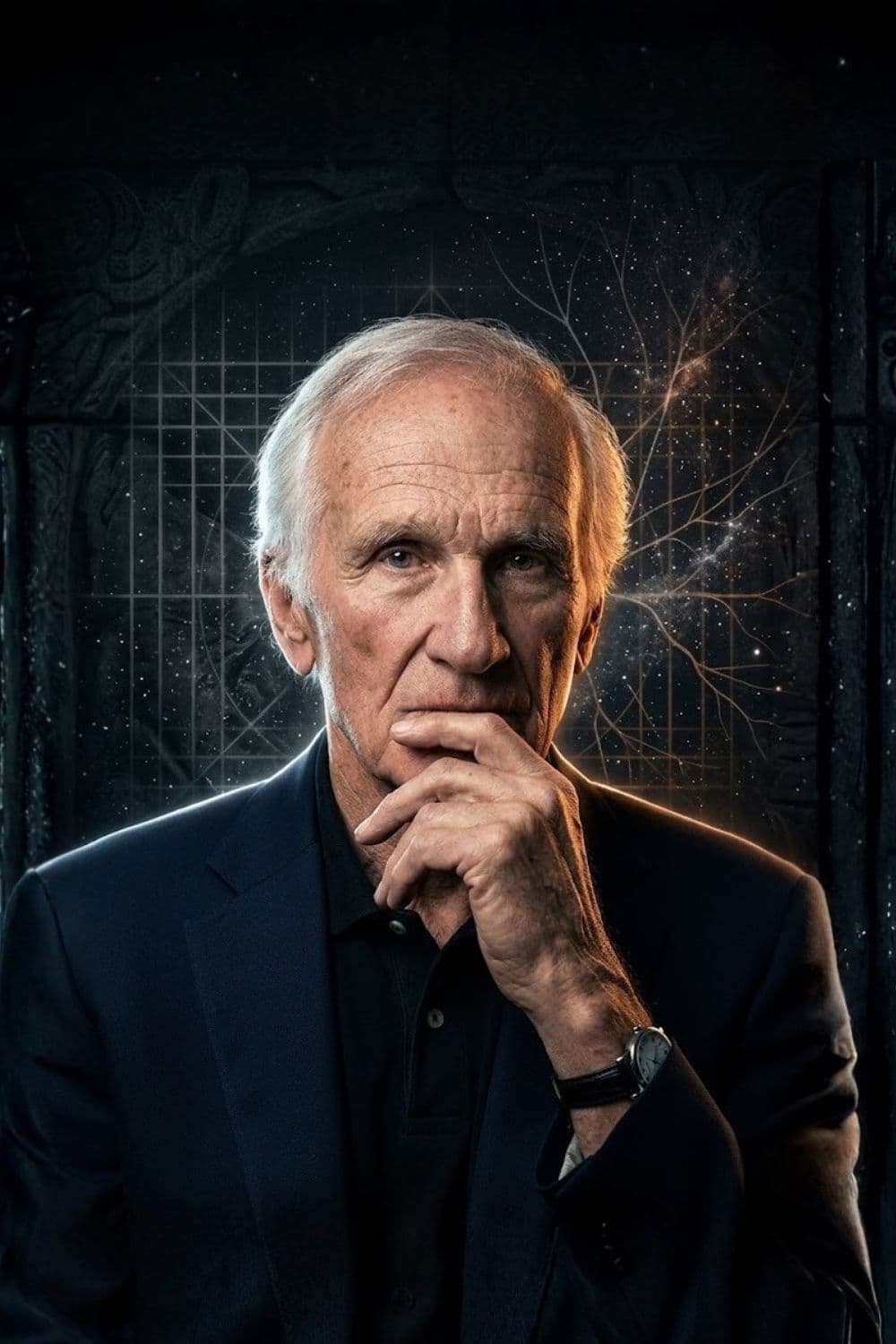
James P. Carse
There are at least two kinds of games in life. A finite game is played for the purpose of winning, while an infinite game is played for the purpose of continuing the play. Every finite game must have a definitive end, a precise beginning, and spatial or numerical boundaries. In contrast, infinite games are not bounded by time or space, and their sole purpose is to prevent the game from coming to an end. Crucially, whoever plays either game must play freely. No one can play who is forced to play, meaning all limitations in any game are ultimately self limitations.
The rules of a finite game are the contractual terms by which the players agree who has won, and these rules must remain fixed throughout the contest. If the rules change, a different finite game is being played. The rules of an infinite game, however, must change during the course of play. These changes occur whenever the play is imperiled by a finite outcome, preventing any player from achieving final victory and ensuring that as many people as possible are brought into the play. Finite players play within boundaries, whereas infinite players play with boundaries.
To participate fully in a finite game, players must intentionally forget the inherently voluntary nature of their play. If they constantly remembered that they could walk away at any time, all competitive effort would vanish. This willing suspension of freedom is called self veiling. Players adopt roles, taking on the mask of a specific profession or societal position with profound seriousness. Infinite players do not avoid the performed roles of finite play, but they enter them without this deep seriousness. They embrace the abstractness of the roles and use masks playfully, always acknowledging to themselves and others that they are masked.
Finite play is inherently theatrical. Because it is intended for a conclusion and its roles are performed for an audience, it resembles a scripted play moving toward a known final scene. Players attempt to act exactly as the script demands to achieve victory. Infinite play is dramatic rather than theatrical. Infinite players avoid any fixed outcome, keeping the future open and rendering all scripts useless. They engage in unscripted, improvisational action where the end is genuinely unknown, allowing for continuous creation.
It is the desire of all finite players to be so perfectly skilled that nothing can surprise them. They train to anticipate every future possibility and control the outcome, attempting to make the past triumph over the future. Surprise causes finite play to end. Infinite players continue their play in the direct expectation of being surprised. If surprise is no longer possible, all play ceases. Therefore, finite players are trained to secure completed pasts, while infinite players are educated to prepare for an open future and to be continually transformed by the unexpected.
What one wins in a finite game is a title. Titles are timeless, public acknowledgments of a completed past, and they require an audience to validate them. Finite players view death as a defeat that ends their ability to win titles, so they strive for a kind of immortality through lasting recognition. Infinite players have nothing but their names, which are given at birth before anything has been accomplished. Because they play to keep the game going in others, infinite players embrace their mortality. They do not play for their own life, but instead offer their death as a way of continuing the play of life.
Power is a concept that belongs exclusively to finite play. It is determined by the amount of resistance a player can overcome within specified limits, making it a measure of past accomplishments and a unit of comparison. One does not win by being powerful; one wins to become powerful. Infinite players do not seek power but instead play with strength. While power forces others to yield, strength allows others to do what they wish. A powerful person settles unresolved issues to bring matters to an outcome, but a strong person carries the past into the future to show that those issues remain open to endless reinterpretation.
Society is the sum of relations under public constraint, functioning as a bounded, finite game that protects property and bestows titles. Societies use patriotism to defend their borders and demand a level of seriousness to maintain their rigid scripts. Culture is an infinite game of undirected choice and fluid association. Where society is defined by its boundaries, a culture is defined by its horizon, which is simply a point of vision that expands as one moves toward it. Deviancy is the essence of culture, as infinite players playfully transcend societal norms to discover new possibilities.
Finite players view time as a diminishing resource. For them, freedom is a function of time, meaning they must be given time in order to be free. As the game nears its end, time is consumed, choices become limited, and errors turn disastrous. The infinite player does not consume time but generates it. For the infinite player, time is a function of freedom, meaning they are free to have time. Instead of working to fill a period of time with tasks, they fill their work with time, treating every moment as a new beginning rich with possibility.
The human relationship with nature takes two contrasting forms. The machine represents the finite desire to control nature, operating on forced external energy to achieve predictable, efficient outcomes. To operate a machine effectively, humans must adopt mechanical rationality themselves. The garden represents the infinite approach to nature. Gardening encourages maximum spontaneity and relies on internal vitality rather than external force. A garden is never truly finished, and the gardener expects to adapt to changing soil, weather, and organic conditions. Growth promotes growth, transforming the gardener alongside the garden.
Discourse functions differently depending on the game being played. Explanation is an antagonistic encounter that seeks to settle issues and silence opposition by convincing listeners of their errors. It operates like property, establishing intellectual dominance and bringing inquiry to a close. Narrative, or myth, raises issues and sets necessities into the context of the possible. Storytellers do not try to convert or defeat their listeners. Instead, they offer a vision that invites the audience to rethink their assumptions, ensuring that the conversation remains open and continuous.
Finite sexuality is a competitive theater where the winner's prize is the defeated opponent. It is focused on specific outcomes, treating the other person as property or a body to be acquired, while using scripted seductions that distance the participants. Infinite sexuality is a drama of touching. It does not focus on physical acquisition but on relating to the other person in their entirety. In infinite sexuality, desire is exposed without seriousness, and neither satisfaction nor the lack of it is viewed as an achievement or failure. It is a vulnerable sharing that transforms both participants.
Evil is not simply the breaking of rules in a finite game. Evil is the absolute termination of infinite play. It is the forced silencing of others and the expression of power that demands obedience. Paradoxically, evil never intends to be evil. It typically originates from the honored belief that history can be tidied up and brought to a sensible conclusion. Infinite players recognize the inescapable likelihood of evil but do not attempt to eliminate it in others, knowing that the very impulse to eradicate evil using force is the origin of evil itself.
Jump into the ideas before you finish the whole summary.