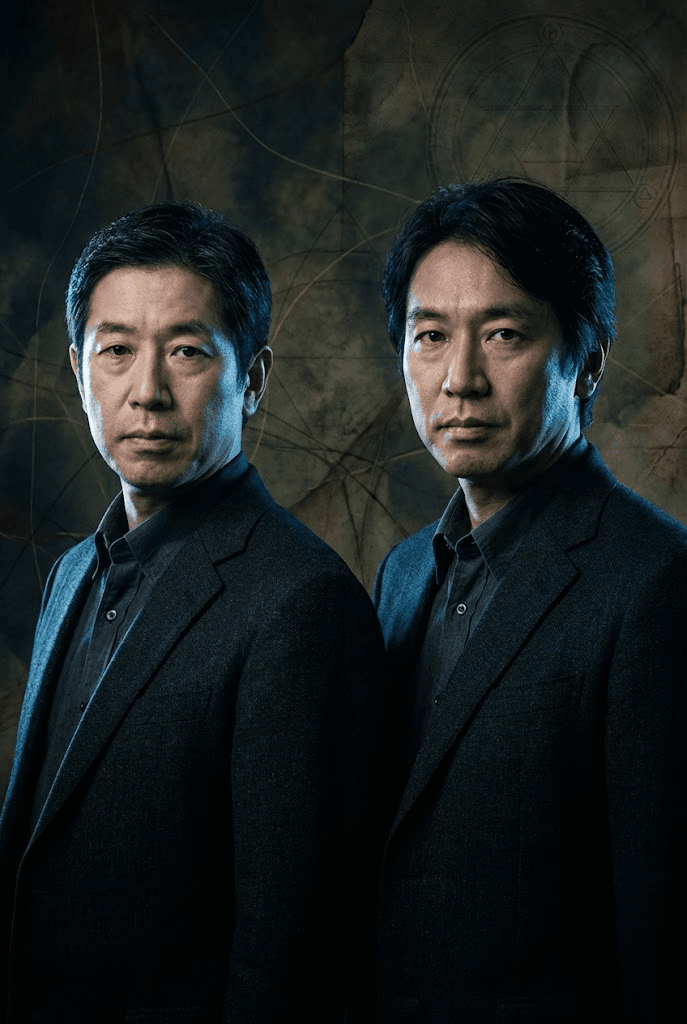
Ichiro Kishimi, Fumitake Koga
A foundational pillar of this psychological architecture is the absolute rejection of etiology, which posits that past traumas dictate present conditions. Instead, human behavior is understood through teleology, the study of purpose. Individuals do not suffer from the objective reality of past events but from the subjective meaning they assign to those events to serve present goals. If a person experiences crippling anxiety that prevents them from leaving their home, this anxiety is not a forced, inescapable consequence of childhood abuse. Rather, the anxiety is manufactured to achieve a specific goal, such as avoiding the potential pain of outside interpersonal relationships or securing the undivided attention of caregivers.
By shifting the focus from past causes to present purposes, individuals are stripped of the comfort of determinism. This radical stance asserts that life is not something given to a person but something actively chosen. Acknowledging this demands immense courage because it places the absolute responsibility for change squarely on the individual in the present moment, closing off the past as an excuse for current unhappiness.
Emotions are frequently perceived as uncontrollable forces that overwhelm the rational mind. This framework subverts that view by arguing that emotions are fabricated tools deployed to achieve specific interpersonal objectives. A sudden outburst of anger directed at a waiter who spills a drink is not an inevitable physiological eruption. The anger is deliberately summoned to establish dominance and force submission. The fact that this rage can be instantly deactivated when answering a phone call from an authority figure proves its instrumental, highly controllable nature.
This perspective dismantles the belief that individuals are ever at the mercy of their feelings. If emotions are purposeful creations rather than unbidden reactions, then people cannot blame their emotional states for their actions. Recognizing the utilitarian function of feelings empowers individuals to select different emotional responses that align with constructive goals rather than manipulative power struggles.
What is commonly called personality or disposition is reframed as lifestyle, a consistent pattern of thinking and behaving that an individual actively chooses, typically around the age of ten. This choice is initially influenced by environment, culture, and family dynamics, but it remains a subjective selection rather than a genetic or environmental destiny. People choose their worldview and their corresponding behaviors because, at the time, that specific orientation seemed the most advantageous or protective.
Because this lifestyle was originally chosen, it can be chosen again at any point in adulthood. People often declare that they are naturally pessimistic or inherently shy, but they have actually decided to maintain a pessimistic or shy view of the world to avoid the risks associated with vulnerability or optimism. To change one's lifestyle requires enduring the profound anxiety of the unknown and risking the disappointment of failure. Choosing a new way of living is entirely possible at any moment, provided the individual possesses the courage to abandon their familiar but unfulfilling psychological shelter.
A central tenet of this philosophy is that all human problems are fundamentally interpersonal relationship problems. To escape difficulty entirely, a person would have to exist completely alone in the universe, a biological and practical impossibility. The very existence of an individual assumes the presence of others, meaning all struggles, insecurities, and conflicts are born from the friction of social existence.
Even internal feelings of inadequacy or loneliness are entirely dependent on social context. Loneliness is not the physical state of being alone, but rather the acute psychological feeling of being excluded from a community. By recognizing that all distress stems from social dynamics, the individual can stop searching for abstract, internal dysfunctions and begin addressing how they relate to the people around them.
Feelings of inferiority are universal and serve as a vital catalyst for human growth when properly utilized. These feelings arise not from an objective lack of value, but from a subjective interpretation of one's traits compared to a personal ideal. When a person feels inadequate, they can use that discomfort as fuel to improve, learn, and advance. This is the healthy pursuit of superiority, which involves taking steps forward to become better than one's previous self.
However, when the healthy feeling of inferiority calcifies into an inferiority complex, it becomes a manufactured excuse for inaction. An individual might claim they cannot succeed because of their physical appearance, their education, or their background, using the perceived deficit to avoid the effort of trying. Conversely, a superiority complex emerges when deep-seated insecurity drives a person to boast, belittle others, or aggressively display status symbols. True confidence requires no such display, as healthy growth is a private competition with oneself rather than a bitter battle against others.
A massive source of interpersonal conflict arises from boundary violations between individuals. To resolve this, one must rigorously practice the separation of tasks. A task belongs to the specific person who must ultimately bear the consequences of the choice made. For example, whether a child studies or not is the child's task, because the child will face the academic and professional results of that decision. When a parent attempts to force the child to study, they are intruding on a task that is not their own, inevitably breeding resentment and rebellion.
Practicing this separation is not an act of cold indifference. It is the cultivation of a respectful, moderate distance that allows for support without control. An individual must recognize what is within their power to change and entirely discard the burdens of other people's responsibilities. If a boss is unjustly angry, managing that anger is the boss's task. The employee's task is simply to perform their work with integrity, completely independent of the superior's emotional state.
The desire for external validation is presented as a fundamental barrier to freedom. When a person lives to satisfy the expectations of parents, teachers, or society, they effectively surrender their autonomy. Seeking praise conditions the individual to act only when a reward is guaranteed, creating a performative existence where the authentic self is suffocated by the demands of an audience.
True freedom is defined as having the courage to be disliked. Being disliked by someone is the definitive proof that an individual is living according to their own principles rather than contorting themselves to fit another person's mold. While one should not actively seek to antagonize others, accepting the inevitability of being misunderstood or rejected is the necessary price for personal liberation.
Societal interactions are heavily dominated by vertical relationships, characterized by hierarchies of power, praise, and rebuke. Both praising and scolding are forms of manipulation used by someone in a higher position to control someone in a lower position. When a parent praises a child for a good grade, they are evaluating the child from a position of superiority, subtly reinforcing a conditional dynamic of approval that strips the child of equal standing.
The alternative is to cultivate horizontal relationships, where individuals view each other as equal but not the same. Instead of evaluating or judging, horizontal interactions rely on encouragement and gratitude. Expressing genuine thanks for someone's contribution fosters intrinsic motivation and mutual respect. By removing the lenses of winning, losing, superiority, and inferiority, individuals can interact with genuine authenticity.
The ultimate objective of interpersonal relationships is the realization of community feeling. This is a profound sense of belonging and contribution that extends beyond immediate family or friends to encompass society, nature, and the universe. A person achieves community feeling by shifting their focus from self-interest to social interest. Those who are entirely self-centered view others merely as objects to fulfill their expectations, constantly asking what the world can do for them.
To transcend this self-absorption, an individual must actively commit to the community. Belonging is not something granted at birth but something earned through continuous effort and contribution. When a person feels that they are of use to someone else, they secure their own existential worth. This contribution does not require grand acts of self-sacrifice. It is found in the simple, daily realization of being beneficial to the whole.
Deep human connection requires replacing transactional trust with unconditional confidence. Trust is inherently conditional. It demands guarantees, collateral, or a proven track record before it is extended. While conditional trust is necessary for banking and commerce, applying it to personal relationships severely limits the depth of intimacy. If a person is constantly scanning for proof of loyalty, they remain guarded, suspicious, and isolated.
Confidence is the active choice to believe in another person without requiring any conditions or guarantees. It involves voluntarily making oneself vulnerable to the possibility of betrayal. By choosing unconditional confidence, the individual takes ownership of their own task, which is to believe. How the other person responds to that confidence is entirely their own task. This radical openness is the only mechanism capable of forging authentic, unshakeable bonds.
Human beings frequently perceive life as a kinetic, linear journey toward a specific destination, treating the present merely as a preparatory stage for the future. If a person believes their life will truly begin only once they achieve a certain career or find a specific partner, they relegate their current existence to a state of meaningless waiting. This perspective is the greatest life lie, as it serves as an elaborate refusal to engage with reality as it unfolds.
Life must instead be understood as an energeial phenomenon, a continuous series of distinct moments called the here and now. In an energeial existence, the process itself is the result. Like dancing, the goal is not to arrive at a specific spot on the floor, but to fully inhabit the movement while the music plays. By focusing intensely on the present moment, the illusion of a predetermined past and a guaranteed future dissolves, allowing the individual to actively create their own meaning step by step.
Jump into the ideas before you finish the whole summary.