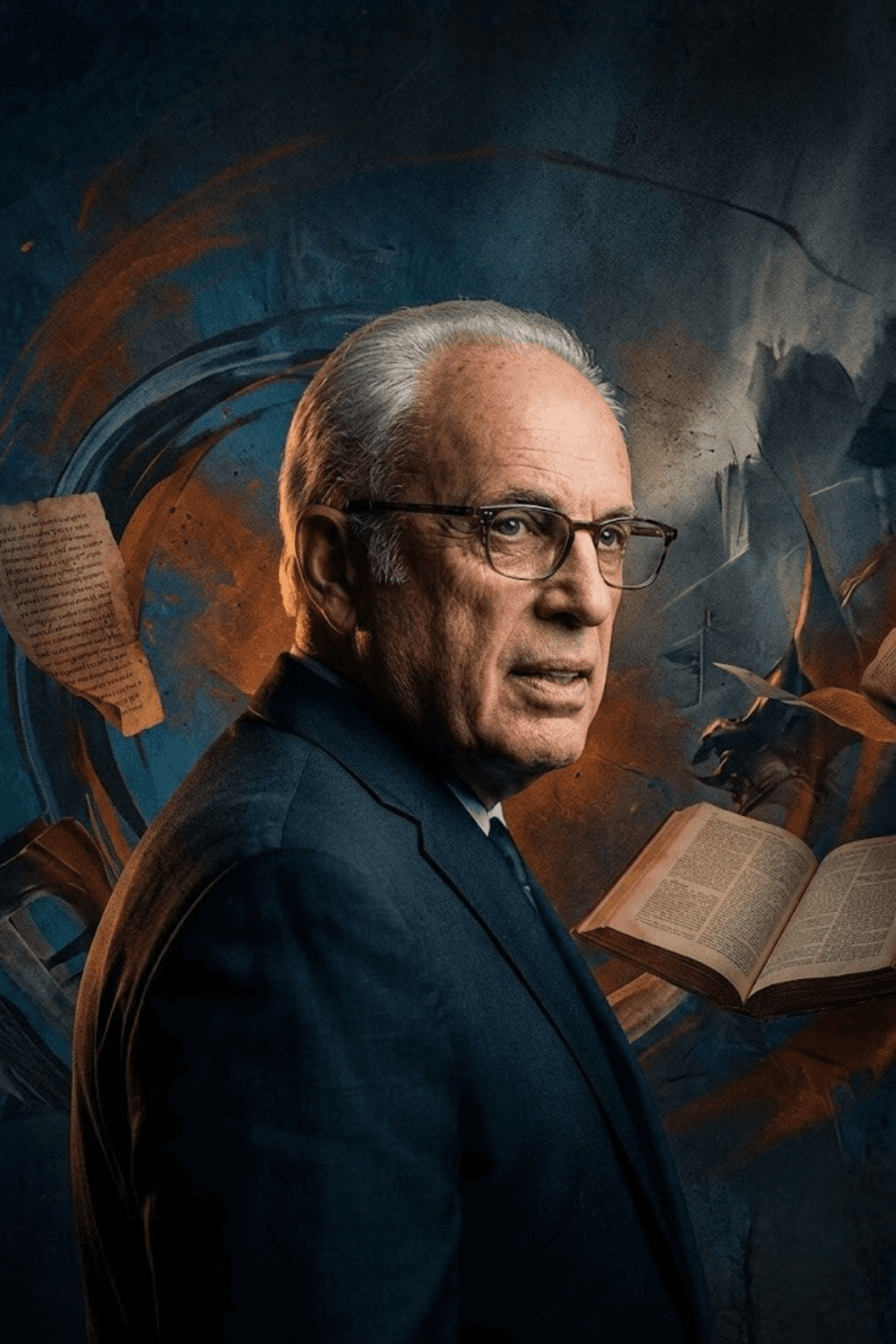
John F. MacArthur
Western churches currently face a profound adaptive challenge driven by the cultural shifts toward postmodernity and a post-Christendom society. This transition means that the church has lost its privileged institutional position and now occupies a marginalized space. Addressing this reality requires more than technical adjustments or programmatic tweaks. It demands a fundamental transformation in vision, identity, and practice so that congregations do not become contextually obsolete.
In response to these cultural shifts, a vigorous defense of absolute and objective truth has emerged, characterizing the transition to postmodernity as a spiritual threat that replaces certainty with ambiguity. This perspective operates as a boundary-set framework, relying on clear doctrinal walls to protect biblical orthodoxy from creeping relativism. Proponents of this view argue that theological tolerance and a preoccupation with methodological relevance inherently compromise the unchanging nature of the gospel.
Contrasting the boundary-set approach are frameworks that reimagine how truth and community are maintained. A center-set paradigm removes rigid defensive walls and instead relies on deepening the central well of faith, trusting that a focus on the living Christ will naturally draw people inward. A relationship-set paradigm further decentralizes authority, proposing that truth is best discovered collaboratively within communities where power dynamics are minimized and theological exploration is a shared, democratic process.
The grassroots response to a postmodern culture is highly diverse but can be understood through three distinct approaches. Relevants minister to postmoderns by updating worship styles and communication methods while retaining conservative theology. Reconstructionists minister with postmoderns by radically rethinking church structures and leadership roles to foster organic communities. Revisionists minister as postmoderns by deconstructing and reimagining historical doctrines, embracing uncertainty, and integrating pluralistic and experiential elements into their theology.
The emerging missional perspective fundamentally critiques the inherited Christendom model, which typically reduces the church to a building, a Sunday-centric event, or an institution managed by professional clergy. Instead, the church is redefined as a sent, missionary movement embedded in local neighborhoods. This requires dismantling attractional models that expect culture to come to the church, replacing them with an incarnational posture where the church infiltrates and adapts to the surrounding culture.
The internal architecture of these new communities is deeply informed by a social understanding of the Trinity, where God is viewed as a perfect, non-hierarchical relationship of mutual giving and receiving. This perichoretic model delegitimizes traditional top-down hierarchies, calling for egalitarian, highly participatory faith communities. Furthermore, these groups strive for communitas, a profound sense of togetherness and equality forged through shared mission, risk, and marginalization, rather than settling for comfortable, consumer-driven socialization.
To break free from modern, mechanistic ways of thinking, missional thinkers deliberately deploy paradigm-shift narratives and rich metaphorical language. Metaphors act as generative tools that transport imagination beyond linear logic, allowing communities to reconceptualize themselves not as corporations, but as jazz bands, networks, or sailboats. While this rhetoric effectively exposes the limitations of institutionalism, it also risks becoming an ideology of its own, where the old is routinely dismissed as obsolete simply for being traditional.
Borrowing from the new sciences, the missional church is frequently conceptualized as a complex adaptive system. In this framework, congregations are viewed as living organisms characterized by non-linearity, self-organization, and emergence. Instead of relying on predictable, centrally planned strategies, these communities trust that novel, effective solutions will organically emerge from the bottom up when individuals are given the freedom to interact, adapt, and experiment in response to their immediate environment.
The shift toward living systems necessitates a departure from classical, command-and-control leadership and heroic, visionary models. The resulting organic leadership paradigm distributes power across the organization, viewing leadership as a collaborative process of mutual influence rather than a static positional office. In this post-heroic model, formal leaders act as catalysts, facilitators, and sense-makers who cultivate an environment of trust and dialogue, empowering the entire community to take ownership of its spiritual trajectory.
Within this organic framework, missional leadership functions through three interconnected dimensions. Envisioning involves cultivating a shared theological imagination and discerning divine direction through communal prayer and dialogue. Cultural and spiritual formation focuses on nurturing a missional spirituality and an internal climate of trust that sustains outward engagement. Structuring requires constantly evaluating and adapting organizational policies, roles, and boundaries to ensure they serve the mission rather than preserving the status quo.
Because traditional seminaries are often rooted in a schooling culture that prioritizes cognitive scholarship over practical leadership, they are frequently seen as ill-equipped to produce missional leaders. The necessary educational shift moves away from deductive, classroom-bound instruction toward experiential, action-reflection learning situated in actual ministry contexts. This approach prioritizes mentoring, case-in-point teaching, and collaborative learning, ensuring that leaders are formed spiritually and practically within the realities of the local culture.
While the push for organic, missional structures offers a vital corrective to institutional stagnation, it carries inherent risks. An uncritical embrace of chaos, continuous change, and anti-hierarchical sentiment can blind communities to the necessity of healthy organizational boundaries, historical continuity, and objective truth. The ultimate challenge lies in navigating these cultural crossroads by integrating the adaptive flexibility required for modern mission with the doctrinal and historical rootedness necessary to sustain a faithful Christian witness.
Jump into the ideas before you finish the whole summary.