
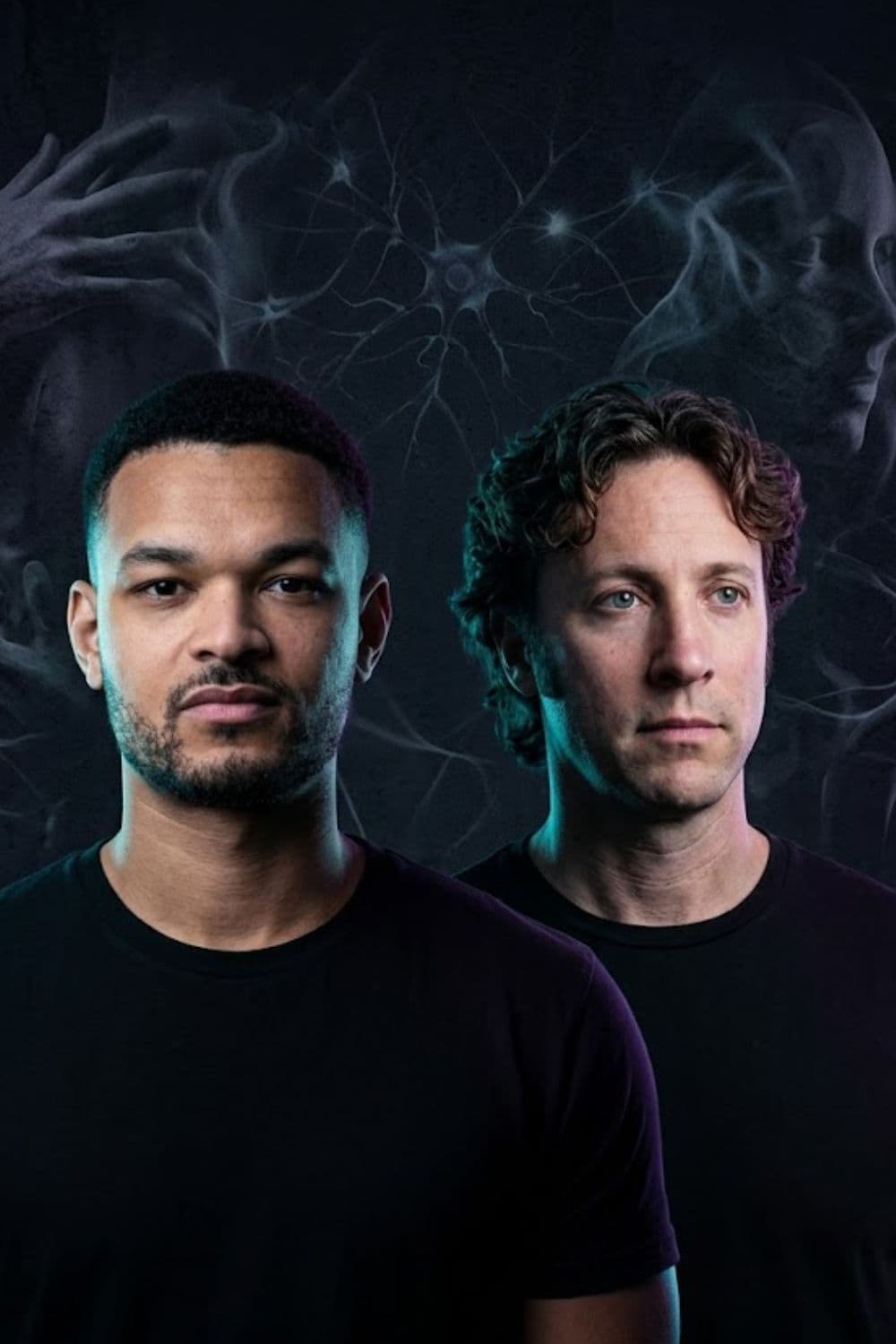
Steven Bartlett with Dr. David Eagleman
The human visual cortex requires constant sensory input to maintain its functional territory within the brain. When an individual loses their sight, or is simply plunged into darkness, the brain immediately begins reallocating the visual cortex to process other senses like hearing and touch. Because the planet rotates into complete darkness for half of the day, the visual system is placed at a severe evolutionary disadvantage during sleep. Dreaming evolved as a biological defense mechanism to protect this vulnerable neural real estate. Every ninety minutes, the ancient midbrain shoots random bursts of electrical activity into the visual cortex. This sudden blast of energy forces the visual circuits to remain highly active, preventing adjacent senses from encroaching on the unused territory. The brain naturally synthesizes these random electrical firings into narrative visual stories, which humans experience as dreams.
The human brain possesses an extraordinary degree of adaptability compared to other animals, dropping into the world largely unformed in order to absorb its specific environment. At age two, the brain achieves its absolute peak of raw neural connections, functioning with immense fluid intelligence. This plastic state allows a child to rapidly acquire complex, fundamental concepts like language, adapting seamlessly to any historical era or local culture. As an individual interacts with their specific environment over time, the brain actively prunes away unnecessary connections while heavily reinforcing the pathways that resonate with their daily reality. This pruning develops crystallized intelligence, an optimized internal model of how the specific world around them operates. Because this customized internal model is highly accurate and efficient, the adult brain requires far less energy and structural change to navigate daily life, causing the raw plasticity of youth to naturally diminish.
Human consciousness naturally feels like a singular, unified identity, but it actually functions as a deeply divided team of rivals. The brain consists of billions of neurons organized into distinct, highly specialized networks that frequently possess contradictory drives. When faced with a temptation, one neural network heavily prioritizes the immediate consumption of caloric energy, while an entirely separate network prioritizes long-term physical health and social goals. These competing systems constantly argue and cast votes on how the physical body should behave. Understanding that the mind operates as a fractured political system fundamentally alters the concept of willpower and regret. Regret is simply the psychological aftermath of one neural faction temporarily taking control of behavior, acting on its specific priorities, and then relinquishing control back to a different faction that violently disagrees with the outcome.
Because human identity constantly fluctuates based on which neural network currently holds power, relying on pure resolve is an ineffective strategy for lasting behavioral change. To reliably alter behavior, an individual must engineer mechanisms that legally or physically bind their future, less disciplined selves. This psychological strategy requires setting up structural barriers during a moment of rational reflection that prevent negative actions from occurring when tempting circumstances inevitably arise. By completely removing addictive substances from the immediate environment or committing to an inescapable schedule with another person, an individual locks in their intended behavior. This acknowledges the biological reality of the neural parliament, strategically favoring the long-term planning networks by physically destroying the options that the short-term pleasure networks will later demand.
The wrinkly outer layer of the brain, known as the cortex, is frequently misunderstood as a rigid system with permanently fixed sensory zones. In reality, the entire cortex operates as highly flexible computational material that constantly reallocates physical real estate based on incoming data and physical demands. When an individual engages in intense, repetitive physical or mental activity, the brain physically expands the neural territory devoted to that specific function. A concert pianist develops a significantly larger loop of tissue in the motor cortex than a violinist because the pianist requires highly complex fine motor movements from both hands simultaneously. The cortex relentlessly optimizes itself for whatever specific tasks the individual repeatedly demands of it, physically reshaping its internal geography to prioritize relevant functions while shrinking the territory given to abandoned skills.
As the brain relies heavily on its established internal model, it naturally seeks absolute efficiency by minimizing energy expenditure. However, operating purely on autopilot accelerates cognitive decline because no new neural pathways are being actively forged. To maintain long-term cognitive health and intentionally change one's identity, individuals must actively seek out tasks that exist in the precise zone of being frustrating but achievable. This process of deliberately confronting novel, difficult problems generates immense stress and massive brain activity, forcing the biological creation of new physical connections. Engaging in this constant challenge builds cognitive reserve, a dense web of overlapping neural pathways. Even when physical brain tissue begins degenerating due to biological aging or dementia, a heavily challenged brain possesses enough alternative routing options to maintain high-level cognitive function without displaying external symptoms.
The integration of highly advanced technologies introduces a critical distinction in how humans apply cognitive effort. Vicious friction encompasses the highly repetitive, administrative tasks that drain human energy without prompting any deep internal learning or neural growth. Offloading this mindless operational work to algorithms is massively beneficial to human development. Virtuous friction occurs when individuals actively wrestle with complex, novel problems that force them to think deeply, suffer intellectually, and fundamentally expand their internal mental models. If humans use artificial intelligence merely to bypass virtuous friction by automatically generating and copying answers, they severely stunt their own cognitive development and atrophy their neural pathways. However, treating the technology as an infinitely patient conversational partner to explore counterarguments, probe intellectual blind spots, and actively push beyond immediate knowledge acts as a powerful accelerant for human neuroplasticity.
Creativity is frequently romanticized as the spontaneous, magical generation of entirely new concepts, but neurologically, it is strictly the mechanical process of absorbing vast amounts of existing environmental data and remixing it into novel combinations. Artificial intelligence systems are massively creative specifically because they can infinitely blend and recombine humanity's entire digitized history at high speed. However, true cultural innovation requires balancing a delicate tension between familiarity and profound novelty. Human aesthetic preference dictates that a new idea must be recognizable enough to feel psychologically safe, yet unusual enough to trigger intense curiosity. While algorithms excel at generating mathematically probable combinations located securely in the middle of this distribution curve, they lack the lived, subjective experience required to evaluate emotional resonance. Humans provide the essential evolutionary filter, sorting through endless generated variations to physically select the rare, anomalous mutations that successfully push culture forward.
Society operates on the fundamentally flawed assumption that every human being shares a largely identical internal psychological experience. In biological truth, perceptual reality varies wildly across a vast spectrum of the human population. Individuals with hyperphantasia experience incredibly rich, vivid visual imagery, literally seeing complex movies in their minds when prompted by language. Conversely, individuals with aphantasia possess entirely dark visual imaginations, relying instead on purely conceptual, motor, or spatial understanding to process the exact same environmental prompts. Neither extreme represents a cognitive deficit, and individuals at both ends of the spectrum can achieve identical, high-level creative and logistical outcomes in reality. Recognizing this profound internal diversity reveals that humans actively navigate the physical world, solve complex problems, and build functional internal models using drastically different neurological hardware and sensory logic.
Jump into the ideas before you finish the whole summary.