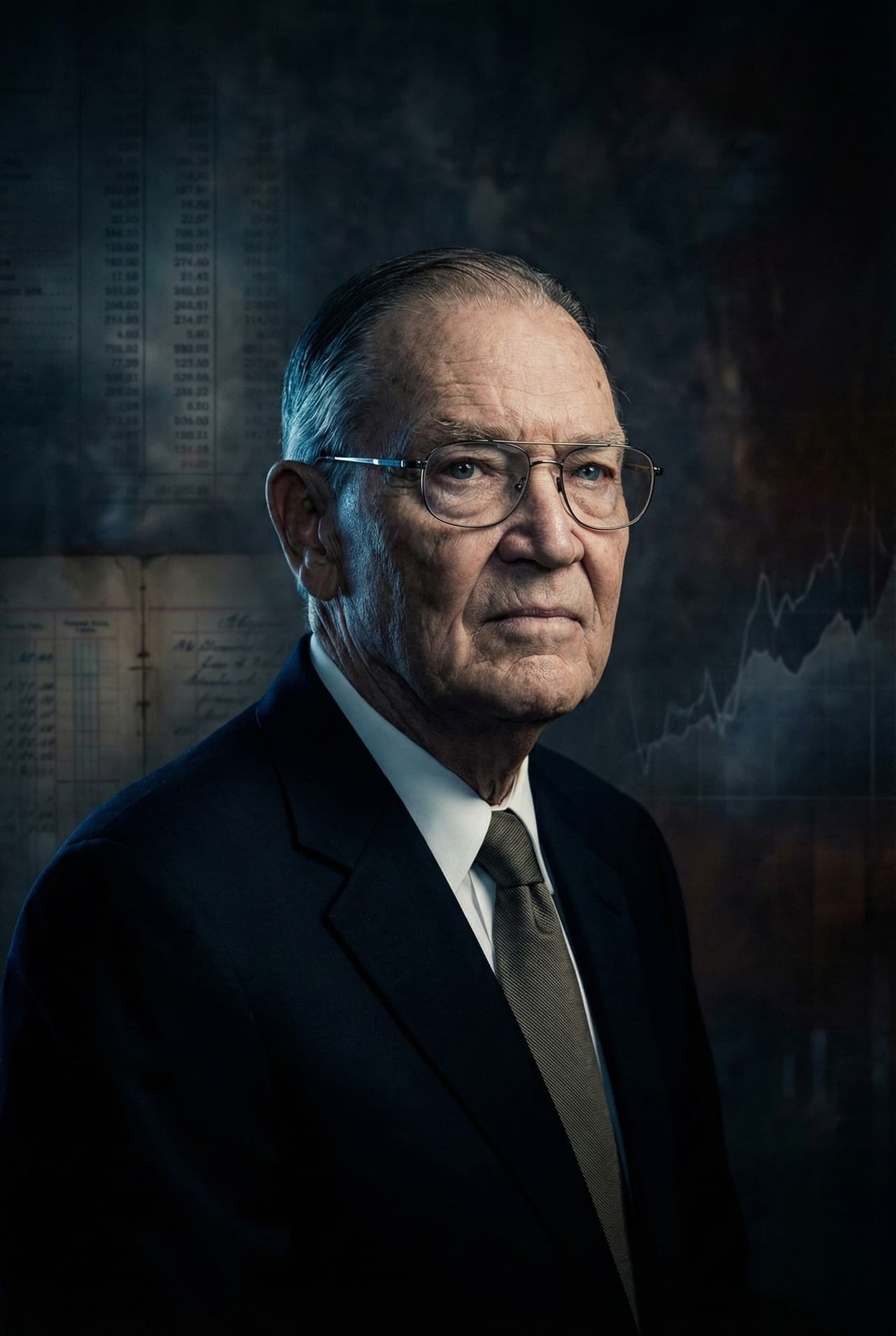
John C. Bogle
All investors collectively own the entire stock market. Therefore, the gross return of all investors combined must exactly equal the gross return of the market itself. If one investor beats the market by a certain percentage, another market participant must underperform by that exact same percentage. This mathematical reality makes investing a strict zero-sum game before expenses are deducted. However, the financial system exacts a heavy toll through management fees, trading commissions, administrative costs, and taxes. Once these frictional costs are subtracted from the gross return, the aggregate net return of all investors must fall short of the market return. Through the sheer mechanics of arithmetic, active investing transitions from a zero-sum game into a loser's game.
The most reliable determinant of long-term investment success is the minimization of frictional costs. The Cost Matters Hypothesis dictates that gross financial market returns minus the costs of financial intermediation equal the net returns actually delivered to investors. These expenses go far beyond the visible mutual fund expense ratio. They include unseen transaction costs driven by high portfolio turnover, cash drag from holding uninvested assets, and sales charges.
While an annual fee of two percent may seem negligible in the short term, the compounding effect of these costs over an investment lifetime consumes a massive proportion of an investor's potential wealth. By assuming all the risk and supplying all the capital, an investor paying high fees may ultimately surrender more than half of their accumulated returns to the financial industry. In the financial markets, investors get exactly what they do not pay for.
The mutual fund industry operates on the premise that highly paid portfolio managers can consistently select winning stocks and outsmart the collective wisdom of the market. Empirical evidence thoroughly dismantles this premise. Over long time horizons, the vast majority of actively managed funds fail to beat broad market index benchmarks.
Furthermore, the industry suffers from profound survivorship bias. Poorly performing funds are routinely liquidated or merged out of existence, masking the true failure rate of active managers. Because the aggregate costs of active management are so high, the mathematical reality guarantees that the average actively managed dollar will underperform the average passively managed dollar.
Investors frequently attempt to select mutual funds based on stellar past performance, assuming that recent outperformance indicates superior managerial skill. This strategy fails because of reversion to the mean, a gravitational force in the financial markets that pulls extreme returns back toward long-term averages.
Funds that deliver extraordinary market-beating returns inevitably attract massive inflows of new capital. This flood of money makes maintaining the precise strategic advantage that caused the outperformance nearly impossible. The managers who occupy the top performance quintile in one period are statistically likely to fall to the bottom quintiles in subsequent periods. Attempting to pick a winning fund based on historical momentum is fundamentally hazardous and counterproductive.
Rather than searching for the elusive needle in the haystack, the optimal strategy is to buy the entire haystack. A traditional index fund holds a diversified portfolio encompassing the entire stock market, weighted by market capitalization. This structure relies on the collective pricing mechanisms of all market participants to determine the fair value of each security.
By maintaining minimal portfolio turnover, operating without advisory fees, and eliminating the risks associated with manager selection and specific market sectors, the index fund isolates the only risk that remains. That remaining factor is the inherent risk of the stock market itself. This passive vehicle guarantees that the investor will capture their exact fair share of whatever returns the overall market provides.
Long-term stock market returns are governed entirely by underlying corporate economics. This fundamental component is the true investment return, defined by the initial dividend yield combined with the subsequent earnings growth of the businesses. Over decades, this fundamental reality dictates the trajectory of wealth accumulation.
In the short term, however, markets are driven by a speculative return, which manifests as the expansion or contraction of the price-to-earnings multiple. This speculative factor is dictated by the changing emotional states of investors, swinging wildly between irrational exuberance and unwarranted pessimism. While speculative returns can dramatically distort total market performance over a decade, they eventually cancel out over the very long run, leaving the fundamental business returns as the ultimate driver of market gravity.
Academic circles perpetually debate the Efficient Markets Hypothesis, questioning whether asset prices perfectly and instantaneously reflect all available information. While pure market efficiency implies that asset bubbles are impossible and mispricing never occurs, the practical reality for investors renders this theoretical debate largely irrelevant.
Even if markets are occasionally inefficient and mispriced securities exist, exploiting those inefficiencies consistently after costs is exceedingly difficult. The mathematical tautology of the Cost Matters Hypothesis applies regardless of the precise level of market efficiency. In any market environment, the average active investor burdened with high costs must underperform the average passive investor utilizing low-cost index funds.
The specific allocation of assets between equities and fixed-income securities dictates the overwhelming majority of a portfolio's risk and return profile. This foundational allocation must be governed by two distinct constraints. The first is the financial ability to take risk, which is determined by time horizon, income, and impending financial liabilities. The second is the psychological willingness to take risk, defined by an investor's emotional capacity to endure severe market volatility.
While equities historically provide superior long-term compounding, bonds act as a critical ballast to dampen portfolio turbulence. A properly calibrated asset allocation strategy acknowledges that if an investor cannot sleep during market panics, their portfolio contains an excessive allocation to risk assets.
The friction of taxation can devastate investment compounding just as severely as high management fees. Actively managed funds generate substantial tax liabilities due to their continuous buying and selling of securities. This portfolio turnover forces investors to pay capital gains taxes even in years when the fund itself loses value.
Index funds are structurally tax-efficient because their buy-and-hold methodology minimizes taxable distributions. To further optimize net returns, investors must deploy careful asset location strategies. Tax-inefficient assets like high-yield bonds must be placed into tax-sheltered accounts, while tax-efficient equity index funds should be held in standard taxable accounts.
Human emotion is structurally incompatible with successful investing. Investors frequently fall into the trap of counterproductive market timing, pouring capital into funds during euphoric market peaks and withdrawing capital during terrifying market troughs. This behavioral flaw causes the actual returns earned by mutual fund investors to substantially lag behind the stated returns of the mutual funds themselves.
Accurately predicting short-term market movements or macroeconomic shifts is impossible. The rational response is to tune out the persistent noise of financial media, ignore the allure of hot tips, and maintain a disciplined program of continuous investment regardless of prevailing market conditions.
The standard corporate architecture of the mutual fund industry creates an inherent conflict of interest between the management company's shareholders, who desire high fee revenue, and the mutual fund investors, who require low costs to maximize net returns.
Resolving this conflict requires a fundamentally different structural paradigm where the investment firm is owned entirely by the mutual funds, which are in turn owned by the individual investors. This mutual structure eliminates the extraction of external profits, allowing the firm to operate strictly at cost. By returning all economies of scale back to the investors in the form of systematically lower expense ratios, this alignment of interests structurally ensures the delivery of the highest possible net returns over time.
Jump into the ideas before you finish the whole summary.