
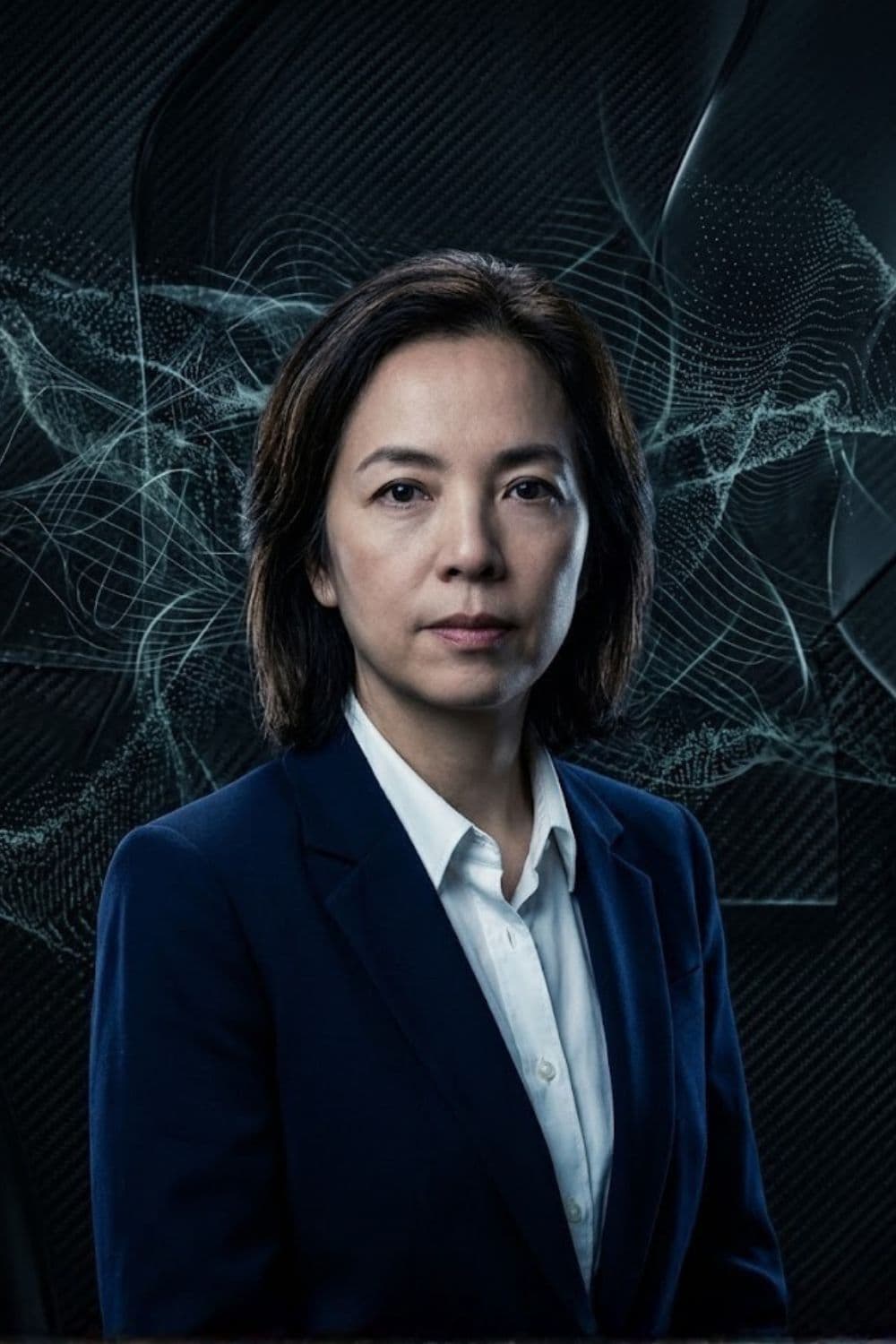
Fei-Fei Li
Fei-Fei Li relocated from China to New Jersey as a teenager, plunging into an environment defined by severe financial scarcity and cultural disorientation. Her family operated a dry cleaning business to survive. The constant pressure of translating for her parents while working grueling physical jobs forced her to develop extraordinary resilience. This early exposure to systemic disadvantage permanently shaped her worldview, proving that survival requires both immense personal grit and a pragmatic approach to solving complex problems.
These hardships established a fundamental empathy that would later govern her scientific career. She learned firsthand that talent is evenly distributed but opportunity is not. The necessity of balancing familial duty with extreme academic demands forged a capacity for managing crisis that proved essential for navigating the high stakes world of technology leadership.
An early intervention by a high school math teacher fundamentally altered Li's trajectory. Mr. Sabella provided critical academic mentorship and extended financial assistance to her struggling family, allowing them to purchase their cleaning business. This localized support network shielded her academic potential from being extinguished by poverty. Secure in her immediate survival, she secured admission and a full scholarship to Princeton University.
At Princeton and later Caltech, the contrasting worlds of extreme familial hardship and elite academic privilege sharpened her focus. Mentors like neuroscientist Christof Koch validated her identity in an alienating environment. Their institutional backing allowed her to transition from physics into the study of human and machine cognition.
By the late 2000s, artificial intelligence research had stalled. Most scientists prioritized the mathematical elegance of algorithms while relying on severely limited training data. Machine learning systems consistently failed to recognize complex real world images because they lacked sufficient examples to learn meaningful patterns.
Li theorized that true visual understanding required an unprecedented volume of data. She observed that human children learn to see by constantly processing an immense variety of visual stimuli. To replicate this computational achievement, machines would need access to millions of labeled images covering the full spectrum of everyday objects.
To solve the data bottleneck, Li initiated the ImageNet project. She mapped the linguistic structure of an existing database called WordNet to visual concepts, aiming to curate a dataset of fourteen million images categorized into tens of thousands of object classes. Her peers initially dismissed the effort as a futile logistical overreach that ignored algorithmic development.
The sheer scale of the project quickly exhausted traditional academic resources. Recognizing that student assistants could not complete the labeling process in a reasonable timeframe, Li leveraged the newly launched Amazon Mechanical Turk platform. This crowdsourced labor force allowed her team to verify millions of images rapidly, transforming an impossible logistical hurdle into a scalable data pipeline.
ImageNet remained obscure until Li transformed the dataset into an annual computer vision competition. In 2012, a team from the University of Toronto deployed a deep convolutional neural network named AlexNet to tackle the challenge. By training their multi layered model on the massive ImageNet dataset using the parallel processing power of graphics processing units, they obliterated the performance of traditional algorithms.
This precise convergence of massive data, deep neural networks, and specialized hardware ignited the modern artificial intelligence revolution. ImageNet proved that algorithms only reach their potential when fed comprehensive data. The success of AlexNet forced the entire software industry to pivot toward deep learning architectures.
As artificial intelligence expanded from academic curiosity to global infrastructure, Li confronted the severe lack of diversity among its architects. She routinely operated as one of the few women in a historically male dominated discipline. The structural exclusion of marginalized groups from engineering spaces meant that emerging algorithms inherently reflected a narrow slice of human experience.
Recognizing that biased design teams inevitably produce biased software, she took direct action to alter the talent pipeline. She established initiatives dedicated to training young women and underrepresented minorities in computer science. By intentionally broadening participation, she sought to ensure that future technological infrastructure incorporates a wider array of societal perspectives and ethical constraints.
The rapid commercialization of machine learning introduced profound moral hazards. During her tenure at major technology corporations, Li witnessed the immense pressure to prioritize scale and profit over societal wellbeing. The deployment of autonomous algorithms in critical sectors like healthcare, hiring, and military operations revealed the dangers of building opaque systems without rigorous ethical safeguards.
In response, Li championed the philosophy of human centered artificial intelligence. She argued that technological innovation must explicitly serve human dignity and operate under strict ethical governance. By founding dedicated research institutes, she institutionalized the belief that assessing the societal impact of an algorithm is just as critical as measuring its computational efficiency.