
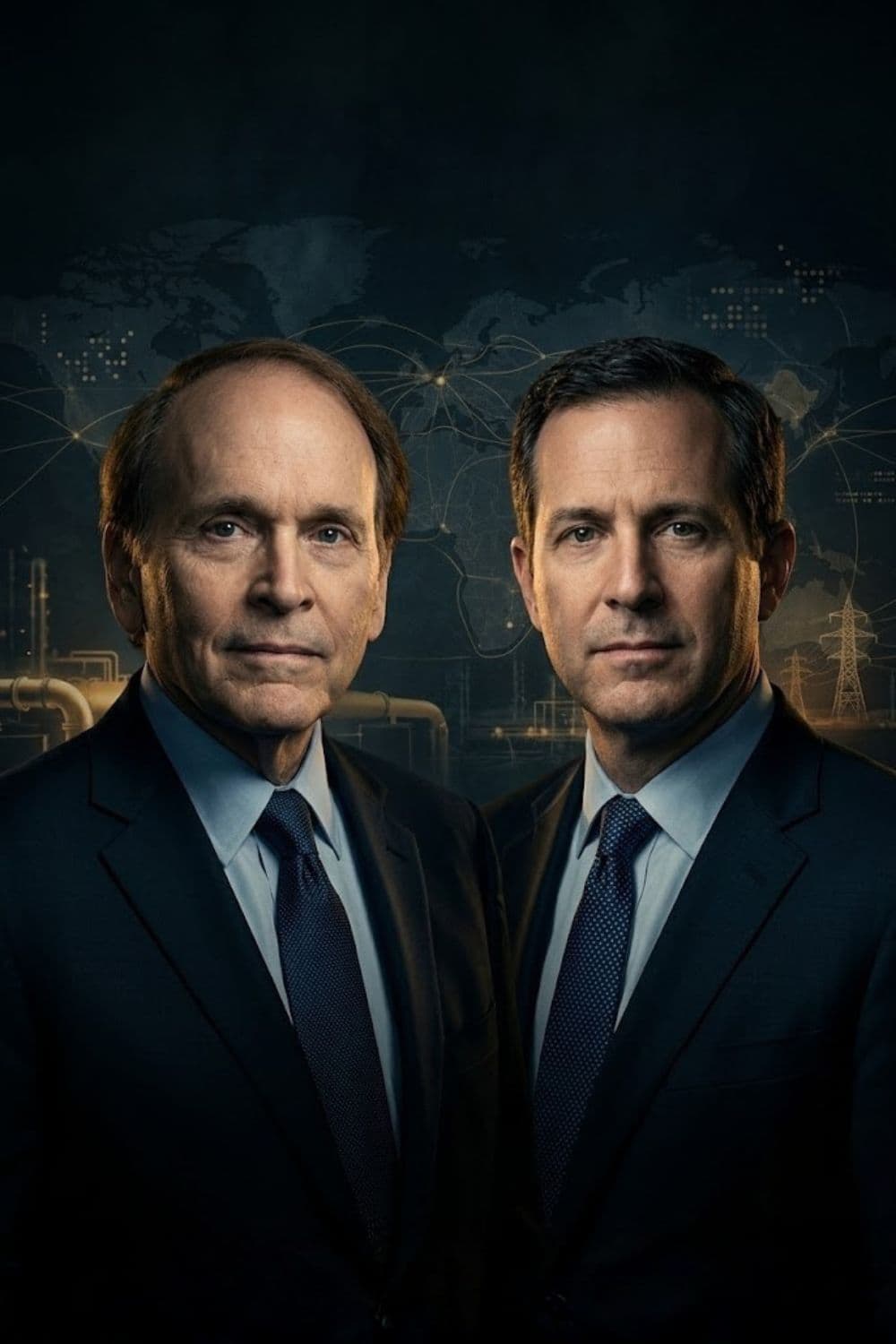
Daniel Yergin and Joseph Stanislaw
The defining narrative of the twentieth century was not merely a military conflict but an intellectual war over the soul of the global economy. This struggle pitted the forces of government control against the chaotic energy of the marketplace. The term itself draws from Vladimir Lenin’s 1922 strategy to retain state control over the key sectors of the economy - steel, coal, railroads - which he designated the commanding heights. While the battleground shifted from the Soviet Union to the mixed economies of Europe and the regulated capitalism of the United States, the central question remained constant: who should govern the allocation of resources? The contest was personified by two distinct intellectual giants. On one side stood John Maynard Keynes, the English economist who argued that markets were inherently unstable and required government intervention to manage the booms and busts. Opposing him was Friedrich von Hayek, the Austrian exile who contended that government planning inevitably leads to a loss of human freedom and economic stagnation.
For the first half of the century, the market was in retreat. The cataclysm of World War I, followed by the devastation of the Great Depression, shattered the world's faith in laissez-faire capitalism. In this vacuum of confidence, the state stepped in as the savior. The consensus across the globe - from the totalitarian regimes of the East to the liberal democracies of the West - was that governments must manage economic life to ensure stability and fairness. In Britain, the Labour Party nationalized major industries, effectively seizing the commanding heights in the name of the public good. In the newly independent India, Jawaharlal Nehru implemented a "Permit Raj" of central planning, while Latin American nations adopted dependency theory to insulate themselves from global trade. Even in the United States, the New Deal cemented a legacy of regulation and managed capitalism. The market was viewed not as a solution, but as a dangerous force that had failed humanity.
The turning point arrived in the 1970s, when the post-war consensus collapsed under the weight of stagflation - a toxic combination of high inflation and high unemployment that Keynesian theory struggled to explain or fix. State-owned enterprises had become bloated, inefficient, and resistant to innovation. It became clear that the government, by trying to do too much, was doing everything poorly. This failure paved the way for a counter-revolution led by political figures who embraced the exiled ideas of Hayek and Milton Friedman. Margaret Thatcher in Britain and Ronald Reagan in the United States launched a frontal assault on the mixed economy, privatizing state industries, deregulation markets, and crushing the power of trade unions. This was not merely a policy adjustment; it was an ideological reversal that prioritized competition and efficiency over state-guaranteed security.
The collapse of the Soviet Union in 1991 marked the definitive end of the experiment in total central planning. However, the victory of the market was already underway in unlikely places. In China, Deng Xiaoping unleashed the power of incentives with the pragmatic maxim that it does not matter if a cat is black or white, so long as it catches mice. This pragmatism dismantled the Communist economic hegemony from within. Simultaneously, countries from Chile to Poland underwent "shock therapy" to transition from state control to free enterprise. The result was a new era of globalization where capital, goods, and information flowed across borders with unprecedented speed. The "commanding heights" had been surrendered by the state and captured by the private sector, fueled by a belief that decentralized decision-making was superior to the clumsy hand of government bureaucracy.
Despite the ascendancy of market economics, its dominance is neither guaranteed nor politically secure. The shift to free markets has generated immense wealth but has also exacerbated inequality and social dislocation. The authors of this historical survey warn that markets require legitimacy to survive. Unlike communism, which offered a spiritual if misguided vision of collective sacrifice for a higher cause, capitalism offers only the cold logic of efficiency and self-interest. Humans yearn for meaning beyond materialism, and if the market fails to deliver widespread prosperity or ignores social fairness, the pendulum may swing back. The state has retreated, but it has not disappeared. As environmental challenges and demographic shifts loom, the battle for the commanding heights is not over; it has simply entered a new and volatile phase.