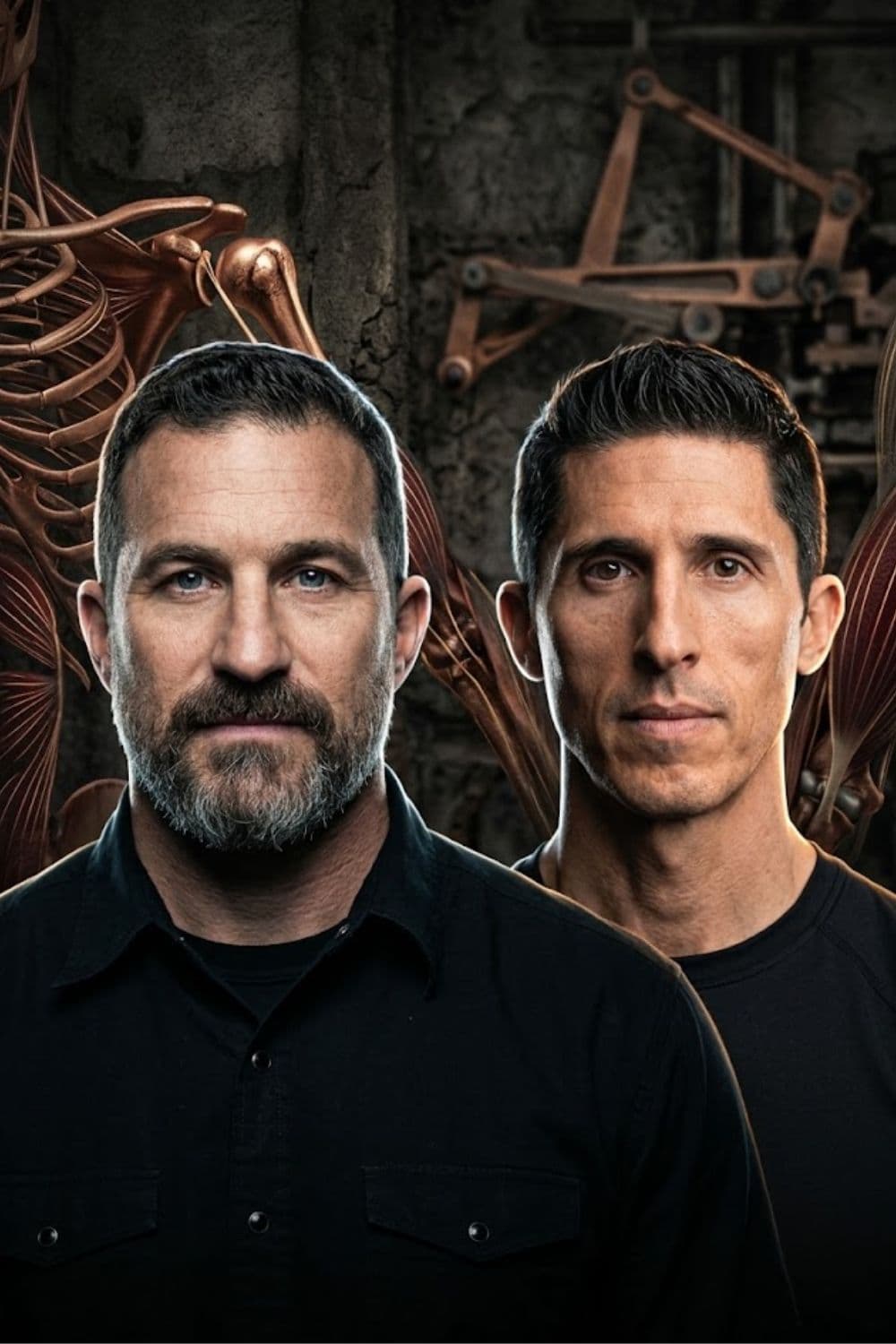
Andrew Huberman with Jeff Cavaliere
The baseline definition of longevity is the capacity to maintain high physical function and movement quality as the body ages. While mainstream fitness discussions prioritize compound, multi-joint lifts and cardiovascular output, long-term athletic durability depends on minor stabilizing muscles. These smaller components act as the hinges and bolts that sustain the overall musculoskeletal structure under load. Overlooking them leads to joint degeneration and movement limitations that eventually halt major training progress.
A common error is treating post-workout stiffness or joint soreness as minor issues that can be ignored in youth. Over decades, this lack of attention compresses the kinetic chain, transforming temporary fatigue into chronic pain and a restricted range of motion. To prevent this decay, individuals must integrate focused, corrective movements that address localized imbalances before structural damage occurs.
Lower back pain is frequently non-surgical, arising from muscular dysfunction and tightness rather than structural spine damage. The pelvis serves as the foundation for the spine, which directly adapts its posture to the positioning of the sacrum. The gluteus medius acts as a primary lateral stabilizer of the pelvis, controlling hip alignment and preventing pelvic tilt or rotation. When the gluteus medius is weak, the pelvis drops or sways excessively during single-leg actions, such as walking or running.
This uncontrolled pelvic movement forces surrounding muscles to provide artificial stability, causing them to enter protective spasms. To relieve this acute discomfort, a pressure point release can be combined with targeted leg movements to relax the spasming muscle. However, permanent relief requires transitioning from temporary symptom alleviation to progressive strengthening of the lateral hip stabilizers.
Strengthening the glutes is essential to stop the transfer of mechanical load to the lower back, which is ill-equipped to handle rotational and lateral stress. The reverse hyperextension is an effective sagittal plane exercise that targets the gluteus maximus without requiring heavy external resistance. By performing this movement with a brief, conscious contraction at the top of the lift, individuals ensure the glute muscles are executing the work rather than allowing momentum or lumbar arching to dominate.
To isolate and strengthen the gluteus medius, movements like the hip slide up a wall force the hip into abduction to level the pelvis. Additional resistance can be applied using mini-bands around the feet while lying prone to train internal and external hip rotation. Because rotational strength operates in a different plane than primary compound lifts, even high-performing athletes who squat heavy loads can exhibit extreme weaknesses in these rotational stabilizers.
Transitioning stabilizing exercises into functional patterns enhances their real-world utility and muscular carryover. Dynamic drills, such as walking with a weight suspended between the legs via a secure belt, force the body to maintain pelvic control during alternating single-leg stances. The suspended weight creates a pendulum effect that amplifies any instability. The mover must slow down and engage the gluteus medius to quiet the swinging weight, building active control.
Similarly, the suitcase lunge utilizes an offset weight held in only one hand to challenge lateral stability during a standard forward lunge. The body naturally wants to tip toward the side of the load, and the opposite hip must contract intensely to keep the pelvis level. This exercise combines sagittal plane training with lateral resistance, training multiple dimensions of movement in a single, high-efficiency pattern.
The human body is highly efficient at compensation, defaulting to large, dominant muscles to perform tasks when smaller stabilizers are weak. To prevent these larger muscle groups from taking over corrective movements, individuals can perform stabilizing exercises immediately after main training sessions. By pre-fatiguing the primary muscles, the smaller, deeper stabilizers are forced to activate and adapt without being overshadowed by larger prime movers.
Alternatively, core and stabilizing routines can be performed as dedicated, short sessions separate from the main workout. This prevents corrective work from becoming an afterthought when an individual is mentally and physically exhausted. Regardless of the scheduling approach, these specialized routines must be treated as essential components of a personalized program designed to address an individual's unique physical weaknesses.
The shoulder joint is a highly mobile ball and socket structure that is vulnerable to impingement when the surrounding musculature is imbalanced. Chronic internal rotation, often exacerbated by daily habits like typing or texting, restricts the space within the shoulder capsule. When the arm is raised in an internally rotated state, a bony protrusion on the humerus pinches the surrounding tendons and bursa, causing inflammation and eventual tearing.
The primary function of the rotator cuff is to centralize the head of the humerus within the glenoid cavity, directly countering the upward pull of the deltoid. Strengthening the external rotators restores this balance, allowing the arm to move overhead without pinching sensitive tissues. Thus, maintaining shoulder health requires active, targeted rotator cuff training rather than relying solely on heavy pressing movements.
An effective rotator cuff exercise involves standing external rotation using a resistance band while keeping the elbow pinned to the torso. To prevent cheating, individuals can place a folded towel under the arm; if the elbow drifts to recruit the deltoid, the towel falls. This exercise can be used before a heavy pressing session as a neuroactivation technique to alert the stabilizing muscles and ensure they support the joint during the lift.
To progress this training, the movement can be made more dynamic by holding a static external rotation and stepping laterally away from the anchor point to increase band tension. Introducing ballistic movements, such as a lateral hop while maintaining joint position, prepares the rotator cuff to handle unpredictable, real-world forces. Furthermore, moving from low-angle rotations to elevated arm positions systematically increases the stabilizing challenge.
Poor posture and prolonged head-forward positions weaken the deep muscles of the neck, leading to neck fatigue and compensatory strain during other movements. Direct neck training is vital for overall spinal alignment and increases the body's resilience to sudden, high-force impacts. To strengthen the neck without causing excessive trap development, movements must target the deep cervical flexors, extensors, and lateral stabilizers.
A standard neck training routine involves laying on a bench with the head off the edge, using a light, towel-wrapped plate on the forehead or back of the head. Each movement must begin with chin retraction, pulling the chin straight back to stabilize the cervical spine before initiating flexion or extension. These exercises must be performed slowly and with controlled tension, building a solid foundation of support that enhances performance in compound pressing and pulling lifts.
Training like an athlete requires prioritizing standing exercises over seated variations to cultivate overall stability and power. Operating on your feet forces the entire kinetic chain to coordinate, using the ground as a stable base to generate force. Staggering or widening the stance naturally increases the base of support, lowering the risk of injury and providing a more solid foundation for heavy upper-body movements.
During movements like a dumbbell curl or a reverse lunge, slightly rotating the torso toward the active side stabilizes the shoulder girdle or pelvis. This screwing down effect co-contracts the muscles of the hip or shoulder joint, eliminating instability and preventing joint wobble. By securing the joint structure, the primary working muscles can contract more efficiently, translating to greater strength and safer movement.
Halting all physical activity in response to an injury accelerates the functional aging process and degrades joint health. Instead, training should be viewed like a construction zone: if one street is blocked, traffic must be rerouted to keep the city moving. If a specific movement causes joint pain, finding a temporary alternative maintains circulation, bathes the joint in protective fluid, and preserves muscle activation.
For example, if an overhead barbell press causes shoulder discomfort, a machine press may offer a more controlled, pain-free alternative. If pressing is entirely unavailable, performing pulling movements like rows still exercises the shoulder joint through a different plane without aggravating the injury. Maintaining continuous, pain-free movement prevents joint stiffening and ensures that some form of training is always occurring.
Sustainable nutrition is built on consistent habits rather than aggressive, restrictive dieting that leads to cravings and failure. A clean omnivore framework structures daily eating around a baseline of protein, which promotes muscle synthesis and satiety. Visually dividing a meal plate allows for easy portion control: one-third should consist of a lean protein source, while the remaining portion is filled with a two-to-one ratio of fibrous to starchy carbohydrates.
Achieving nutritional freedom requires educating oneself on the macronutrient and caloric profiles of various foods to make equivalent swaps on the fly. This avoids the traps of marketing-based labeling on highly processed foods, which often disguise high sugar and fat content under high-protein branding. By understanding food composition, individuals can navigate eating in any environment, maintaining consistency over decades without feeling deprived.
The foot is the primary point of contact with the ground, serving as the foundation for all standing movements and force transmission. Weakness in the intrinsic foot muscles causes the arches to collapse, which rotates the ankle and torques the tibia out of alignment. This structural misalignment sends harmful rotational forces up the kinetic chain, causing pain and degeneration in the knees, hips, and lower back.
To restore a natural arch and improve stability, individuals can perform targeted barefoot exercises. Simple towel scrunches, barefoot balancing drills, and walking in sand force the intrinsic muscles of the foot to contract and strengthen. Actively building foot strength establishes a more stable interface with the ground, reducing compensatory strains throughout the rest of the body.
Jump into the ideas before you finish the whole summary.