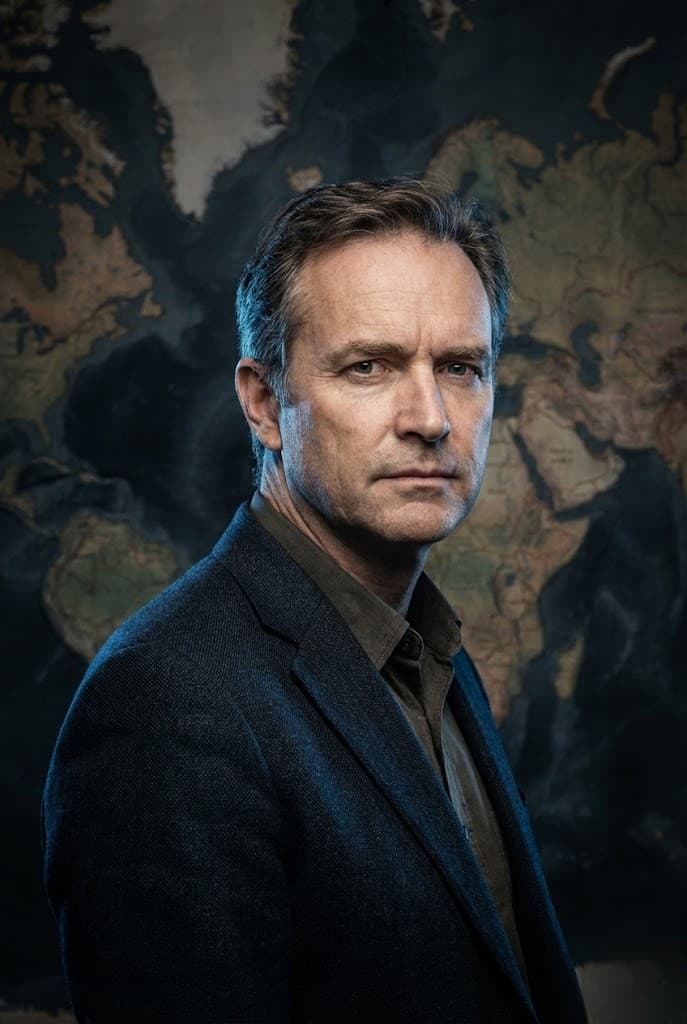
Tim Marshall
The physical reality of the planet forms an invisible framework that dictates the behavior of nation states and limits the choices available to their leaders. Topography, climate, demographic distribution, and natural resources generate an underlying logic to international relations that supersedes ideology or individual political will. Leaders are constrained by the maps they inherit. A mountain range provides a natural defensive barrier, a flat plain invites perpetual invasion, and a deep river system facilitates internal cohesion. This deterministic view strips away the rhetoric of global affairs to reveal a world governed by a zero sum competition for secure borders, navigable waters, and strategic depth.
The central anxiety of Russian geopolitics is driven by the North European Plain, a flat corridor that functions as a topographical funnel stretching straight to the heart of Moscow. Historically subjected to catastrophic invasions across this terrain, the Russian state operates on a defensive doctrine requiring the domination of a massive buffer zone in Eastern Europe. To secure its core, Russia must expand outward until it hits natural geographic barriers like the Carpathian Mountains.
Furthermore, the extreme northern latitude freezes the majority of Russian ports for much of the year. This geographical freeze locks the state out of global sea lanes, forcing an aggressive, perpetual quest for warm water ports to project naval power and secure uninterrupted trade. Without a warm water port, the Russian fleet remains bottlenecked by geographic choke points controlled by competing military alliances.
Chinese grand strategy is predicated on insulating the Han demographic heartland in the North China Plain from external threats. To achieve absolute security, China aggressively maintains control over its vast peripheral buffer zones, most notably Tibet and Xinjiang. Tibet acts as a towering geographic shield against India and serves as the source of China's most vital river systems, while Xinjiang provides a massive buffer into Central Asia.
Having secured its land borders, the state now faces a profound vulnerability at sea. Dependent on imported energy passing through narrow choke points like the Strait of Malacca, China is compelled to militarize the surrounding waters and push its defensive perimeter into the Pacific. This maritime expansion is designed to prevent any adversary from blockading its economic lifelines during a conflict.
The United States possesses a geography that virtually guarantees superpower status. It is insulated from hemispheric threats by two massive oceans, and its immediate land borders are shared with weaker neighbors or buffered by uninhabitable deserts and tundras. This geographic isolation provides absolute strategic depth, making a conventional land invasion practically impossible.
Internally, the continent is united by the greater Mississippi basin, an extraordinary network of naturally navigable rivers that allows for incredibly cheap transport of goods and intense internal political cohesion. This unparalleled combination of vast arable land, natural defensive isolation, and a ready-made transport network allowed the nation to rapidly unify and generate immense wealth, freeing it to project unprecedented naval and military power across the globe.
Unlike the integrating river systems of North America, the rivers of Western Europe do not naturally connect. Combined with a landscape fractured by mountain ranges and peninsulas, this topography historically isolated populations, creating distinct linguistic and cultural identities that hardened into modern nation states. This natural division fueled centuries of catastrophic warfare as states competed for dominance within confined spaces.
However, the region benefits from the Gulf Stream, which provides a temperate climate and abundant rainfall, creating fertile soils that historically supported food surpluses. This localized agricultural wealth drove early industrialization and the eventual creation of a powerful economic bloc, even as the fractured geography continues to test the limits of European political integration.
The developmental trajectory of Africa has been severely hindered by a brutal physical geography that naturally resists human integration and commerce. The continent is isolated from the Eurasian landmass by the immense Sahara Desert, while its smooth coastlines offer almost no natural deep water harbors for global trade. Internally, the great African rivers plunge over steep waterfalls, rendering them useless for the transport of goods from the interior to the sea.
Coupled with a tropical climate that incubates virulent diseases and a lack of easily domesticated flora and fauna, these geographic realities stifled early, large-scale state formation. This fractured natural landscape was later carved into artificial nation states by colonial powers who drew straight lines on maps, entirely ignoring the ethnic and topological realities on the ground and guaranteeing perpetual civil conflict.
The modern instability of the Middle East is the direct result of imposing external concepts of the nation state onto a geography and demographic reality that fiercely resists them. Following the collapse of the Ottoman Empire, colonial powers partitioned the region using arbitrary lines that ignored the organic boundaries of mountains, deserts, and ethnic or religious concentrations.
These artificial borders forced disparate and historically hostile groups, such as Sunni, Shia, and Kurdish populations, into unitary states controlled by autocratic regimes. The resulting internal friction ensures that when authoritarian control falters, these artificial states immediately fracture along their true geographic and sectarian fault lines, plunging the region into protracted proxy wars.
The partition of the Indian subcontinent created a volatile geographic arrangement defined by structural paranoia. Pakistan suffers from a fatal lack of strategic depth, possessing a narrow, elongated territory with vulnerable population centers situated dangerously close to the Indian border. It is internally divided by hostile terrain that separates distinct ethnic groups, preventing true national cohesion.
Conversely, India enjoys a more robust geographic position, shielded by the Himalayas to the north and possessing a massive, unified agricultural and industrial base. The resulting power imbalance drives a perpetual arms race, with conflict relentlessly centering on the contested mountainous region of Kashmir, which provides critical high ground and secures the headwaters of the rivers absolutely essential to the survival of both nations.
The Korean peninsula functions geographically as a bridge extending from the Eurasian landmass toward the Pacific, historically making it a transit route and battleground for surrounding empires. Its lack of lateral mountain barriers leaves it perpetually vulnerable to invasion from the north or the sea, forcing Korean states to rely heavily on the patronage of larger superpowers for survival and resulting in its current divided stasis.
Just across the water, Japan benefits from the absolute defensive advantage of being an island nation, protecting it from land invasions throughout its history. However, Japan is severely impoverished of the natural resources required to sustain an industrial economy. This deep material insecurity forces a strategic imperative to secure maritime supply lines and aggressively look outward to feed its domestic industries.
Economic development in South America is actively suppressed by a topography that prevents internal integration. The continent is dominated by the impenetrable Amazon basin and bisected by the Andes, the longest continuous mountain chain on the planet. These massive natural barriers prevent the construction of viable transcontinental trade routes and isolate populations from one another.
Consequently, Latin America is a demographically hollow continent where wealth and political power are almost entirely concentrated along the coastal rims. This geographic fragmentation has historically stunted the emergence of a unified geopolitical bloc, leaving individual states dependent on maritime trade and perpetually vulnerable to the influence of external naval powers.
The melting of the Arctic ice cap represents a rare historical moment where the physical map of the world is actively changing, unlocking a volatile new geopolitical battleground. As the ice recedes, it exposes vast, previously inaccessible reserves of oil, natural gas, and precious metals.
More critically, it opens new, vastly shorter maritime shipping lanes that connect Asian manufacturing centers to European markets, fundamentally altering global trade economics. This geographic transformation has triggered an aggressive scramble among bordering nations to project military power and establish sovereignty over the newly exposed waters, turning a frozen wasteland into a high stakes arena for resource extraction and strategic dominance.
Jump into the ideas before you finish the whole summary.