
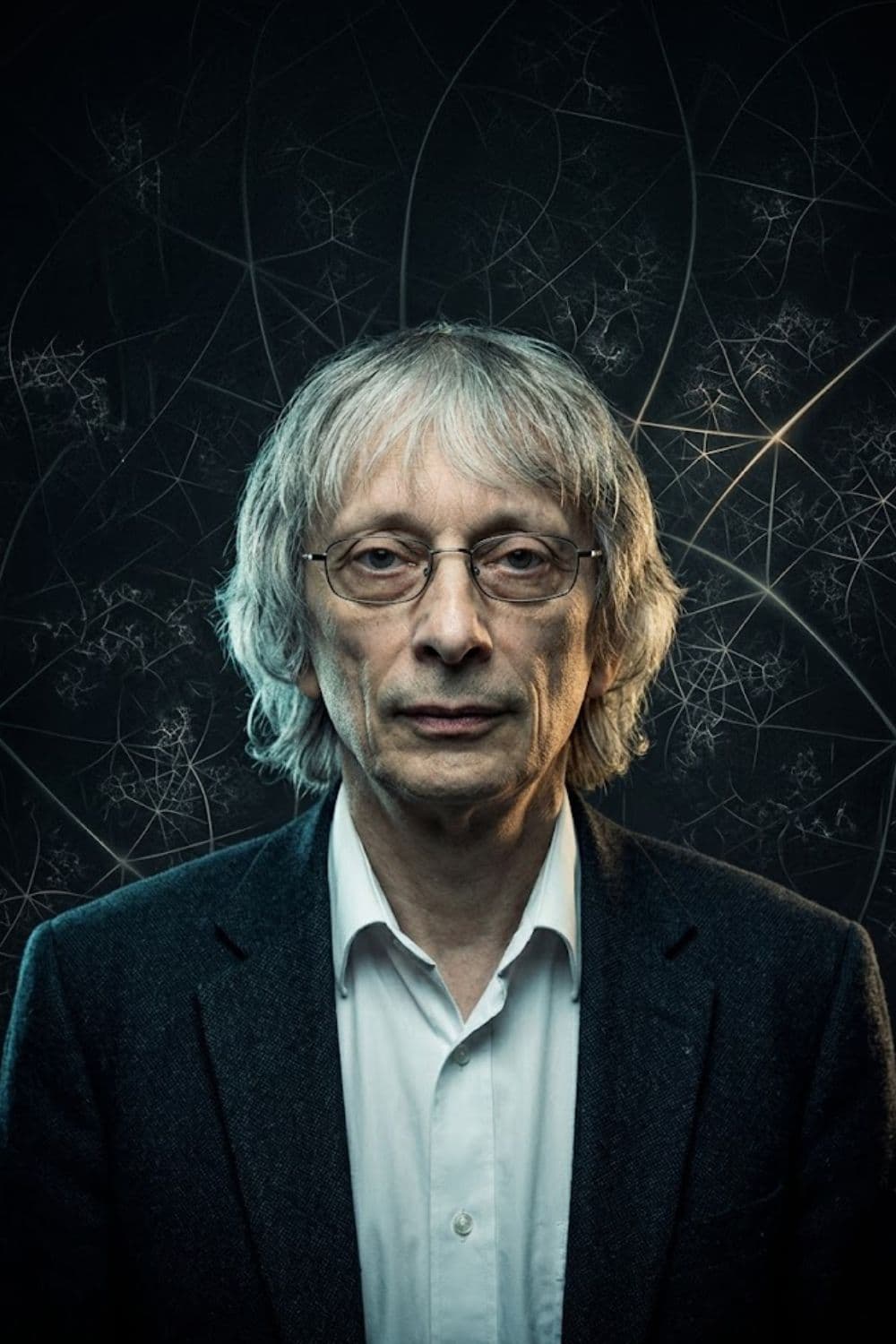
David Deutsch
Scientific and intellectual progress does not stem merely from acquiring data, but from the generation of good explanations. A good explanation is fundamentally defined by being hard to vary. Every detail of the explanation plays a functional role in accounting for the phenomenon, meaning that any arbitrary change to its structure would cause it to fail. This stands in contrast to bad explanations, such as ancient myths, which can easily be altered to accommodate new observations without losing their internal logic.
Furthermore, good explanations possess reach, meaning they can solve problems and explain phenomena far beyond their original intended scope. By prioritizing theories that are highly constrained and specific, humanity developed an error-correcting mechanism capable of replacing flawed models with ones that align more closely with objective reality.
The traditional assumption that knowledge is derived directly from sensory experience is a misconception. Empiricism suggests that we simply observe the world and extract truth, while inductivism argues that we can extrapolate universal laws from repeated past experiences. Both models fail because they cannot account for entirely novel phenomena that exist outside human sensory perception, such as the core of a star or the curvature of spacetime.
Instead, knowledge begins with a creative leap. Explanatory theories are first guessed through human imagination and then subjected to rigorous criticism and testing. Observation does not generate the theory. Observation serves strictly to choose between competing theories that have already been creatively conjectured.
The quest for absolute certainty is a philosophical dead end known as justificationism. For most of human history, societies sought authoritative sources, such as ancient texts or dogmatic leaders, to guarantee the truth of an idea. The true catalyst for sustained progress is fallibilism, which is the recognition that all human knowledge is tentative, incomplete, and fundamentally capable of containing errors.
By accepting that no idea is immune to flaws, society shifts its focus away from proving an idea's ultimate authority and toward an ongoing tradition of criticism. Progress is achieved entirely through the continuous process of identifying errors in our current best explanations and replacing them with slightly better, though still fallible, alternatives.
Optimism is positioned not as a psychological mood but as a rational, structural principle of reality. It is founded on the premise that all evils, failures, and catastrophes are caused exclusively by a lack of knowledge. Because everything not forbidden by the laws of physics is achievable, every problem humanity faces is fundamentally soluble provided the right explanatory knowledge is discovered.
This worldview insists that problems are inevitable, as our knowledge will always be incomplete. However, viewing problems as natural barriers waiting to be dismantled transforms challenges into catalysts for further discovery. A society that expects to solve its problems will actively pursue the creative conjectures necessary to overcome them.
The unique significance of human beings lies in our capacity for universal explanation. If a phenomenon can be understood, a human mind possesses the computational and creative architecture to comprehend it. We are not fundamentally limited by biological constraints because our minds can generate tools, computers, and theories to bridge any physical or cognitive gap.
Because human beings can understand the physical laws governing the universe, they act as universal constructors. We have the potential to cause any physical transformation in the environment that the laws of physics permit. This makes human knowledge a profound physical force capable of reshaping reality on a cosmic scale.
To achieve a deep understanding of the universe, one cannot rely on a single scientific discipline. Reality must be understood through the convergence of four fundamental and interdependent theories: quantum physics, epistemology, the theory of computation, and the theory of evolution. Together, they form a unified lens for comprehending existence.
Quantum physics explains the fundamental behavior of matter. Epistemology outlines how knowledge is created. Evolution describes how replicators like genes and ideas survive and adapt. Computation dictates that physical systems can simulate and process information universally. None of these strands can be fully understood in isolation, and their integration proves that the universe is inherently comprehensible.
Quantum phenomena, particularly those demonstrated by the double slit experiment, cannot be adequately explained by treating particles as mere probabilities or waves. The presence of interference patterns when individual particles are fired forces the acknowledgment that these particles are interacting with unseen counterparts. The only logically sound explanation is the existence of a quantum multiverse.
In this framework, every physically possible event unfolds across an infinite branching of parallel, interacting universes. Rejecting the multiverse in favor of purely mathematical predictions is a retreat into instrumentalism, which abandons the scientific pursuit of describing reality as it actually is. The multiverse is a literal, physical structure required to make sense of quantum mechanics.
There is a widespread illusion that mathematics provides absolute, unassailable truth, distinct from the approximations of the physical sciences. This mathematician's misconception ignores the fact that mathematical proof is a physical process. Whether performed by a human brain, ink on paper, or a silicon computer, computation is bound by the laws of physics and is therefore susceptible to error.
Gödel's incompleteness theorems further demonstrate that no formal mathematical system can be both perfectly complete and self-consistent. Mathematical knowledge, much like scientific knowledge, advances through creative conjecture and the subsequent discovery and correction of errors, rather than through the revelation of absolute certainties.
Human cultural evolution operates through the replication of ideas, or memes. For the vast majority of history, humans lived in static societies governed by anti-rational memes. These cultural structures survived by actively disabling the critical faculties of their members, demanding blind obedience, conformity, and resistance to change, which kept progress agonizingly slow.
The Enlightenment marked the emergence of dynamic societies driven by rational memes. These societies sustain themselves by encouraging open debate, dissent, and critical evaluation. By designing institutions specifically optimized to detect and eliminate bad policies and flawed leaders without violence, dynamic societies unlock an accelerating, self-sustaining cycle of innovation.
The development of Artificial General Intelligence is hindered by a fundamental philosophical misunderstanding of how human creativity works. Current artificial intelligence paradigms often rely on behavioral mimicry, massive datasets, and inductive extrapolation, none of which equate to genuine explanatory thought. Passing a behavioral test through clever conversational tricks is entirely divorced from true intelligence.
True artificial intelligence requires a jump to universality, mirroring the leap that occurred in human evolution. A genuine artificial mind must be a universal explainer capable of generating novel, creative conjectures to solve unencountered problems. Until the precise mechanisms of human creativity are understood, adding more processing power to specialized algorithms will not yield generalized intelligence.
The universe does not impose a fixed ceiling on what can be discovered or achieved. The cultural shift away from dogma and toward error correction initiated a process that can continue indefinitely. We exist at the beginning of an infinite sequence of purposeful knowledge creation, limited solely by our own choices and willingness to pursue better explanations.
To seek a sustainable lifestyle that merely preserves the status quo is a dangerous trap that invites stagnation and eventual ruin. The only truly sustainable strategy for human survival is to embrace an open-ended, infinite journey of continuous problem-solving, endless discovery, and relentless transformation.
Jump into the ideas before you finish the whole summary.