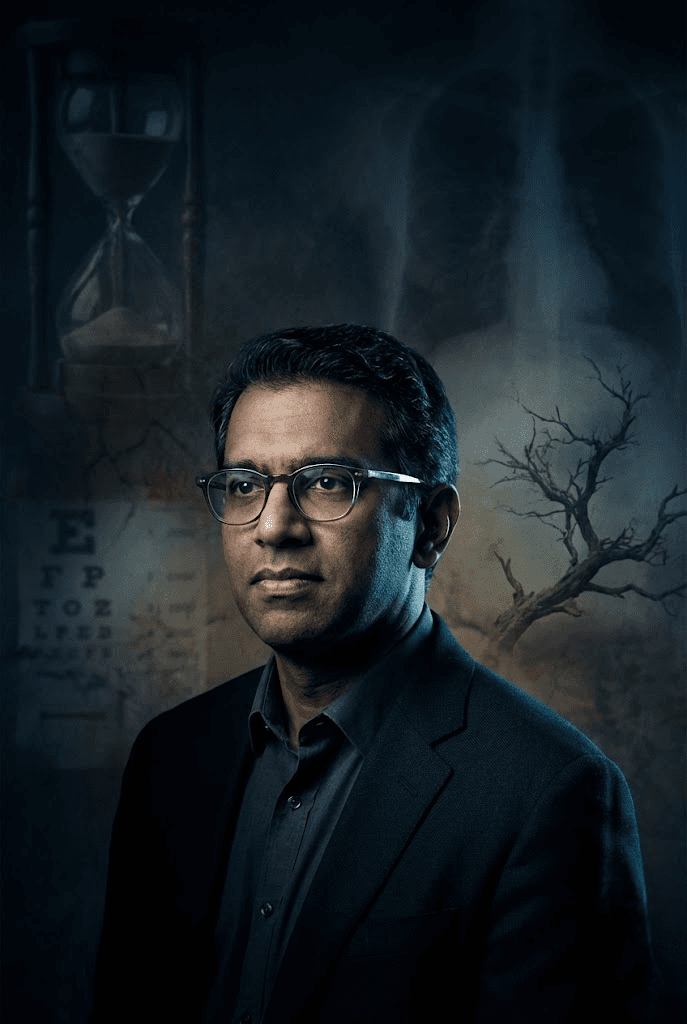
Atul Gawande
Modern medicine has fundamentally altered the human relationship with death. Historically, the end of life was a natural inevitability experienced within the home and the family. In the modern era, death has been transformed into a clinical failure. The medical establishment operates under the implicit assumption that every physical ailment can and must be fixed, which creates an endless cycle of aggressive interventions. This approach strips patients of their dignity and treats the natural progression of mortality as an enemy to be defeated at all costs.
When the focus remains exclusively on prolonging life, the medical system ignores the reality that life is a fatal condition. Doctors and hospitals are trained to fight disease but are profoundly unprepared to care for individuals who face unfixable decline. This fundamental mismatch between the realities of the human body and the objectives of the healthcare system results in patients suffering through futile treatments rather than experiencing a meaningful conclusion to their lives.
The human body is destined to fail through a slow, inexorable process of wear and tear. Bones weaken, blood vessels harden, muscles thin, and joints wear out. Despite the medical advancements that have dramatically increased life expectancy, science cannot reverse the ultimate trajectory of physical decay. This slow unraveling creates a new challenge that humanity has never faced on such a massive scale: the necessity of managing prolonged frailty rather than simply treating acute illnesses.
Because medical training revolves around curing discrete problems, clinicians struggle to address the holistic unraveling of the aging body. The system is designed to stabilize patients and send them home, but it lacks the infrastructure and the philosophy required to support people through years of gradual dependency. Recognizing the physiological reality of decline is the first step toward building systems that accommodate aging rather than denying it.
When the elderly can no longer manage their own lives independently, society typically places them in institutions designed to protect them from physical harm. Nursing homes and assisted living facilities prioritize safety and physical maintenance above all other considerations. Residents are subjected to rigid schedules, controlled diets, and strict supervision to prevent falls and medical emergencies. This regimented environment succeeds in extending life but fundamentally empties that life of the meaning and joy the individual once possessed.
The prioritization of safety creates a profound tension with personal autonomy. In the pursuit of keeping the elderly out of danger, institutions often strip away their freedom to make basic choices, such as what to eat, when to sleep, and how to spend their time. The underlying philosophical error is the assumption that mere survival is the highest good. For most human beings, a life stripped of choice and reduced to mere existence is not a life worth living.
The architecture of standard elder care creates deep psychological suffering, which manifests as three pervasive plagues: boredom, loneliness, and helplessness. When individuals are removed from the vibrant, unpredictable flow of normal life and placed in sterile, medicalized environments, they lose the organic stimuli that keep the human spirit engaged. Boredom sets in when every day mirrors the last, devoid of surprise or meaningful activity.
Loneliness and helplessness compound this sensory and emotional deprivation. Residents are separated from their communities and families, surrounded by professionals who are paid to manage their bodies rather than engage their souls. Furthermore, the total loss of responsibility over their own daily routines generates a crippling sense of helplessness. Without the ability to care for themselves, for others, or even for a simple pet or plant, the elderly lose their sense of purpose, accelerating both mental and physical decline.
The core objective of healthcare has long been understood as ensuring health and survival. This definition must be fundamentally expanded to focus on enabling wellbeing. Wellbeing encompasses much more than the absence of disease or the continuation of a heartbeat. It involves the preservation of the reasons an individual wishes to be alive in the first place. When survival becomes the sole metric of medical success, doctors blind themselves to the sacrifices their patients are forced to make to achieve that survival.
Shifting the goal of medicine to wellbeing requires clinicians to ask a completely different set of questions. Instead of simply offering the next available treatment, medical professionals must investigate what makes a patient's life meaningful. By aligning medical care with the patient's personal definitions of joy and fulfillment, doctors can provide care that supports the human spirit rather than merely sustaining the physical shell.
A central tension in end of life care is the widespread assumption that prioritizing comfort means sacrificing time. Patients and their families often resist palliative care and hospice because they view these options as giving up the fight. However, clinical studies reveal a striking paradox: patients who stop aggressive, toxic treatments in favor of palliative care often live longer than those who continue to pursue a cure.
By avoiding the severe physical trauma of late stage surgeries and chemotherapy, patients preserve their remaining strength. Palliative care focuses on managing pain, reducing stress, and maximizing the quality of daily life. When the body is no longer ravaged by desperate medical interventions, patients experience not only a drastic reduction in suffering but also a measurable extension of their final days. This reality dismantles the false dichotomy between fighting for life and accepting comfort.
The relationship between doctors and patients has evolved through distinct stages, each with its own flaws. The traditional model was paternalistic, where the doctor acted as an unquestioned authority, deciding what treatment was best without consulting the patient's desires. In reaction to this, medicine shifted to an informative model. Doctors became technical experts who provided a menu of options, risks, and benefits, leaving the patient completely alone to make a terrifying choice. This approach preserves autonomy but abandons the patient in their moment of greatest vulnerability.
The most effective model is interpretive and involves shared decision making. In this approach, the clinician acts as an expert counselor rather than just a technician. The doctor takes the time to understand the patient's core values, goals, and fears, and then recommends a medical path that aligns with those priorities. This synthesis of medical expertise and deep empathy allows patients to navigate complex choices without feeling abandoned or dictated to.
Meaningful end of life care cannot happen without difficult, explicit conversations about mortality. These discussions must move beyond the binary question of whether to fight or to give up. Instead, they should explore what the patient is actually fighting for. This process requires uncovering the patient's understanding of their illness, their deepest fears for the future, and the outcomes they find entirely unacceptable.
Establishing these boundaries early changes the entire trajectory of care. By clearly identifying what a patient is willing to sacrifice and what they are not, families and doctors can make medical decisions that protect the individual's core values. These conversations are not singular events but ongoing dialogues that must adapt as a disease progresses, ensuring that the care plan always serves the patient's evolving reality.
At the heart of a meaningful final chapter is a highly specific, personalized understanding of what constitutes a good day. For one person, a good day might mean having the cognitive clarity to read a book, even if it requires enduring physical pain. For another, it might mean eating chocolate ice cream and watching sports on television, or having the mobility to sit at the dinner table with family.
Identifying these simple, mundane goals provides a concrete target for medical care. When a doctor knows exactly what a good day looks like for a patient, they can calibrate medications and therapies to protect that specific experience. Medicine becomes a tool to enable these small but profound moments of joy, proving that a life limited by illness can still hold deep personal significance.
Facing the end of life demands a profound psychological fortitude that operates on two distinct levels. The first is the courage to confront the reality of mortality. It is deeply uncomfortable to look past the false optimism offered by endless medical trials and accept the hard truth of a terminal diagnosis. This requires piercing through the collective denial that permeates modern culture and the medical establishment.
The second, and often more difficult, dimension is the courage to act upon that truth. It is one thing to know that death is approaching, but it is another entirely to make decisions based on that knowledge. Acting on this truth might mean refusing a life prolonging surgery, choosing to enter hospice, or having agonizing conversations with loved ones. This active courage is what ultimately allows individuals to reclaim control over their final days.
The fundamental human drive is not merely to survive, but to have agency over the narrative of one's own existence. True autonomy is not necessarily about physical independence, as frailty inevitably strips away the ability to perform basic tasks. Rather, it is the freedom to shape one's life in a way that is consistent with one's character, loyalties, and values.
When people are permitted to be the authors of their own stories to the very end, mortality ceases to be purely a medical failure and becomes a deeply human completion. The ultimate goal of care should be to protect this authorship, ensuring that the final chapters of a person's life are written not by the rigid protocols of a hospital, but by the desires and choices of the individual.
Jump into the ideas before you finish the whole summary.