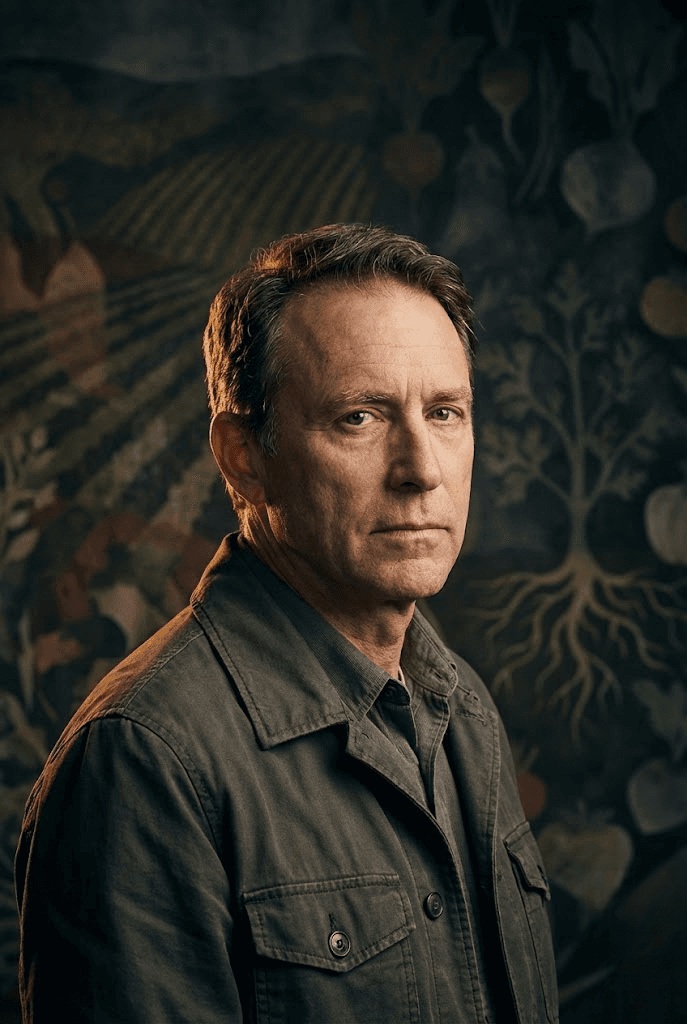
Michael Pollan
Unlike specialized eaters in the animal kingdom, humans possess the biological capacity to consume a vast array of flora and fauna. This physiological freedom creates a profound anxiety over determining what is safe and nourishing to eat. Historically, human societies relied on deeply ingrained cultural traditions to navigate this infinitude of choices. In the modern American landscape, however, these cultural guardrails have eroded. They have been replaced by food science, marketing, and government policy, leaving the modern eater vulnerable to an industrialized food system that prioritizes cheap calories over nutrition and ecological health.
To resolve the modern dilemma of eating, the investigation isolates four distinct pathways that food travels from earth to plate. These pathways represent the evolutionary stages of human agriculture and consumption. The industrial food chain represents the dominant modern paradigm of mass production and hyper processing. The industrial organic chain attempts a compromise between large scale distribution and chemical free agriculture. The local sustainable chain relies on localized, interconnected ecological systems. Finally, the hunter gatherer chain represents the most primal, transparent method of acquiring calories. Examining each chain reveals the hidden ecological, moral, and biological costs embedded in a single meal.
The modern industrial food system is not a diverse agricultural ecosystem but a vast monoculture built on a single, heavily subsidized crop. Corn has been biologically and economically engineered into a ubiquitous commodity, hidden in nearly every processed food through components like high fructose corn syrup and fed to livestock on massive scales. This reliance transforms corn from a traditional food into an industrial raw material. The overproduction of this crop fundamentally reshapes farm policy, drives the chemical fertilizer industry, and demands immense fossil fuel inputs, replacing solar energy with petrochemicals at the base of the human food chain.
The industrial imperative for efficiency inevitably extends to the raising of livestock, treating biological organisms as mere units of production. In concentrated animal feeding operations, cattle are forced to consume a diet of cheap, surplus corn. Because ruminants evolved to eat grass, this unnatural diet sickens the animals, necessitating the routine administration of antibiotics and creating a toxic living environment. This system severs the natural relationship between animal and landscape, prioritizing rapid growth and market weight over animal welfare and human health.
As consumers recoil from conventional agriculture, the organic movement offers an alternative, yet it too has been compromised by industrial logic. When organic standards are codified by bureaucratic agencies, the original philosophy of holistic, soil based agriculture often gives way to large scale, monocrop farming. While avoiding synthetic pesticides, industrial organic farms still rely heavily on fossil fuels for processing and global distribution. This creates a paradox where a product is technically organic but severed from the localized, seasonal, and sustainable principles that initially defined the movement.
In stark contrast to industrial monocultures, true sustainable agriculture mimics the complexity of natural ecosystems. At the center of this model is the philosophy of grass farming. Instead of importing fossil fuels and chemical fertilizers, grass farmers manage the grazing patterns of herbivores to maximize the capture of solar energy. By moving cattle daily and allowing grasses adequate recovery time, this method naturally builds soil fertility, sequesters carbon, and produces nutrient dense food. The farm functions as a closed biological loop rather than a linear factory.
True sustainability requires leveraging the natural behaviors of different species to perform agricultural labor. On a management intensive farm, chickens follow cattle in the pasture rotation. The birds spread the manure, eat parasite larvae, and sanitize the pasture while generating highly nutritious eggs. This symbiotic layering of species transforms animal waste from a toxic liability into a vital asset for soil health. The animals live in accordance with their evolutionary instincts, entirely eliminating the need for pharmaceutical interventions or chemical fertilizers.
The industrial food system presents an illusion of extreme affordability, yet the price tag at the supermarket fundamentally misrepresents the true cost of production. The cheap calories derived from subsidized corn carry massive externalized costs that are simply shifted elsewhere. These include the environmental degradation caused by chemical runoff, the depletion of fossil fuels, the suffering of confined animals, and a national public health crisis characterized by rising rates of obesity and diet related disease. True sustainable food often appears more expensive only because its costs are transparent and accounted for at the point of purchase.
To fully grasp the consequences of taking a life for food, the ultimate exercise in transparency is a meal acquired entirely through personal hunting and gathering. Stepping into the woods to track a wild boar or forage for mushrooms forces the modern consumer to confront the reality of the predator prey dynamic. This process demands a profound environmental awareness, tapping into ancient cognitive wiring that sharpens the senses. It strips away the industrial obfuscation, allowing the eater to understand exactly what biological energy and physical death are required to sustain their own life.
Eating animals presents an inescapable ethical tension. While industrial slaughterhouses operate with a mechanical, emotionless detachment that hides the reality of death from the consumer, hunting requires a direct, intimate act of killing. The hunter experiences a complex convergence of triumph, primitive elation, and profound disgust during the butchering process. This disgust is an evolutionary mechanism, yet overcoming it through conscious processing and cooking transforms a carcass into sustenance. Acknowledging this emotional weight is presented as a more honest and ethically responsible approach to consuming meat than relying on the willful ignorance required by the modern supermarket.
Jump into the ideas before you finish the whole summary.