
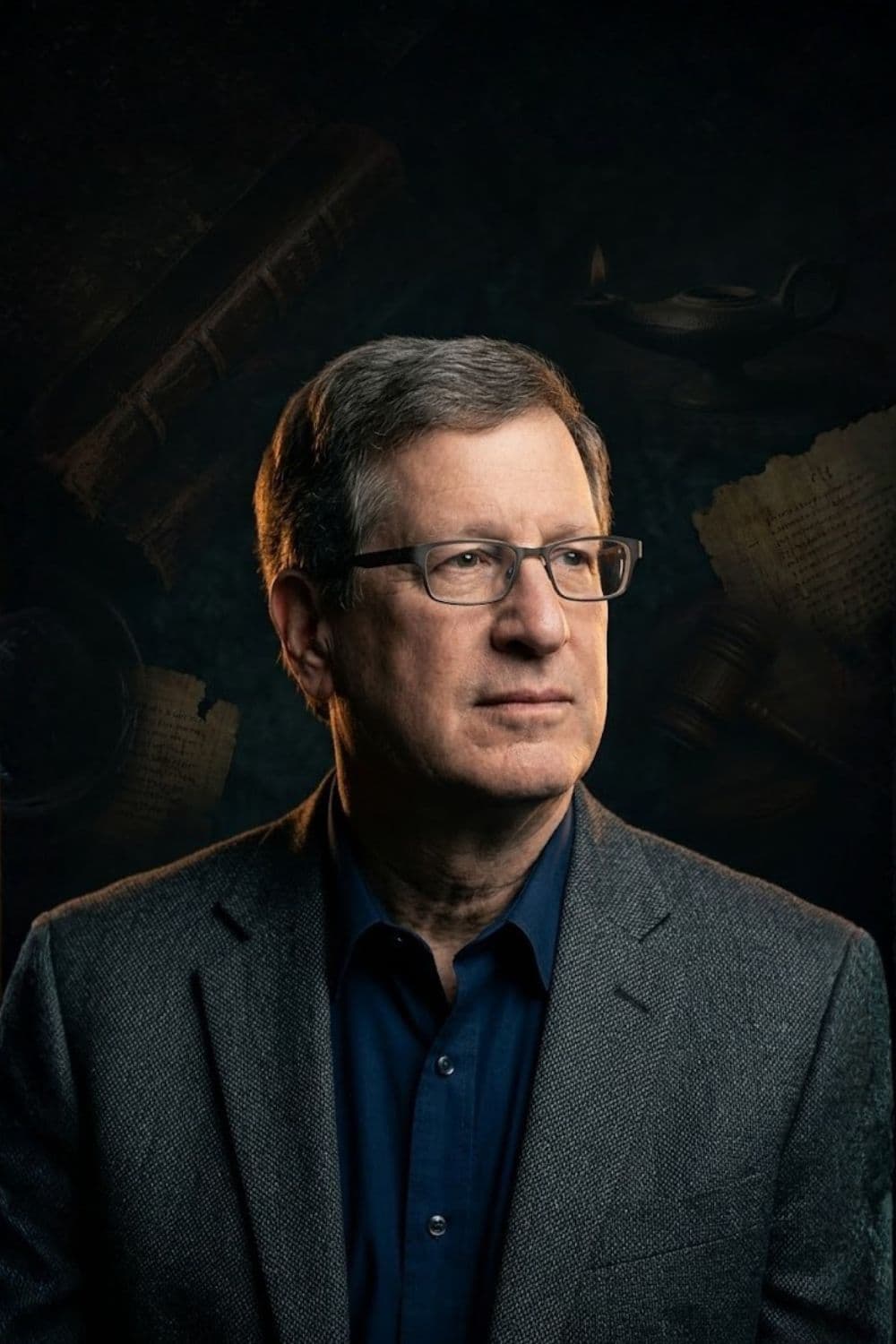
Lee Strobel
Lee Strobel frames his investigation into Christianity as a rigorous legal and journalistic inquiry. The premise relies on evaluating historical, documentary, and scientific evidence to establish the existence, deity, and resurrection of Jesus. By treating the New Testament claims as a cold case, the methodology attempts to subject religious belief to the same burden of proof required in a court of law. This structured approach aims to transition faith from a subjective feeling into a logical conclusion derived from objective data.
Apologists argue that the four Gospels function as reliable eyewitness accounts rather than evolving mythologies. The relatively short time gap between the actual events and the written texts prevents the development of legendary corruption. Furthermore, the sheer volume of surviving ancient manuscripts allows scholars to cross-check textual variations and reconstruct the original writings with a high degree of confidence. When compared to other accepted works of ancient history, the New Testament possesses significantly more manuscript evidence dating much closer to the original authorship.
The existence of Jesus does not rely solely on Christian texts. Secular historians from the first century, such as Josephus and Tacitus, document the execution of Christ under Pontius Pilate and the rapid spread of his followers. Archaeological discoveries continually validate the specific geographic locations, cultural practices, and political figures mentioned by the Gospel writers. This external corroboration strengthens the argument that the biblical narratives are rooted in actual historical events rather than fabricated religious allegories.
To counter the argument that Jesus was a delusional fanatic making false claims of divinity, scholars analyze his psychological profile. Jesus exhibited emotional stability, logical reasoning, and deep compassion that directly contradict the symptoms of clinical insanity. His radical claims were consistently backed by authoritative teachings and rational behavior under extreme stress. A clinically insane individual would lack the capacity to deliver profound ethical discourses or attract a devoted following of rational adults.
The Old Testament contains dozens of specific prophecies detailing the lineage, birthplace, and execution of the coming Messiah. Apologists argue that Jesus fulfilled these predictions with a level of precision that renders statistical coincidence impossible. Because many of these fulfilled prophecies involved circumstances completely outside of his control, the narrative rules out the possibility that Jesus intentionally manipulated his life to match ancient scriptures. The early Christians could not have fabricated these fulfillments because hostile witnesses living in Jerusalem would have easily exposed the lies.
Skeptics occasionally propose the swoon theory, suggesting that Jesus merely fainted on the cross and later revived in the cool tomb. Medical analysis of Roman execution methods renders this theory physically impossible. The brutal nature of Roman flogging induced severe blood loss and shock well before the crucifixion even began. The physiological mechanics of hanging on a cross ensured a slow death by asphyxiation and cardiac arrest. A severely wounded survivor dragging himself out of a sealed cave could never have inspired his disciples to believe he had triumphantly conquered death.
The foundation of the Christian faith rests entirely on the physical resurrection of Jesus. The tomb was guarded by Roman soldiers and sealed with a massive stone, effectively preventing anyone from stealing the corpse. The Gospel accounts specifically name women as the first discoverers of the empty tomb. Because female testimony held virtually no legal weight in first century Jewish culture, inventors of a legendary hoax would have undoubtedly assigned this discovery to male disciples.
Critics argue that the entire investigative premise is a biased facade designed to validate preconceived conclusions. The complete exclusion of adversarial scholars and secular skeptics from the interviews creates a circular argument that preaches exclusively to the converted. Skeptics assert that the evidence presented is selectively cherry-picked to support the supernatural claims while ignoring contradictory historical data. From this perspective, the conclusions are driven by a desire for religious validation rather than a genuine search for objective truth.
The debate ultimately hinges on the clash between supernatural acceptance and naturalistic assumptions. Skeptics assert that the Gospels function as theological myths, pointing out that natural laws preclude the possibility of miracles or bodily resurrections. Conversely, apologists argue that dismissing the texts entirely due to their supernatural claims demonstrates an unscientific bias. They maintain that if a creator God exists, miracles are a logical possibility, and historians must evaluate the evidence without automatically discarding events that defy naturalistic explanations.
Jump into the ideas before you finish the whole summary.