
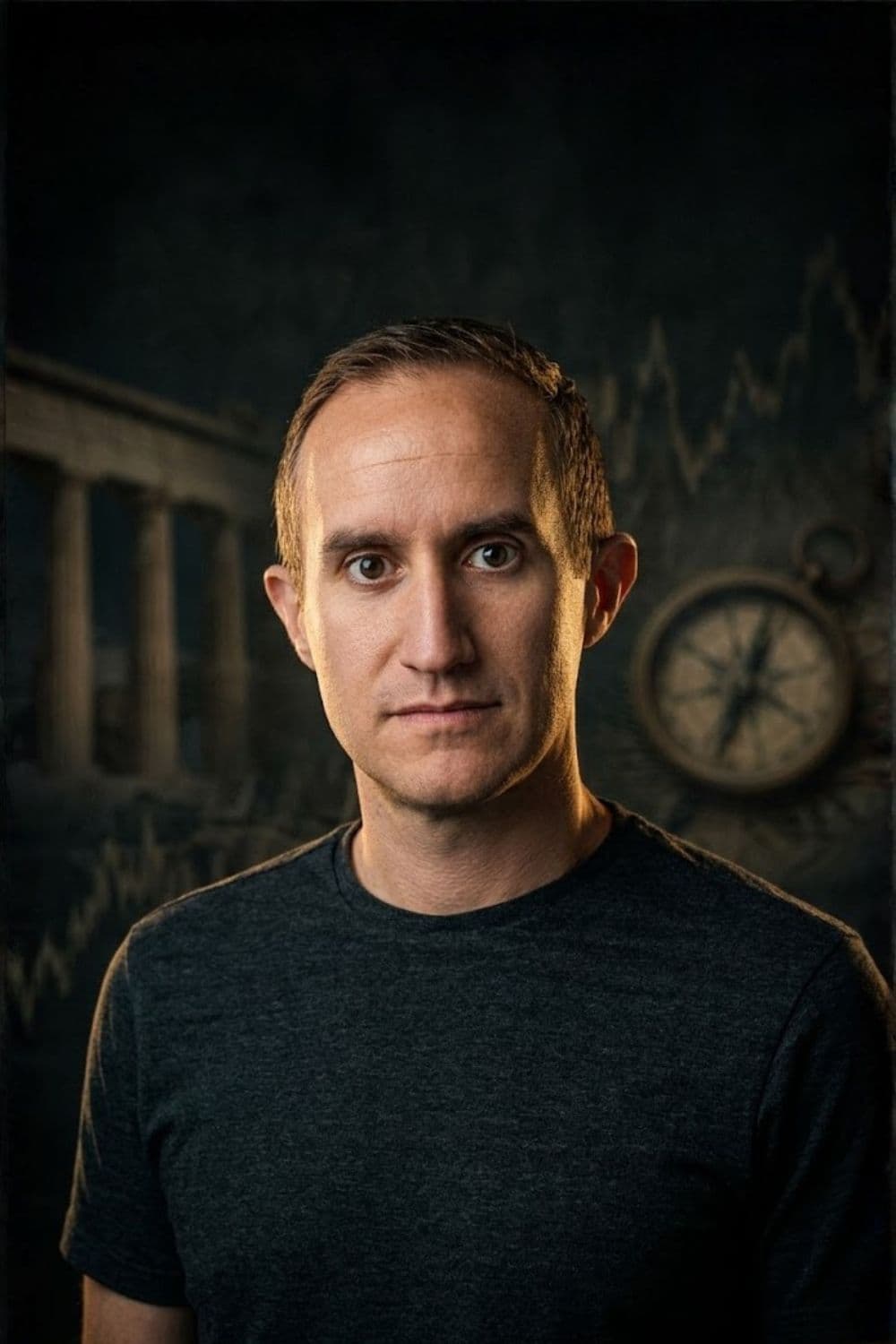
Morgan Housel
Human beings possess a deep desire for certainty in a probabilistic world. Because complex systems produce unpredictable outcomes, attempts to forecast the future with high precision consistently fail. Major historical shifts often result from minor, overlooked events snowballing into massive consequences. Therefore, investing effort in preparing for a wide range of outcomes yields better results than attempting to predict specific events.
Preparedness requires maintaining flexibility and creating buffers against unexpected shocks. When people construct flawless plans that account for every known variable, they leave themselves vulnerable to the unknown. The most dangerous risks are always the ones that nobody anticipates, because the lack of preparation amplifies their destructive impact.
Progress demands a seemingly contradictory mindset. You must pair a long-term belief that conditions will improve with a short-term paranoia that acknowledges constant threats. Pure optimism leads to reckless behavior and devastating disappointments when inevitable setbacks occur. Pure pessimism paralyzes action and prevents individuals from capturing compounding gains over time.
Survival requires blending these two mentalities. A successful financial strategy involves saving capital with deep pessimism while investing that same capital with confident optimism. Acknowledging that the path to a prosperous future involves a continuous chain of shocks, setbacks, and disappointments allows people to endure volatility without abandoning their long-term strategies.
Systems optimized for maximum efficiency eliminate all slack, creating systemic fragility. When a process operates without any margin for error, a single disruption causes the entire mechanism to collapse. Redundancy and inefficiency are not wasteful flaws but necessary survival mechanisms in an unpredictable environment.
Holding significant cash reserves during an economic boom appears inefficient and acts as a drag on portfolio returns. However, that same cash acts as vital oxygen during a market crash, preventing the forced liquidation of assets at depressed prices. True resilience requires absorbing short-term inefficiencies to guarantee long-term survival.
Compounding generates astonishing results over long periods, but it is fueled entirely by endurance. Most exceptional outcomes in investing, business, and personal growth derive their value from patience and scarcity. Because rapid scaling often breaks fragile systems, allowing assets and ideas to grow at their natural pace ensures ultimate sustainability.
Long-term success is not a smooth trajectory. It is merely a collection of brutal short-term periods that a person must survive. The primary obstacle to benefiting from compounding is the human tendency to interrupt the process during times of stress. Mastering the ability to sit through periods of market insanity allows individuals to capture the maximum mathematical benefit of time.
Rational analysis frequently loses to the most compelling story. People remember narratives rather than statistics, and a brilliantly told story will spark a revolution even if the underlying idea is fundamentally flawed. Understanding this dynamic prevents individuals from being manipulated by persuasive marketing and helps them communicate their own ideas more effectively.
Furthermore, financial and social incentives dictate human behavior more strongly than pure logic. The fear of social rejection or the promise of massive profits drives otherwise rational people to justify immoral or disastrous actions. Evaluating the underlying incentives of advisors, leaders, and peers provides the clearest window into predicting their future decisions.
Stress focuses human attention and eliminates procrastination. During periods of severe economic or existential crisis, urgency forces people to collaborate, discard bureaucratic hurdles, and pursue radical solutions. As a result, the darkest periods of history frequently plant the seeds for the most transformative technological and productivity breakthroughs.
Conversely, prolonged periods of calm and prosperity breed complacency. When systems remain stable for too long, individuals assume risk has disappeared and consequently take on dangerous levels of debt or operational leverage. This overconfidence guarantees that stability will eventually manufacture the next crisis.
Happiness and satisfaction are determined entirely by the distance between reality and expectations. If an individual's income and wealth increase dramatically but their expectations rise at the exact same rate, their level of satisfaction remains completely flat. The objective measurement of wealth matters far less than the subjective feeling of having enough.
Managing expectations requires the same active effort as increasing income. People often mistake envy for ambition, allowing the visible success of others to inflate their own baseline desires. Maintaining low or reasonable expectations guarantees a baseline of contentment and transforms positive surprises into immense joy.
Borrowed capital amplifies the speed of financial gains but introduces a catastrophic vulnerability. A leveraged portfolio cannot survive the routine volatility inherent in capitalist markets. When asset prices inevitably drop, margin calls force investors to sell at the worst possible moment, permanently destroying their capital base.
Foregoing leverage caps the speed of wealth accumulation but fundamentally guarantees survival. Since survival is the ultimate prerequisite for compounding, operating without debt is a mathematical necessity for long-term success. Protecting the downside entirely ensures that upside potential remains infinite over a lifetime.
Jump into the ideas before you finish the whole summary.