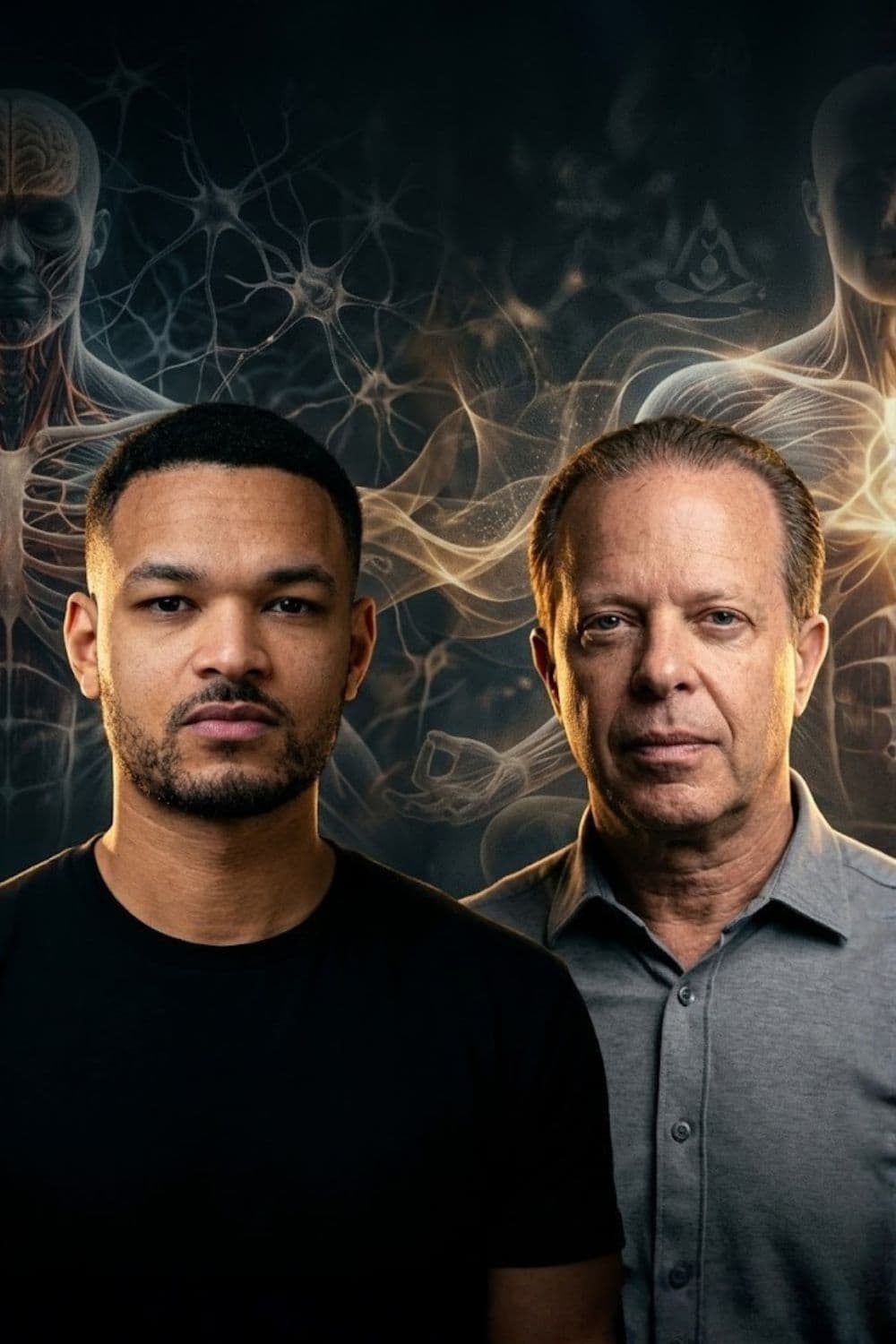
Steven Bartlett with Dr Joe Dispenza
By the time an individual reaches the age of thirty five, ninety five percent of their identity is a subconscious set of automated behaviors, emotional reactions, and hardwired beliefs. This biological programming means the body has literally learned how to live better than the conscious mind. When a person attempts to change their life using only conscious willpower, they are fighting an entire operating system dedicated to maintaining the familiar past.
The fundamental problem of human transformation is the habit of being oneself. Because the brain acts as a record of everything known, waking up and immediately engaging with familiar environments, people, and devices simply reminds the brain of who the person used to be. To enact genuine change, an individual must step outside this predictable loop and become intensely conscious of their unconscious thoughts, refusing to let them slip by unchecked.
Every thought produces a corresponding chemical reaction in the body. When individuals dwell on negative experiences or anticipate worst case scenarios, they continuously trigger the physiological fight or flight response. Over time, the rush of adrenal hormones associated with survival states like anger, fear, and resentment becomes deeply addictive. The body begins to crave the very chemistry that destroys its homeostasis.
Because of this chemical dependency, people often unconsciously seek out toxic relationships or miserable jobs to provide the necessary stimulus to feel their familiar emotions. They use the problems in their external environment to reaffirm their addiction to their internal state. To break this cycle requires enduring the profound discomfort of withdrawal, stepping into the biological uncertainty of the unknown without the chemical crutch of familiar suffering.
The foundation of cognitive change rests on the principle that nerve cells that fire together wire together. When an individual repeats the same choices and emotional patterns daily, they construct an impenetrable neurological network. Conversely, learning new information creates novel synaptic connections, adding fresh stitches into the gray matter of the brain.
Transformation is essentially an act of unlearning and relearning. It demands the conscious pruning of old synaptic connections and the deliberate sprouting of new ones. If a person does not continually review and mentally rehearse their new understanding, the newly formed circuits simply prune apart. Memory and habit dictate that it is always easier to forget a new paradigm than to sustain it, making relentless repetition the only way to install new neurological hardware.
Neuroscience reveals that a human brain cannot distinguish between a deeply imagined mental event and an actual physical experience. When a person vividly rehearses a future behavior or choice with absolute presence, the brain physically alters itself to reflect that the event has already occurred. This phenomenon allows individuals to prime their neural circuitry for a desired destiny before taking a single physical step.
By consistently simulating a future scenario, a person installs the necessary cognitive machinery to perform that action seamlessly when the real moment arrives. If an individual mentally maps out how they will respond to a difficult family member or a moment of temptation, their behaviors will eventually match their intentions automatically. The mental rehearsal essentially downloads the software of the new self into the body.
While thought is the vocabulary of the brain, feeling is the vocabulary of the body. Most people live in a conditional model of reality, waiting for an external event like wealth or health to trigger an internal feeling of success or wholeness. This reactive state locks the individual into a holding pattern where they remain victims of their environment.
True creation requires reversing this dynamic by feeling the emotion of a future event before the event actually materializes. By combining a clear intention with an elevated emotion like gratitude or joy, an individual chemically instructs their body to understand what their mind has intellectually conceived. When the body believes it is already living in the future reality, it drops its defensive posture and begins to align with that newly manufactured destiny.
To undergo genuine metamorphosis, an individual must become greater than their environment, greater than their physical body, and greater than time. The external environment is highly seductive, filled with neurological triggers that automatically associate specific people and places with old emotional states. The body itself rebels against change because it prefers the certainty of familiar misery over the unpredictability of a new reality.
Furthermore, individuals remain trapped by time when they constantly project the memories of the past onto the canvas of the future. The crossing of the river of change requires sitting in absolute stillness, disconnecting from the physical world, and bringing the mind into the pure present moment. Only by losing track of the physical self and the linear progression of time can a person enter the void where genuine biological and psychological rewriting becomes possible.
The analytical mind serves as a barrier separating the conscious mind from the subconscious operating system. When individuals try to force positive affirmations while fully alert in high arousal states, their body simply rejects the suggestions as falsehoods. The thoughts never penetrate past the brain stem because the analytical mind evaluates and blocks them based on current physical reality.
Meditation is the mechanical process of slowing down brain wave frequencies from highly alert states to more relaxed frequencies. By transitioning out of normal waking states, a person moves beyond their analytical defenses and enters the subconscious realm. In this highly suggestible state, the individual gains direct access to the source code of their identity, allowing them to rewrite the programs that govern ninety five percent of their behavior.
Living in a state of chronic stress forces the brain to operate in a highly compartmentalized and incoherent manner. As an individual frantically shifts their attention between various external problems, different modules of the brain fire out of order, creating a neurological lightning storm. This narrowed, obsessive focus drives the brain into erratic states of extreme arousal.
To counteract this fragmentation, one must practice divergent focus, which involves taking attention away from material objects and focusing instead on empty space. The act of sensing nothingness slows the brain waves and causes the previously divided compartments of the brain to synchronize. What synchronizes in the brain links in the brain, resulting in a profoundly holistic state of order and coherence that allows for a much clearer broadcast of intention.
The traditional biological model dictates that humans are beholden to their genetic code, but intentional emotional regulation proves that the body operates as its own inner pharmacy. When a person successfully maintains an elevated emotional state, they alter the chemical environment surrounding their cells. This new environment physically signals genes ahead of actual environmental changes.
Through this epigenetic mechanism, individuals can upregulate genes associated with health and downregulate genes linked to chronic disease. Measurable biological shifts occur within days, releasing thousands of new metabolic chemicals into the bloodstream without the introduction of any exogenous substances. By mastering their internal emotional state, an individual biologically relocates their physical body into a completely new life.
Beyond the limits of visible light and standard sensory input lies a vast spectrum of reality that the human brain typically filters out. However, specific latent systems within the brain, particularly a small gland located near its center, possess the capacity to access these invisible frequencies. This gland contains tiny crystal structures that can act as a radio receiver when properly activated by elevated states of consciousness.
Once this biological antenna begins to resonate, it transduces high frequency quantum information into profoundly vivid imagery and sensory experiences. The nervous system effectively generates its own endogenous psychoactive compounds, producing transcendental moments that challenge all prior conceptions of physical reality. These intense internal events permanently expand an individual's psychological paradigm, proving that human perception is capable of extending far beyond three-dimensional space.
The impact of neurological and cardiac coherence extends far beyond the boundaries of the individual human body. When large groups of people gather to meditate and purposefully elevate their emotional states, they create a measurable collective network of observers. This shared coherence begins to interfere with the physical environment itself, demonstrating that reality is not entirely random.
During these highly synchronized events, random event generators begin to behave with intentionality, and violent occurrences in surrounding populations dramatically decrease. It is not merely the sheer number of participants that alters reality, but the depth of their combined coherence. This phenomenon suggests that human consciousness, when organized and focused, possesses the architectural power to steer the timeline of a society.
Jump into the ideas before you finish the whole summary.