Charles Duhigg
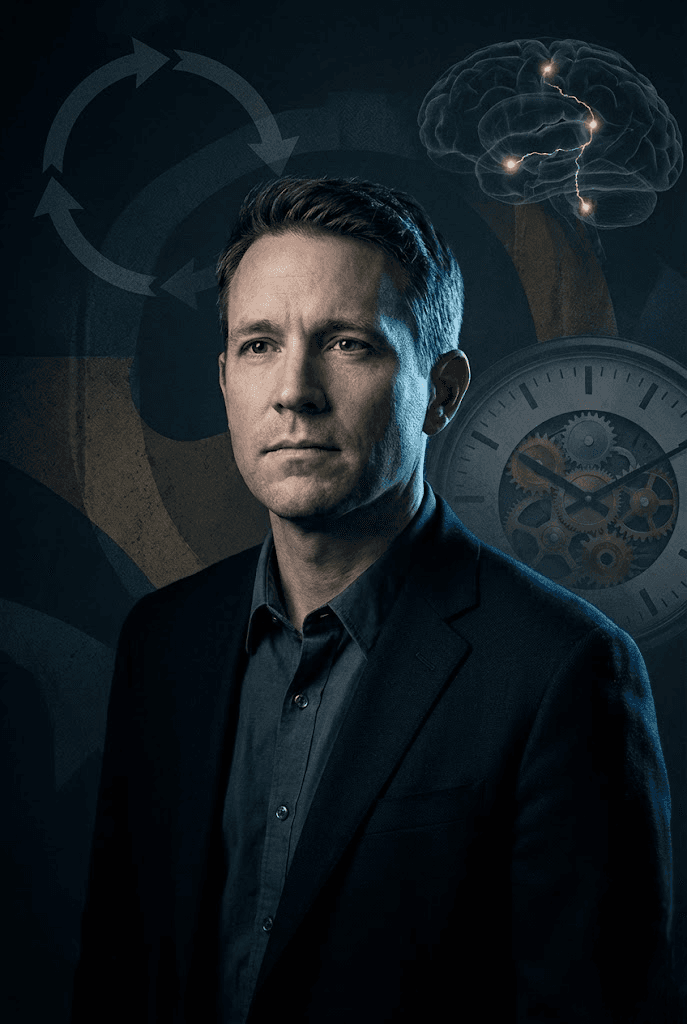
At the core of all automatic human behavior lies a three-step neurological process known as the habit loop. The cycle begins with a cue, which is an internal or external trigger that tells the brain to switch into an automatic mode. This cue prompts a routine, which can be a physical, cognitive, or emotional sequence of actions. Finally, the routine delivers a reward, a neurochemical payload that helps the brain determine whether this specific loop is worth remembering for the future.
As this loop repeats, mental activity in the basal ganglia actually decreases. The brain becomes more efficient by delegating complex behavioral sequences to unconscious automation. This physiological adaptation saves vital cognitive energy but also means that habits emerge and solidify without conscious permission.
A cue and a reward alone are insufficient to make a new behavior stick. For a habit loop to become fully entrenched, the cue must trigger a deep neurological craving for the reward. Over time, the brain begins to anticipate the reward before the routine is even completed. This creates a surge of dopamine simply upon encountering the cue.
If the anticipated reward is delayed or denied, the craving manifests as frustration or physical discomfort. This anticipation is the engine that drives the habit loop, compelling the brain into autopilot even when faced with strong logical disincentives to perform the routine.
Habits are never truly erased from the brain's structures, but they can be permanently overwritten. The most effective method for altering behavior is to respect the existing neurological pathways rather than fighting them. To change a habit, one must keep the old cue and deliver the old reward, but insert a new routine to satisfy the craving.
This requires a process of deliberate disaggregation. By breaking down a recurring behavior to isolate the exact environmental trigger and the specific underlying emotional or physical reward, a person can consciously design a substitute action. As long as the substitute routine responds to the same cue and satisfies the same craving, the brain will gradually adopt the new pathway.
While replacing a routine works in stable conditions, the newly engineered habit loop is highly vulnerable to stress. During moments of high anxiety or life disruption, individuals frequently regress to their original destructive routines. Sustaining habit change under pressure requires a fundamental belief that change is permanent and possible.
This necessary belief is rarely generated in isolation. It is cultivated most effectively within a group or community setting. Shared experiences and public commitments provide external social proof that reinforces internal resolve. When individuals see others succeeding, it builds the necessary psychological resilience to maintain new routines during high stress inflection points.
Not all habits possess the same leverage. Certain behaviors act as keystone habits, creating a chain reaction that remakes other, seemingly unrelated patterns across an individual's life or an entire organization. These habits work by providing small, continuous wins that construct a foundation of victory and momentum.
Changing a keystone habit alters the fundamental structures of a system. For an individual, establishing a daily exercise routine often naturally leads to better financial planning and healthier eating. For a corporation, prioritizing worker safety can inadvertently optimize manufacturing processes and increase overall profitability. The systemic shift occurs because the keystone habit reshapes the underlying culture and values of the entity.
Willpower is not a static personality trait or a mere act of resolve. It operates physiologically like a muscle, capable of being strengthened through consistent use but also subject to severe fatigue. When individuals exert high levels of self discipline in one area of their lives, they drain their finite daily reserve of willpower, making them highly susceptible to impulsive behavior in other areas.
However, by deliberately exercising self control in small, structured ways, individuals can increase their overall stamina. As the willpower muscle strengthens, this enhanced capacity spills over into every other domain, making it a critical driver of personal and professional success. Furthermore, willpower depletes much slower when an individual feels a sense of personal agency and autonomy over their choices.
The most successful applications of willpower do not rely on in the moment resistance. Instead, they rely on pre planned habit loops designed to activate exactly when self control is most likely to fail. These moments of high friction, stress, or temptation are known as inflection points.
By mapping out inflection points in advance, individuals and organizations can script specific routines to execute when pain or frustration arises. When an employee encounters an angry customer or a dieter faces a moment of extreme hunger, they do not have to expend cognitive energy deciding what to do. They simply follow a predetermined routine, effectively outsourcing their willpower to an automatic habit.
Corporations frequently present themselves as rational entities driven by logical decision making. In reality, firms operate almost entirely on institutional habits. These organizational routines act as a collective memory, allowing hundreds or thousands of employees to coordinate complex actions without requiring constant executive direction.
While these routines provide necessary efficiency and reduce internal uncertainty, they often grow haphazardly out of rivalries, fear, or historical accidents. Over time, these unwritten rules create informal truces between competing departments. If left unexamined, these truces can cement toxic behaviors that prioritize bureaucratic peace over safety and effectiveness.
When organizational habits become toxic, they are notoriously difficult to dismantle because of the entrenched truces that protect them. It typically requires a severe crisis, or the acute perception of one, to suspend these unspoken agreements and create the momentum necessary for change.
During a crisis, the standard operational rigidities dissolve. Leaders can leverage this period of instability to implement new keystone habits and restructure reporting lines. By deliberately utilizing the turmoil of a disaster or failure, management can establish a new cultural baseline that would have been fiercely resisted during a period of stability.
Because habits dictate a vast majority of daily actions, external entities can track these automated behaviors to predict deeply personal life events. Retailers and data analysts identify subtle shifts in routine purchasing patterns to pinpoint moments of life disruption, such as pregnancy, when long standing loyalties are most vulnerable to change.
To exploit these windows without triggering consumer alarm, organizations use the familiarity loop. They disguise entirely new behavioral prompts by sandwiching them between highly recognizable and comforting cues. By dressing a novel routine in old, familiar clothes, marketers bypass conscious resistance and seamlessly integrate new products into an individual's existing habit loops.
Widespread social change does not happen spontaneously. It follows a distinct architectural progression based on shifting social habits. A movement typically ignites through the strong ties of personal friendship, where individuals take action to support someone they know and respect.
For the movement to expand beyond a single neighborhood, it must engage the weak ties of the broader community. This expansion is driven by the social habits of peer pressure and communal obligation, making it socially costly for individuals to opt out. Finally, for the movement to endure, leaders must instill new habits of identity, transforming participants from passive followers into self directing agents of the cause.
The discovery of the basal ganglia's role in automated behavior raises profound questions regarding free will and culpability. Advanced neurological imaging shows that deeply ingrained habits, such as pathological gambling or sleepwalking, can completely bypass the brain's decision making centers. These central pattern generators can execute complex actions without conscious intent.
Despite this powerful neurological automation, the fundamental argument remains that humans are ultimately responsible for their actions. Once an individual understands how the habit loop operates, they acquire the agency to isolate their cues and redesign their routines. The awareness of the mechanism removes the excuse of biological inevitability, making the remaking of one's habits a deliberate moral responsibility.
Jump into the ideas before you finish the whole summary.