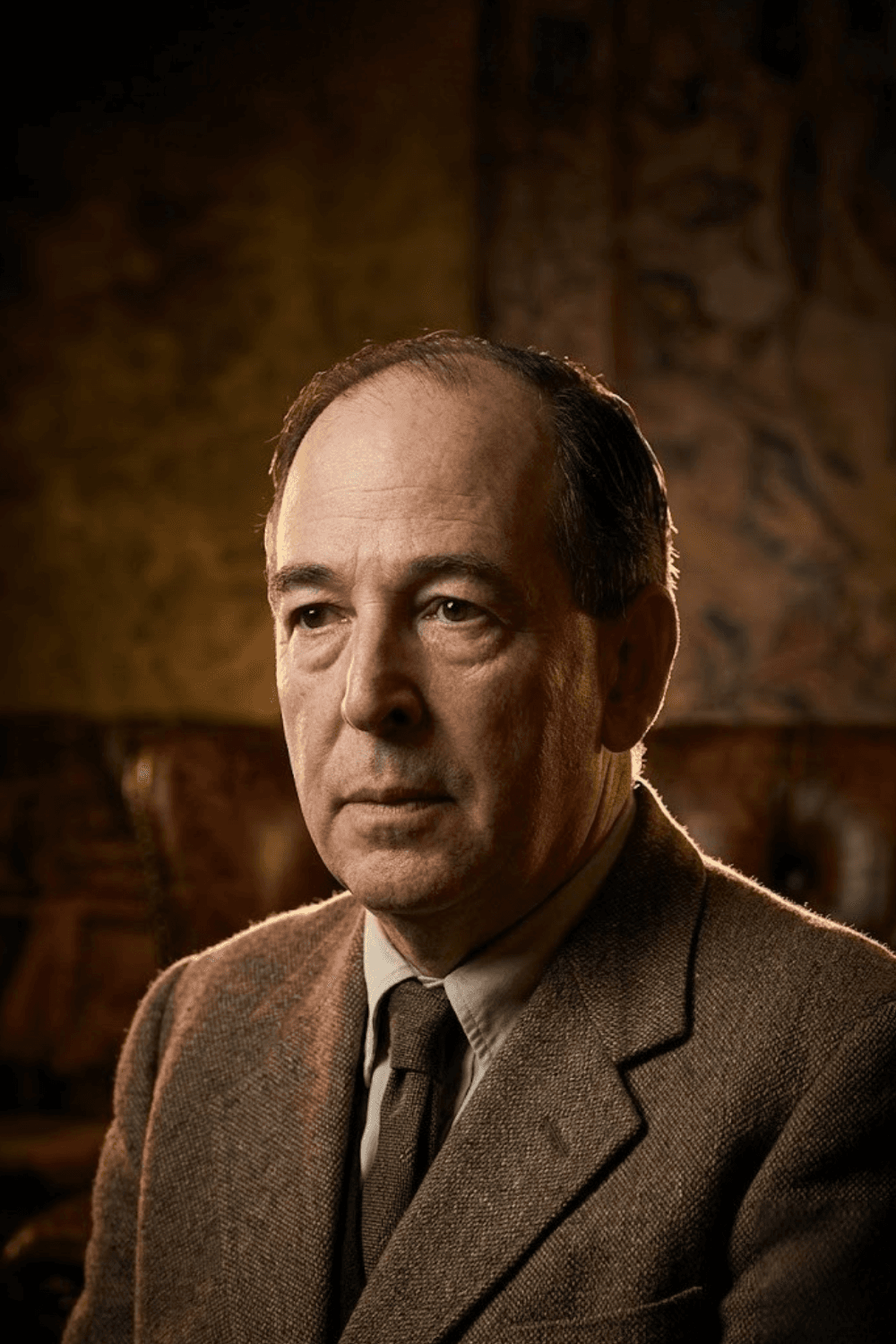
C.S. Lewis
At the foundation of human civilization lies a universal belief system that recognizes an inherent, objective order to the universe. This concept, broadly termed the Tao, asserts that objects and situations do not merely receive our emotional reactions but intrinsically merit specific responses. A beautiful waterfall demands awe, just as a courageous act merits veneration. Under this paradigm, emotions are not irrational or purely subjective preferences but cognitive responses that can be judged as congruent or incongruent with reality.
To live within the Tao is to accept that certain attitudes are objectively true to the nature of the universe. Education, therefore, is not merely the transfer of data but the cultivation of ordinate affections. The goal of the ancient philosophers was to train the young to feel pleasure, liking, disgust, and hatred for the things that genuinely deserve those responses, harmonizing the internal emotional state with external objective truth.
Modern educational philosophies increasingly reject the doctrine of objective value, favoring a subtle indoctrination into moral subjectivism. By teaching that all statements of value are merely expressions of the speaker's emotional state, modern educators inadvertently strip the world of intrinsic worth. When a student learns that calling a landscape sublime only describes their own feelings, they internalize the assumption that all values are relative, trivial, and devoid of objective authority.
This approach aims to protect students from the sway of emotional propaganda by fortifying their minds with cold rationality. However, starving the sensibility of students does not make them critical thinkers. Instead, it creates a vacuum of apathy and cynicism, leaving them defenseless against manipulation. The true defense against false sentiment is not the eradication of emotion, but the deliberate cultivation of just sentiments.
Human nature operates through a tripartite architecture consisting of the intellect, the animal appetites, and the organizing center of trained emotions. The intellect alone is powerless to govern the visceral urges of the biological organism. Rational knowledge of right and wrong requires a corresponding desire in the heart to translate thought into ethical action.
The chest serves as the indispensable liaison officer between the cerebral and the visceral. By organizing emotions into stable, trained habits, the chest allows the rational head to rule the appetites of the belly. It is precisely this middle element of ordinate affection that distinguishes humans from pure spirits or mere animals. Without the mediation of the chest, rational ethics collapse under the weight of biological instinct.
When a culture aggressively debunks objective virtue and abandons the education of the sentiments, it produces human beings devoid of the very mechanism required for moral courage. By severing the link between reason and emotion, society creates individuals lacking the stable sentiments needed to resist baser impulses. These individuals are expected to exhibit honor, enterprise, and virtue, yet they have been systematically deprived of the emotional architecture that makes such qualities possible.
The resulting societal paradox is tragic and absurd. A culture built on moral relativism clamors for the very virtues it actively destroys, demanding function after removing the organ. The absence of the chest does not produce a more evolved or rational being. Instead, it yields a creature whose intellect is no larger than normal, but whose capacity for noble action has entirely withered.
Those who attempt to dismantle traditional morality inevitably smuggle in their own absolute values to justify their new ethical systems. The modern innovator uses skepticism as a weapon against the Tao while shielding their own ideological goals from the same critical scrutiny. They claim that values are subjective, yet they dogmatically demand sacrifices for the sake of progress, efficiency, or societal preservation.
Attempts to ground this new morality in utilitarianism or biological instinct quickly collapse. Utilitarianism demands that individuals act for the collective good, but without an objective moral law, there is no rational reason why one person ought to sacrifice their own happiness for another. Similarly, relying on instinct fails because human instincts constantly war against one another. To elevate the instinct of herd preservation over the instinct of self preservation requires an external standard of judgment, a standard that instinct itself cannot provide.
The Tao is not simply one value system among many, but the sole source of all value judgments. Every attempt to invent a fundamentally new morality is an illusion. Any new ethical framework is inevitably constructed from fragmented, isolated precepts torn from the Tao and arbitrarily elevated above the rest. The human mind lacks the capacity to invent a genuinely new primary value, just as it cannot invent a new primary color.
Because the Tao is the axiomatic foundation of all practical reason, it cannot be rejected in part. To attack one aspect of the Tao always requires standing on another part of it. True moral progress is possible, but it must occur from within the tradition itself, driven by those who understand and submit to its underlying spirit. Stepping outside the Tao completely leaves a void where no moral argument can be made.
The modern narrative of humanity conquering nature conceals a darker reality regarding the distribution of power. Every technological advancement that appears to increase human mastery over the natural world is, in practice, a transfer of power. Airplanes, radios, and applied genetics are not merely tools of human empowerment, they are instruments by which some human beings exercise control over others.
When viewed across generations, this conquest becomes even more asymmetrical. Each age that alters human nature weakens the generations that follow. By using scientific conditioning to preordain how future populations will think and behave, an earlier generation turns its descendants into patients rather than heirs. The ultimate triumph over nature does not empower the human race universally but consolidates total control into the hands of a microscopic elite.
In previous eras, educators sought to initiate the young into an overarching moral reality to which both teacher and student were equally subject. The modern era introduces the Conditioner, an architect of human nature who operates outside the boundaries of objective value. For the Conditioner, the ultimate springs of human action are no longer sacred mysteries to be respected, but natural phenomena to be manipulated.
This shift transforms moral instruction into mere propaganda. The Conditioner does not transmit humanity like an older bird teaching a younger bird to fly. Instead, the Conditioner approaches the student as a poultry keeper approaches a flock, shaping the raw material of human minds to serve purposes the subjects cannot comprehend. Freed from the Tao, these planners decide what kind of conscience they will manufacture, treating human values as artifacts of applied psychology.
Once the Conditioners emancipate themselves from all traditional values, they face a paralyzing dilemma. Having debunked the concepts of good and duty, they have no rational foundation upon which to base their conditioning. They assume the godlike role of choosing humanity's destiny, yet they possess no motive to choose one path over another, save for their own arbitrary, natural impulses.
This absolute freedom results in the total erasure of their humanity. Good and bad become meaningless concepts to the Conditioners, as they themselves are the source from which those words now derive their meaning. By stepping completely outside the Tao, they do not transcend human nature, they step into a void. The subjects they manipulate are reduced to mere artifacts, marking the complete abolition of humanity as a moral species.
The final stage of this conquest reveals a profound and tragic irony. By reducing human beings to raw material to be scientifically manipulated, the Conditioners submit themselves entirely to the irrational forces of mere nature. Stripped of objective moral values, their actions are driven solely by their own biological and psychological appetites.
This transaction mirrors the ancient pact of the magician, surrendering the soul in exchange for power. In their attempt to subdue reality to their own wishes, the Conditioners treat humanity as a natural object, only to find themselves ruled by unrestrained natural impulses. The quest to conquer nature culminates in nature's total conquest of man, leaving the human species governed by the very blind forces it mistakenly believed it had mastered.
Jump into the ideas before you finish the whole summary.