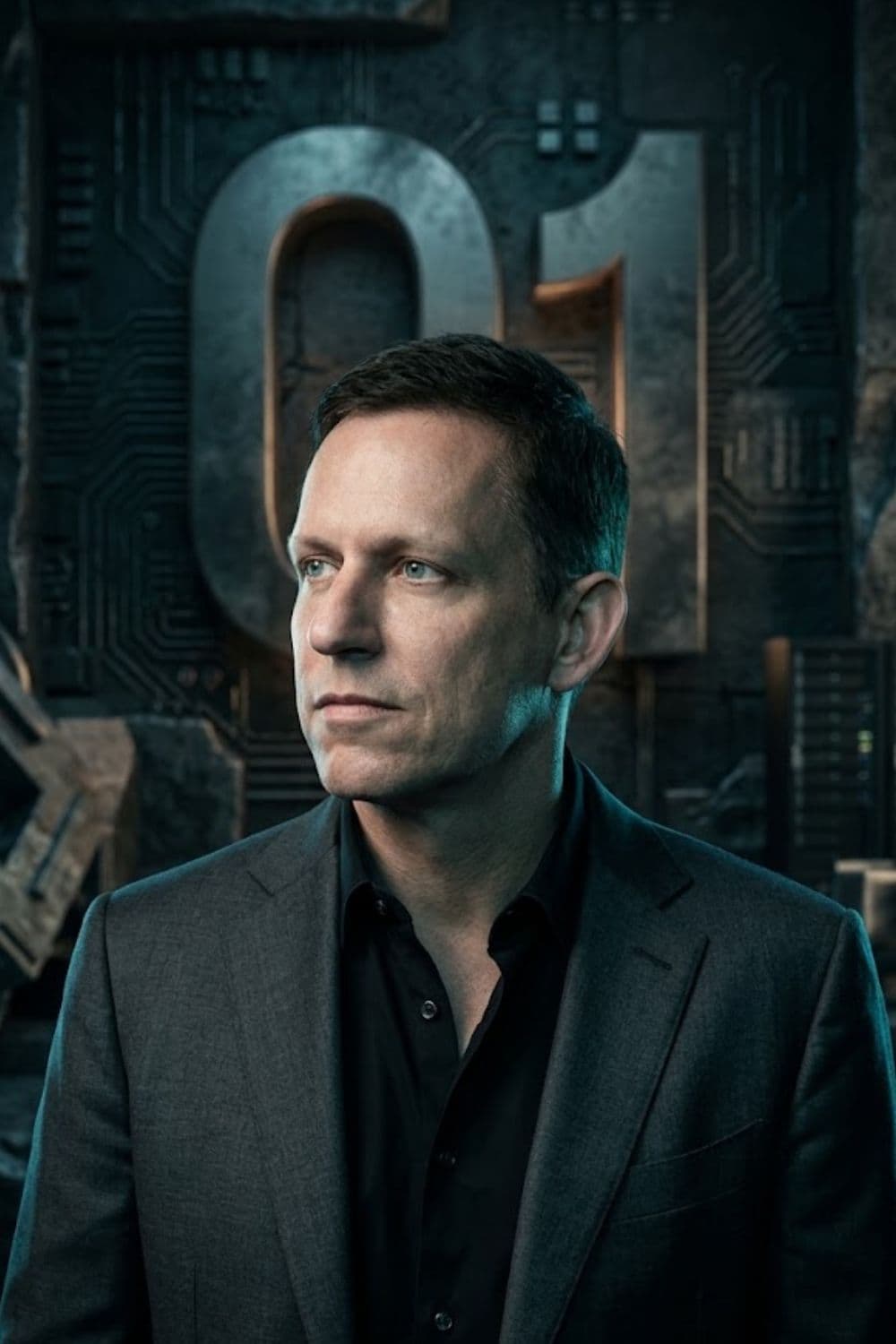
Peter Thiel
True innovation requires identifying an important truth that very few people agree upon. Progress takes two distinct forms. Horizontal progress involves copying things that already work, taking the world from one to many through globalization. Vertical progress requires doing entirely new things, moving from zero to one through the creation of technology.
Because vertical progress creates something that has never existed before, it is inherently difficult to imagine and execute. A society cannot rely endlessly on horizontal scaling without eventually facing resource depletion and intense competition. Only by prioritizing the creation of entirely new technologies can humanity escape the zero sum battles of globalization and achieve lasting prosperity.
The aftermath of historical market crashes left the business world traumatized, leading to a dogmatic embrace of cautious, incremental advancement. Companies are taught to stay lean, rely on minimum viable products, and iterate their way to success based entirely on continuous customer feedback. This methodology treats the future as fundamentally unknowable and substitutes genuine vision with agnostic experimentation.
Iteration without a bold plan traps a company in local maximums, optimizing existing models but failing to uncover breakthroughs. Extreme reliance on customer feedback often acts as a vision killer, discouraging founders from pursuing radical innovations that the market does not yet understand. Instead of treating business as a series of random mutations, true progress requires intelligent design and a commitment to risky, visionary planning.
Conventional economic theory treats perfect competition as the ideal state of the market, yet capitalism and competition are functional opposites. In a perfectly competitive environment, undifferentiated businesses fight for survival and drive profit margins down to zero, leaving no resources for future planning. Companies that create lasting value escape this trap by establishing a creative monopoly.
By doing something so uniquely well that no other firm can offer a close substitute, a monopoly gains the power to set prices and accumulate capital. These outsized profits are not extracted through artificial scarcity but earned by introducing entirely new categories of abundance. This allows the monopolistic company to transcend the daily struggle for survival and invest heavily in long term research and further innovation.
A durable monopoly is built upon a combination of four distinct structural advantages. Proprietary technology is the most substantive, requiring an invention to be at least ten times better than its closest substitute to effectively eliminate competition. Network effects make a product increasingly valuable as more people use it, though they require a highly engaged initial user base in a very small market to ignite properly.
Economies of scale allow a business to grow stronger as it expands, spreading fixed costs over vastly larger quantities of sales. This is especially potent in software, where the marginal cost of producing an additional copy is near zero. Finally, a powerful brand establishes a strong psychological moat, provided it is backed by actual technological superiority rather than mere marketing aesthetics.
Attempting to capture a fraction of a massive market is a common strategic error that leads to heavy competition. The correct approach is to identify a small, highly concentrated niche market and monopolize it completely. Once a startup dominates this initial demographic, it can systematically expand into adjacent and slightly broader markets.
This sequencing requires immense discipline and a rejection of the popular desire to disrupt powerful incumbents. Framing a business as a disruptor anchors its identity to existing competitors and older paradigms. A true zero to one company avoids unnecessary battles and focuses entirely on the act of new creation.
Individuals and societies view the future through the lens of either optimism or pessimism, and they treat it as either definite or indefinite. The modern world is paralyzed by indefinite optimism, a state where people believe the future will be better but have no specific idea how, leading them to blindly accumulate optionality and diversified skills.
Great companies are built on definite optimism, which demands that founders determine the single best thing to do and execute a firm, concrete plan to achieve it. Success is not a lottery ticket drawn from a patchwork of lucky breaks. It is the deliberate result of exerting intelligent agency over the world.
The universe does not distribute outcomes normally, yet the business world continuously acts as if it does. In venture capital and startup creation, outcomes follow a steep power law where a tiny handful of companies radically outperform all others combined. Investors who try to mitigate risk by assembling broadly diversified portfolios of mediocre companies undermine their own results, because the few exponential winners will account for nearly all the returns.
This principle dictates that an entrepreneur must focus relentlessly on an endeavor that has the potential to scale exponentially. Differences in scale between exponential companies will completely dwarf differences in daily operational execution. Because an individual cannot diversify their own life or career, they must rigorously evaluate whether their chosen path holds the potential for power law returns.
If all fundamental truths have already been discovered, no new zero to one companies can be built. Opportunities exist precisely because the world is still full of secrets, which divide into natural secrets hidden in the physical world and human secrets that people actively conceal or fail to recognize.
Extreme incrementalism, risk aversion, and the assumption of a flat world convince most people that no hard problems are left to solve. Finding a valuable secret requires looking where no one else is looking and questioning the conventional wisdom that defines everyday life. A great startup is essentially a group formed around a shared secret that the rest of the world has not yet grasped.
A company with a flawed foundation cannot be repaired later. The earliest decisions regarding cofounders, corporate structure, and the allocation of equity dictate whether a startup will survive internal pressures. Misalignment is avoided by cleanly separating ownership, possession, and control, ensuring that employees, managers, and board members are structurally committed to long term value creation.
A cohesive culture does not emerge from superficial office perks but from a tribe of similar minded people fiercely dedicated to a singular mission. Assigning every individual a single, unique responsibility eliminates internal competition. This structural clarity forces the team to focus their energies on the outside world rather than on each other.
Engineers frequently suffer from the delusion that a superior product will magically sell itself without targeted distribution. In reality, sales is a fundamental component of product design, operating on a spectrum from complex, multimillion dollar deals handled directly by the executive team to viral marketing loops driven by consumer invites.
Distribution channels themselves follow a power law, meaning a company only needs one highly effective channel to succeed, but will fail if it tries to execute many poorly. The most masterful sales efforts are completely invisible to the target, embedding subtle impressions that shape purchasing behavior without the buyer ever feeling sold.
The fear that computers will inevitably replace human labor stems from confusing technology with globalization. While human workers in different countries can substitute for one another, computers possess fundamentally different capabilities than humans. Machines excel at processing vast amounts of data but lack intentionality and complex judgment, whereas humans possess acute situational judgment but struggle with massive data computation.
The most valuable businesses of the future will not attempt to automate humans out of existence. Instead, they will build symbiotic systems where advanced computing empowers human professionals to solve previously intractable problems. True technological progress leverages machines as complements to human intelligence rather than as direct substitutes.
Any venture attempting to build the future must affirmatively answer seven critical questions regarding its fundamental viability. A business must possess breakthrough engineering, optimize the timing of its launch, monopolize a specific market, assemble the right team, master its distribution channels, ensure durability over decades, and build upon a unique secret.
Entire industries can fail when entrepreneurs rely on macroeconomic trends and social goodwill rather than securing concrete advantages across these seven vectors. Exaggerating uniqueness or failing to achieve an order of magnitude improvement in engineering weakens the foundation of the business. Answering all seven well strengthens a company's odds of durable growth.
The personalities of successful founders do not map to a normal distribution but instead exist at the extremes of human behavior, often combining contradictory traits like extreme insider influence with profound outsider alienation. This paradox serves an important corporate function, allowing the founder to act as a unifying figurehead who can make authoritative, long term decisions that impersonal bureaucracies avoid.
However, this dynamic also positions the founder as a potential scapegoat when things go wrong. A truly effective leader embraces their unique capacity to inspire the best work from their team while remaining cautious not to fall victim to their own manufactured myth. The greatest danger is losing touch with reality, but the founder's role remains vital in pushing a company toward a distinctive future.
Jump into the ideas before you finish the whole summary.