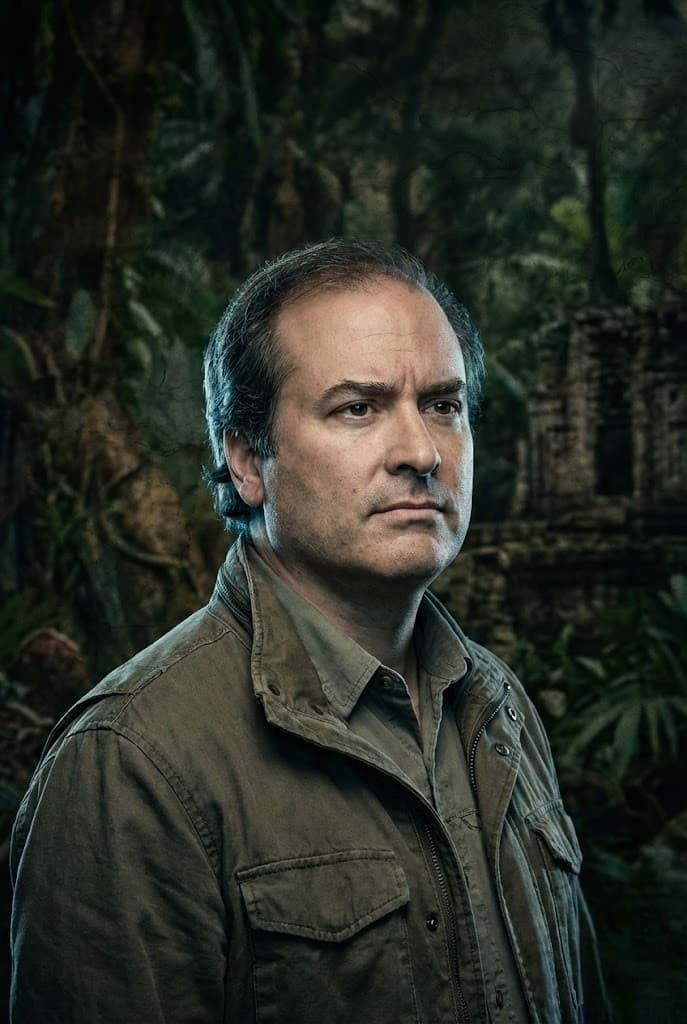
David Grann
The narrative operates on a parallel timeline, intertwining historical biography with modern journalistic investigation. It mirrors the obsession of the original explorer with the obsessive quest of the author striving to uncover his fate. This structure reveals how the allure of the unknown transcends time, as the author abandons his comfortable life to retrace a century-old path into the jungle. By tracking both the historical expeditions and the contemporary search, the text demonstrates that the pursuit of hidden knowledge is a recurring human compulsion. The author's journey acts as a modern lens through which the reader experiences the same disorientation, bureaucratic hurdles, and physical exhaustion that plagued the original explorer.
A central intellectual tension in the story is the conflict between the explorer's theories and the prevailing scientific consensus of his era. The academic establishment viewed the Amazon basin as an environment fundamentally hostile to complex human development. Experts argued that the heavy rains and poor soil made large-scale agriculture impossible, effectively capping the potential of any indigenous population. In this view, the jungle could only ever support small, nomadic tribes of hunter-gatherers. To suggest that a sprawling, sophisticated civilization once thrived in the Amazon was considered heresy, framing the explorer as a radical dissenting against the rigid geographical and anthropological orthodoxies of his time.
The theoretical framework for the hidden civilization was not born from a single revelation but constructed slowly from disparate pieces of evidence. The explorer combined physical artifacts like ancient pottery shards found in elevated earthen mounds with indigenous oral histories describing ruined settlements deep in the forest. He layered these contemporary discoveries over obscure colonial documents, most notably an eighteenth-century manuscript detailing a wandering fortune hunter's encounter with a monumental stone city. By treating these fragments as interconnected clues rather than isolated anomalies, the explorer built a cohesive, though heavily romanticized, geographical hypothesis that demanded physical verification.
Beyond empirical geography, the quest was profoundly shaped by esoteric spiritual beliefs. The explorer was deeply influenced by the burgeoning occult movements of the early twentieth century, particularly those seeking a unified origin for human spiritual wisdom. He began to interpret his physical findings through a mystical lens, associating the hidden city with lost continents and ancient, enlightened races. This spiritual dimension transformed the expedition from a mere cartographic survey into a holy pilgrimage. The city ceased to be just an archaeological site and became the cradle of all human civilization, a sacred space whose discovery would alter the spiritual understanding of the world.
The psychological drive behind the expeditions intensified as a direct reaction to the horrors of the First World War. Witnessing the mechanized slaughter of millions shattered the explorer's belief in the inherent superiority of European civilization. The brutality of the trenches cast the Western world as a degenerate, insane society, prompting a deep psychological need for an alternative model of human existence. The lost city became a utopian projection, an idealized counterpoint to the failures of the modern age. Returning to the jungle was no longer just about mapping borders; it was an escape from a ruined continent and a desperate search for a pure, uncorrupted society.
The search for a hidden civilization presents a unique psychological trap, operating as a strictly non-falsifiable hypothesis. In the logic of the believer, failing to find the city does not prove it is a myth; it merely proves that the searchers have not looked in the correct location. Every failed expedition and empty stretch of jungle only confirms the city's elusive nature and deepens its mystique. This intellectual framework insulates the explorer from doubt. The profound isolation of the wilderness allows individuals to project their deepest desires onto the blank spaces of the map, ensuring that the quest can consume an entire lifetime without ever facing definitive refutation.
The narrative meticulously strips away the romantic veneer of adventure by detailing the absolute hostility of the Amazonian environment. The explorers are subjected to a relentless biological assault from disease-carrying mosquitoes, flesh-eating insects, and venomous wildlife. Starvation is a constant threat in a forest teeming with life but devoid of accessible calories for outsiders. This environment enforces a strict egalitarianism, breaking down the rigid class structures of the Victorian expeditions. Survival depends not on social pedigree or military rank, but on physical endurance, adaptability, and the willingness to abandon civilized norms in the face of agonizing deprivation.
The explorer's relationship with the indigenous populations reveals a complex tension between progressive respect and ingrained racial prejudice. Unlike many contemporaries who relied on violence and subjugation, he approached native tribes with relative diplomacy, learning their languages and trusting their knowledge of the terrain. However, this respect was severely limited by the era's racial hierarchies. He remained convinced that the dark-skinned inhabitants of the jungle were incapable of engineering the monumental ruins he sought. Consequently, he attributed the hypothetical city to a lost, lighter-skinned race, demonstrating how colonial biases distorted his otherwise groundbreaking ethnographic observations.
The central mystery of the explorer's disappearance acts as a psychological virus, infecting generations of subsequent adventurers. The void left by his vanishing created an irresistible narrative gravity that drew hundreds of followers into the exact same deadly environment. These rescue missions and copycat expeditions were rarely driven by pure scientific inquiry; they were fueled by the romantic myth of the original explorer and the intoxicating promise of uncovering hidden truths. The text illustrates how an unresolved mystery can paralyze rationality, transforming a cautionary tale of starvation and death into an alluring invitation for future tragedy.
The final conceptual stage bridges the gap between historical myth and modern science. Decades after the fatal expedition, contemporary archaeologists uncovered extensive networks of pre-Columbian settlements, complete with defensive ditches, causeways, and engineered agricultural landscapes. These discoveries proved that the Amazon once supported massive, sophisticated populations. While the original explorer did not find a glittering city of gold, his core hypothesis regarding the jungle's capacity to sustain complex civilizations was ultimately validated. The true hidden city was not built of stone to rival European capitals, but was an organic, highly engineered society intricately adapted to the rainforest.
Jump into the ideas before you finish the whole summary.