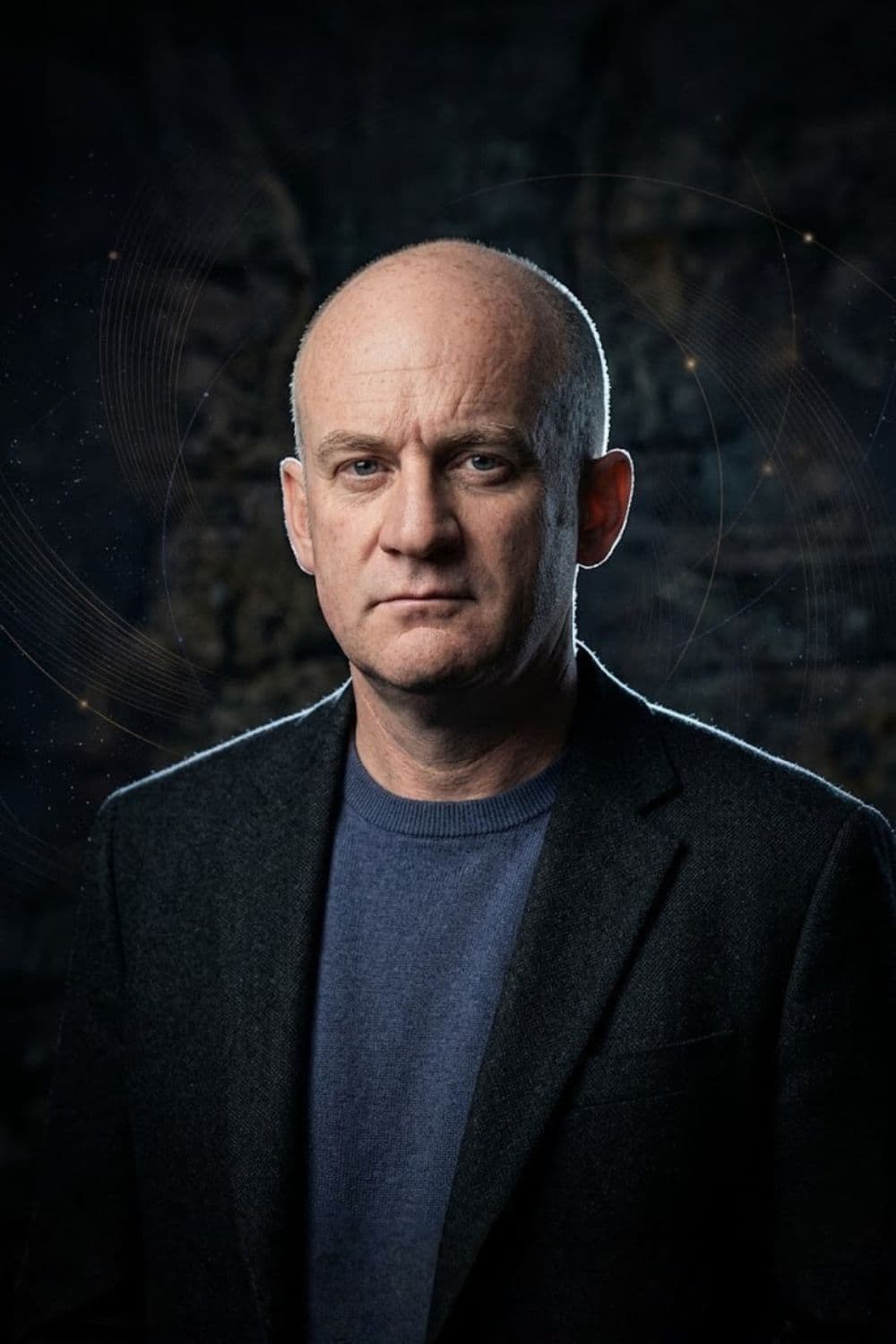
Oliver Burkeman
The modern approach to time management operates on a hidden and destructive premise. It assumes that with enough discipline, the right habits, or the perfect system, a person can eventually get on top of everything. This creates a relentless forward-looking orientation where the present is treated merely as a stepping stone to a future state of total control. People spend their days attempting to clear the decks, believing that once the emails are answered and the tasks are sorted, the real and meaningful part of life will finally begin.
This future state of perfect control never arrives. The attempt to master time is a rigged game that guarantees chronic anxiety. Because the supply of potential demands, experiences, and obligations is infinite, while human time is strictly finite, the math of getting everything done simply does not work. Acknowledging this mathematical impossibility is not a defeat but a necessary baseline for engaging with reality.
When individuals become more efficient at processing tasks, they do not gain free time. Instead, they attract more demands. This is the efficiency trap. If a worker streamlines their process for answering emails, the immediate result is a higher volume of replies generating even more emails. The system of demands expands to consume whatever capacity is made available, much like a conveyor belt that speeds up the faster you clear items off it.
Furthermore, this trap degrades the quality of a life. The harder someone struggles to fit everything in, the more time they end up spending on trivial or less meaningful items. Because smaller, easier tasks can be processed quickly, they provide a false sense of progress. Meanwhile, complex and deeply important projects are continually deferred because they require a level of focus and unhurried time that the hyper-efficient mind feels it can no longer afford.
At its core, the obsession with optimizing time is an emotional avoidance strategy. Confronting the brevity of a human lifespan of roughly four thousand weeks is psychologically painful. It requires acknowledging that tough choices are mandatory, that countless potential lives will never be lived, and that human control over the universe is agonizingly small.
To avoid this pain, people retreat into the fantasy of limitless potential. They take on impossible workloads or endlessly prepare for the future, subconsciously believing that if they just move fast enough, they can outrun their mortality and their limitations. Accepting finitude means abandoning the comforting illusion of omnipotence and stepping fully into the constraints of being human.
Since it is impossible to complete everything of value, procrastination is not a flaw to be eradicated but a permanent condition to be managed. The goal shifts from trying to do it all to consciously choosing which tasks to neglect. The true measure of any time management philosophy is whether it helps an individual ignore the right things.
This dynamic is best illustrated by the strategy of separating top priorities from middling ones. If a person identifies their top twenty-five goals, the first five are the clear focus. The remaining twenty are not secondary tasks to be squeezed in during free moments. They are active threats. These middling priorities are important enough to be seductive, but not important enough to constitute a life's core work. They must be actively avoided at all costs to protect the primary objectives.
Modern culture treats settling as a failure, urging people to keep their options open in careers, relationships, and experiences. However, preserving infinite possibilities directly prevents anyone from extracting depth or meaning from actual life. Meaning is generated entirely by the act of choosing one path and permanently closing off others.
Living life to the fullest requires settling. A person cannot master a craft or build a profound relationship without forgoing the imaginary rewards of countless alternative choices. Missing out on the vast majority of what the world offers is fundamentally guaranteed. Recognizing this transforms the fear of missing out into the joy of missing out, where the deliberate sacrifice of alternatives gives weight and substance to the chosen path.
Digital devices and notifications are widely blamed for fracturing human attention, but they are only the secondary cause. The primary cause of distraction is the internal discomfort of facing a limitation. When a person sits down to work on something deeply important, they are immediately confronted by their lack of control, the possibility of failure, and the difficult reality of their own constraints.
This encounter with finitude triggers acute psychological friction. To escape this friction, the mind actively seeks out interruptions. Distractions provide temporary emotional relief from the painful encounter with limits. To cultivate deep focus, one must not merely block websites but learn to tolerate the anxiety and boredom that arise when attempting to do meaningful work.
The industrial revolution conditioned humanity to view time as a raw resource, much like coal or iron, which must be extracted and utilized for maximum future profit. Under this paradigm, time has no inherent value. Its worth is judged solely by the results it produces down the line. This instrumentalization drains the present moment of all joy and presence.
When every hour is evaluated by its future utility, life becomes a frantic sequence of preparations. Even leisure and rest are corrupted by this mindset. People take vacations specifically to recharge for work, or they optimize their hobbies for self improvement. The present is constantly sacrificed on the altar of an imaginary, optimized future.
To reclaim the present, individuals must engage in atelic activities. These are pursuits that have no ultimate aim, no future payoff, and no metric for success. Taking a walk without a destination, listening to music, or dedicating an afternoon to a completely unproductive hobby are forms of rebellion against the capitalist pressure to instrumentalize every waking moment.
Spending time wastefully, focused entirely on the pleasure of the experience itself, is the only way to avoid wasting a life. If time is only ever used as a tool to get somewhere else, the person never actually inhabits the life they are currently living.
A world obsessed with speed inherently devalues processes that require slow, sustained maturation. The modern disease of accelerated living demands immediate resolution, viewing any delay or friction as a defect. In contrast, true originality and deep accomplishment belong to those who cultivate patience and develop a taste for having problems.
This requires adopting radical incrementalism. Instead of attempting heroic, exhausting bursts of effort to clear a project out of the way, one must learn to work on it for a modest, predetermined amount of time each day, and then possess the discipline to stop. Stopping when the time is up preserves energy and prevents the work from consuming the rest of life, making long term creation sustainable.
The contemporary ideal of time management heavily favors individual time sovereignty. People strive for ultimate control over their own schedules, seeking to free themselves from the demands of others. Yet, time is not merely a personal resource; it is a networked good that derives its highest value from synchronization with a community.
Total control over one's schedule often leads to profound isolation. The deepest human experiences, from collaborative work to communal celebration, require surrendering personal sovereignty to fall in line with the rhythms of others. True freedom involves trading some individual flexibility for the friction and reward of shared time.
Modern individuals frequently suffer from the oppressive expectation that they must do something remarkable with their lives. They judge their daily actions against an abstract standard of historical or cosmic significance, inevitably finding their efforts inadequate. This creates a paralyzing pressure that makes ordinary life feel insufficient.
Reminding oneself of one's absolute insignificance on a cosmic scale is deeply therapeutic. When the burden of changing the world or leaving a permanent legacy is lifted, the definition of a life well spent dramatically expands. It frees a person to find profound meaning in small, everyday actions, local contributions, and simple human connections.
To align daily habits with the reality of finitude, the mind requires physical boundaries that enforce limits. A limitless to do list maintains the illusion that everything can be done. Instead, an individual must adopt a fixed volume approach to work, physically restricting the amount of tasks allowed into their active focus.
This is implemented by maintaining an open list for all incoming demands and a closed list with a hard, unyielding cap on the number of active items. A new task cannot enter the closed list until an existing one is finished. This forces the individual to serialize their attention and make the difficult, conscious sacrifices that finitude demands, rather than letting tasks drop by default.
The ultimate philosophical shift requires abandoning the linguistic and conceptual trap of treating time as an object. Humans do not have a limited amount of time in the way they have a bank account. Instead, as existential philosophers argue, humans are a limited amount of time.
There is no stepping outside the flow of moments to master them, organize them, or secure them against uncertainty. To accept this is to admit defeat in the war against time. By surrendering the fantasy of mastery, a person is finally able to enter reality, gaining genuine traction on life and becoming fully present in the only moment they will ever possess.
Jump into the ideas before you finish the whole summary.