
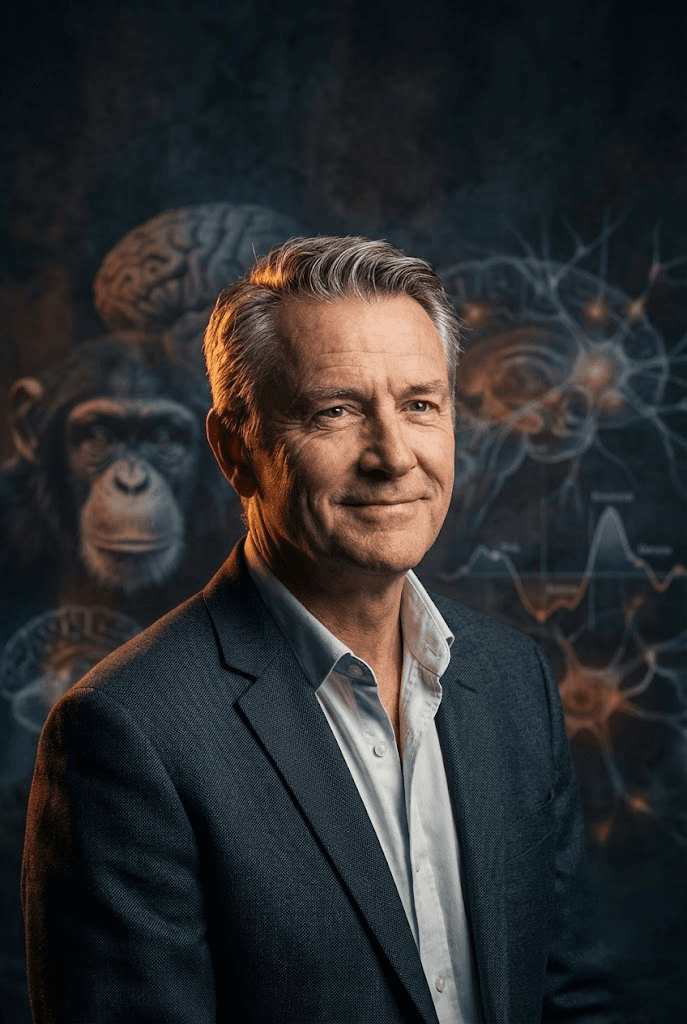
Steve Peters
The psychological mind operates through three distinct entities that constantly vie for control over behavior and decisions. The frontal lobe houses the rational mind, which relies on facts, evidence, and logical deduction to navigate the world. The limbic system houses the emotional center, an independent machine driven by primal instincts, survival, and rapid emotional judgments. The parietal lobe acts as an automatic processing center, serving as a high speed memory bank programmed by the other two entities over a lifetime.
Information entering the brain reaches the emotional processing center before it reaches the logical reasoning center. This biological sequencing causes the emotional mind to react instantaneously to perceived threats or social dynamics, often resulting in irrational or paranoid behavior. Because this primitive system interprets situations with black and white thinking and jumps to conclusions without evidence, it easily hijacks the decision making process. Individuals cannot suppress this biological response with willpower, but they can learn to recognize it by asking if they actively choose to experience a specific negative emotion.
Controlling erratic emotional reactions requires a strategy of nurturing rather than suppression. A neglected or threatened emotional center will consistently overpower rational thought and sabotage behavior. Effective management involves allowing the emotion to be expressed in a safe environment, reasoning with it using undeniable truths, and providing tangible behavioral rewards. By satisfying primal needs for territory, security, and immediate gratification, the logical mind regains the authority necessary to make balanced decisions.
The automatic processing center functions at a significantly higher speed than both the emotional and rational centers. It executes habitual responses based on stored experiences and deeply ingrained beliefs without requiring conscious effort. Positive, constructive behaviors stored here operate as efficient shortcuts that bypass the need for slow, deliberate reasoning. Conversely, unhelpful beliefs stored in this center automatically trigger anxiety and counterproductive reactions during challenging situations, overriding logical intentions.
Flawed conditioning creates bugs in the automatic processing center that consistently derail personal success and emotional stability. Flexible negative beliefs acquired later in life cause individuals to misinterpret social cues and suffer from chronic stress. These harmful patterns must be actively identified during moments of emotional distress and overwritten with logical, evidence based truths. Hardwired destructive beliefs acquired during early childhood cannot be easily erased and must instead be contained through conscious awareness and environmental management.
A stable psychological framework requires a firmly established set of ultimate truths and personal values. This central reference point dictates how an individual perceives the world and acts as the ultimate stabilizer during emotional turbulence. When individuals clearly define their guiding principles and regularly reinforce them, their automatic processing center can quickly neutralize irrational fears. Aligning daily actions with these core values eliminates inner conflict and produces a consistent, resilient personality.
Conflating desires with actionable targets directly triggers anxiety and performance failure. A dream represents a desired outcome heavily dependent on external variables beyond an individual's direct influence. When the brain registers a lack of complete control over an outcome, it activates primal survival mechanisms that induce panic. Defining success exclusively through actionable goals that remain entirely under personal control prevents this emotional hijacking and sustains logical commitment.
The biological drive to form social groups stems from an ancient necessity for physical safety and survival. This instinct frequently compels individuals to compromise their integrity to gain approval from large, superficial groups. A functional support network must instead be selectively curated based on mutual understanding, shared values, and honest feedback. Engaging only with trustworthy individuals who fulfill specific relational roles protects the emotional mind from unnecessary social anxiety and fosters genuine psychological security.
Stress serves as a biological indicator that an internal or external environment requires immediate alteration. Instant stress triggers a rapid emotional response that must be diffused by physically or mentally distancing oneself from the trigger, thereby allowing rational assessment to resume. Chronic stress typically develops when individuals normalize harmful environments or maintain unrealistic self expectations. Resolving long term stress demands a deliberate restructuring of environmental factors and the elimination of the internal negative beliefs perpetuating the psychological strain.