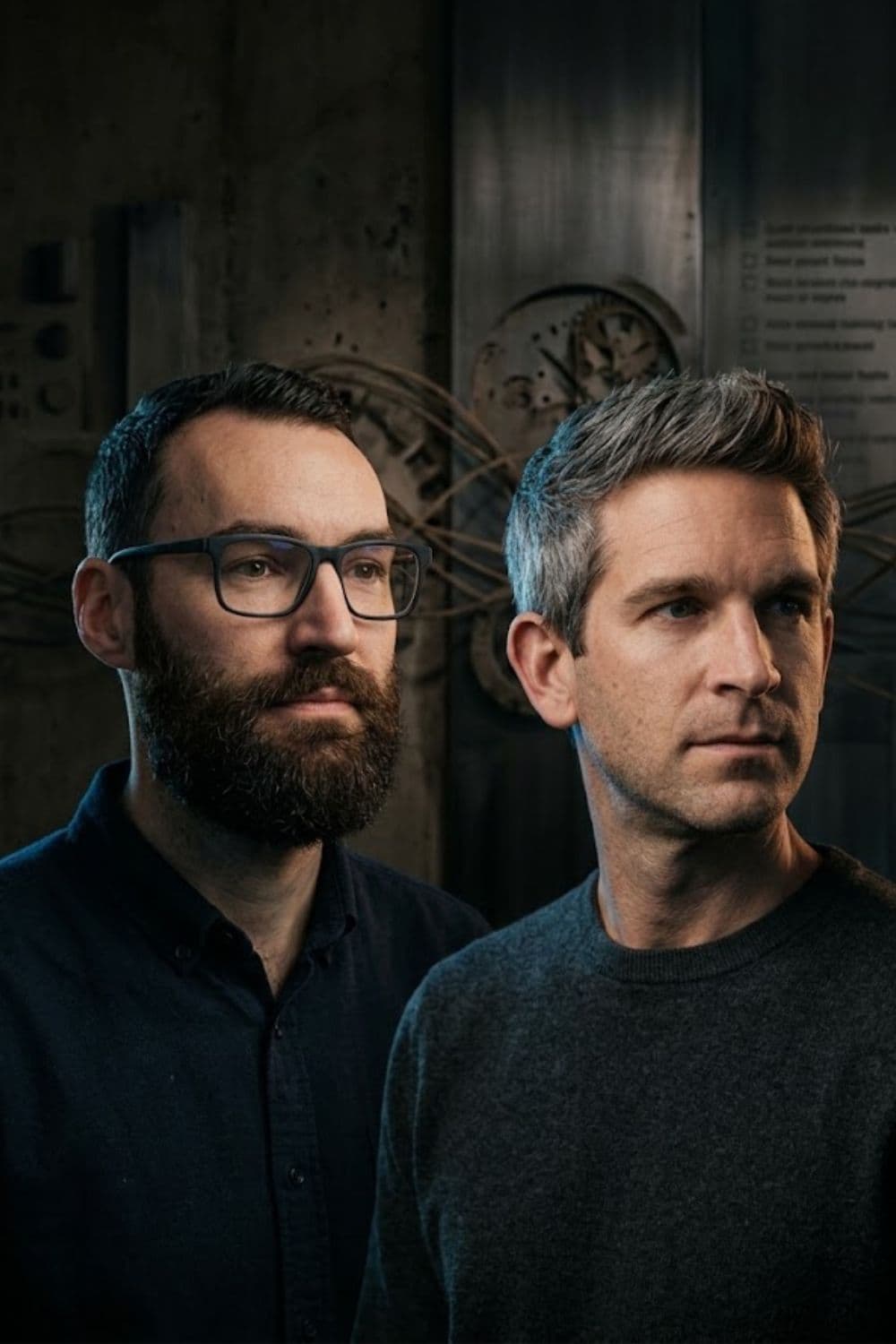
Jake Knapp, John Zeratsky
Modern life is dominated by two competing forces that lay claim to our time and attention. The first is the Busy Bandwagon, which represents our culture of constant busyness, overflowing inboxes, and the compulsion to fill every minute with productive tasks. It demands constant reactivity to other people's priorities. The second force is the Infinity Pool. These are sources of endlessly replenishing content, such as social media feeds, streaming platforms, and continuous news cycles. When exhaustion from the constant output of the Busy Bandwagon sets in, Infinity Pools offer an irresistible, frictionless escape that ultimately drains whatever time remains in the day.
Both the Busy Bandwagon and Infinity Pools derive their power from being the default settings of our devices and workplaces. Technology is designed to be frictionless and addictive, delivering notifications and infinite content automatically. Similarly, corporate culture defaults to back-to-back meetings and instant email responses. Attempting to overcome these defaults through sheer willpower or by simply working faster only accelerates the hamster wheel. Taking control of time requires actively redesigning these standard settings and erecting intentional barriers, shifting the environment from reactive to proactive.
To break the cycle of constant reactivity, the day must be anchored by a single focal point called the Highlight. This concept targets the neglected space between immediate, minor tasks and distant, long-term goals. While long-term goals can feel too detached to motivate daily action and standard to-do lists quickly dissolve into a blur of mundane chores, a Highlight is a specific, meaningful activity that takes roughly sixty to ninety minutes to complete. By prioritizing this single event, an individual guarantees that a meaningful accomplishment occurs each day regardless of surrounding chaos.
Selecting a daily Highlight requires evaluating tasks through three distinct lenses: urgency, satisfaction, and joy. Urgency dictates selecting a task with a pressing deadline that absolutely must be completed to prevent severe negative consequences or deep regret. Satisfaction involves choosing a project that has been postponed for too long, focusing on what you want to get done rather than what you feel obligated to do. Joy allows for activities that are purely for pleasure and mental health, such as spending focused time with family or mastering a new hobby. Evaluating the day through these three criteria ensures that time is allocated intentionally rather than surrendered by default.
Once a Highlight is chosen, executing it requires entering Laser mode, a state of absolute focus and presence. Because digital distractions are meticulously engineered to capture attention, maintaining Laser mode requires creating physical and digital friction. Instead of relying on discipline to ignore a buzzing phone, the most effective strategy involves removing the temptation entirely. This means deleting social media apps, disabling all non-essential notifications, and logging out of accounts after every use. By making distraction inconvenient, the mind is forced to pause, creating a gap between the impulse to check a device and the action of actually doing so.
Sustaining focus also requires redefining the rules of communication. Email and instant messaging are the primary engines of the Busy Bandwagon, creating an implicit expectation of immediate replies. To reclaim time, these expectations must be actively reset. Strategies include dealing with email in a single batch at the end of the day, removing email accounts from smartphones, and actively delaying response times. By treating digital messages like physical mail that is checked and answered on a specific schedule, an individual signals to both themselves and their colleagues that focused work takes precedence over continuous availability.
Sustained focus requires substantial mental energy, and that energy is entirely dependent on physical well-being. Humans evolved as hunter-gatherers, adapted to constant movement, natural light cycles, and whole foods. The modern sedentary lifestyle, characterized by processed foods, artificial lighting, and constant screen time, represents a severe evolutionary mismatch that chronically depletes baseline energy levels. Recognizing this mismatch is essential for maintaining the stamina needed for absolute focus. Taking care of the body is not a separate fitness goal but a fundamental requirement for keeping the brain functioning at its highest capacity.
Recharging the body requires mimicking the habits of prehistoric ancestors in a modern context. This involves incorporating frequent, moderate movement throughout the day rather than relying solely on grueling, sporadic workouts. It also requires consuming real, unprocessed foods and optimizing sleep by mimicking the natural sunset through dimmed lights and screen-free bedrooms. Even caffeine consumption must be managed strategically, utilizing an understanding of how the chemical blocks sleep-inducing adenosine receptors. Delaying the first cup of coffee until the body's natural morning cortisol levels drop, or taking a calculated caffeine nap, prevents energy crashes and maintains steady alertness.
The final component of the system relies on continuous iteration through everyday science. Because no single tactic works universally for every person, the architecture of a focused life must be customized. This requires ending each day with a brief reflection to observe energy levels, measure the success of the chosen Highlight, and evaluate which specific focus or energy tactics succeeded or failed. By treating daily routines as ongoing experiments, an individual can discard ineffective habits and reinforce successful ones, gradually building a highly personalized and resilient system for sustaining attention.
Jump into the ideas before you finish the whole summary.