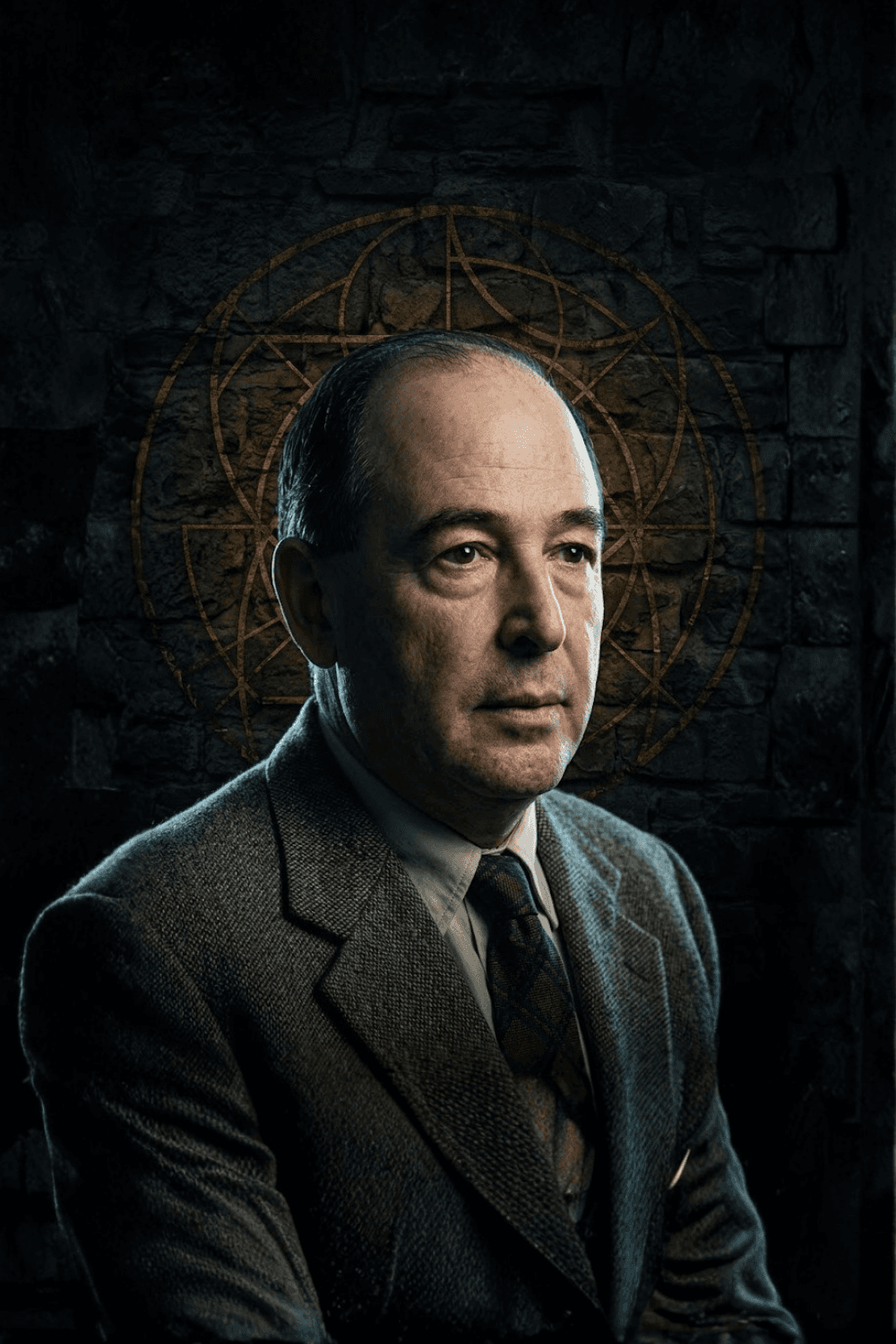
C.S. Lewis
Human beings constantly appeal to an unspoken standard of behavior when they quarrel. When individuals argue over a stolen seat or a broken promise, they do not simply express personal displeasure. They attempt to demonstrate that the other party has violated a shared rule of fair play. The accused party rarely rejects this standard entirely. Instead, they offer excuses to justify their specific deviation. This universal impulse to make excuses proves that humans believe in a concrete moral standard.
This internal code is fundamentally different from biological laws like gravity. A stone cannot choose whether to fall, but a human can choose whether to obey this moral law. Despite recognizing this standard of decent behavior, humans universally fail to practice it. We expect fairness from others while constantly making exceptions for our own failures.
Skeptics often dismiss this moral law as a mere herd instinct or a byproduct of social conditioning. However, the moral law operates differently from a simple biological drive. When a person hears a cry for help, they might feel an instinct to assist and a conflicting instinct to run away from danger. The moral law acts as a third voice, directing the person to encourage the weaker instinct to help and suppress the stronger instinct for self preservation. The thing that judges between two instincts cannot itself be an instinct.
Furthermore, the moral law is not an arbitrary social convention like driving on the left side of the road. While different cultures exhibit slight variations in their moral codes, the core principles remain remarkably consistent across ancient and modern societies. We evaluate the moral progress of different civilizations by comparing them against an objective standard of right and wrong. If morality were purely subjective, measuring one culture's ethics as superior to another's would be logically impossible.
The existence of an objective moral law points to a purposeful consciousness operating behind the universe. The materialist view asserts that space and matter have existed eternally by random chance, producing human life without any overarching design. In contrast, the religious view posits that a mind or consciousness created the universe with specific preferences for right and wrong.
Science cannot resolve this debate through observation because scientific experiments only describe how matter behaves. The driving force behind the universe must reveal itself as an internal pressure or command. Because humans feel a persistent moral weight urging them to behave correctly, logic dictates that an external creator expects adherence to this standard. This realization leads to despair, as humans recognize they continually break the laws established by the universe's absolute power.
If a perfectly good and powerful being created the universe, the existence of evil requires a logical explanation. Dualism attempts to solve this by suggesting two equal, independent powers of good and bad are locked in an eternal war. This theory fails because badness is not an independent entity. Wickedness is simply the pursuit of good things in the wrong way. Evil is spoiled goodness, meaning the dark power must rely on good faculties like intelligence and will to execute its designs.
Instead of an independent evil force, the flawed state of the world stems from free will. The creator granted humanity the ability to choose between right and wrong, knowing that free will makes evil possible. This risk was taken because coerced obedience lacks value. Only creatures with the capacity to rebel can genuinely experience love, joy, and goodness. Humanity misused this freedom, resulting in a broken world occupied by a hostile, rebellious power.
The Christian worldview addresses the world's brokenness through a divine invasion, marked by the arrival of a man who made unprecedented claims. This historical figure claimed the authority to forgive sins, asserted his preexistence, and promised to judge the world at the end of time. Claiming to forgive offenses committed against others implies that the speaker is the primary offended party in all sins, a position exclusive to the universe's creator.
These radical assertions destroy the popular notion that this figure was merely a great moral teacher. A mortal man making such supreme claims would either be completely insane or a malicious deceiver. Logic dictates a choice among three distinct options. The man was a lunatic, a liar, or the divine Lord he claimed to be. Accepting his moral authority while rejecting his divinity presents a massive logical contradiction.
Modern skeptics frequently attempt to bypass this logical trap by arguing that the biblical accounts of these claims are simply exaggerated legends. This counterargument suggests that later followers fabricated the claims to elevate a humble teacher. However, analyzing the ancient texts through the lens of literary history reveals a fatal flaw in this theory.
The textual accounts lack the artistic embellishments and structural pacing typical of ancient myths. Furthermore, they contain realistic, unpolished dialogue that does not appear elsewhere in ancient literature. The realistic novel did not emerge as a literary form until centuries later. Therefore, the narratives are either highly accurate historical accounts or the product of an impossible literary anomaly.
Theology presents the divine nature not as a static entity, but as a dynamic, pulsating activity. The First Person produces the Second Person in a continuous, eternal action, similar to how a lamp constantly emits light. This relationship is not a sequence of events in time but an eternal reality. The first entity delights in the second, creating a supreme relationship of pure love.
When people interact deeply, a communal spirit emerges from their bond. In the divine context, the profound union between the two primary persons generates a real, distinct entity known as the Holy Spirit. This third person operates internally, guiding individuals into the divine dance. Humans are invited to participate in this relationship, allowing the infectious nature of divine love to shape their character.
The ultimate goal of this theology is not simply moral improvement, but a fundamental biological and spiritual upgrade. Humans currently possess Bios, a natural biological life subject to decay and death. The divine possesses Zoe, an eternal, spiritual life. Humans were created as statues bearing a divine likeness, but the intention was always to breathe true life into them, transforming the statues into living children.
This transformation requires total submission. Individuals must yield their natural selves, allowing their pride to be dismantled and their inner nature to be reconstructed. This evolutionary leap does not occur through natural reproduction but through a deliberate, voluntary surrender. As humans let go of their biological attachments, they acquire the divine life, becoming completely new creatures fit for eternity.
Living out this new life requires the rigorous practice of specific virtues. Morality operates on three levels. It demands harmony between individuals, internal harmony within the individual's own thoughts, and alignment with humanity's eternal purpose. Achieving this harmony involves mastering four cardinal virtues shared across cultures. These are prudence, temperance, justice, and fortitude.
Virtue is not defined by isolated good deeds but by the gradual formation of character. Practicing these principles repeatedly makes moral behavior instinctive. Conversely, self indulgence creates mental fog, while attempting to act virtuously brings clarity. By cultivating these habits, individuals prepare their spiritual architecture for the profound transformation initiated from within.
Jump into the ideas before you finish the whole summary.