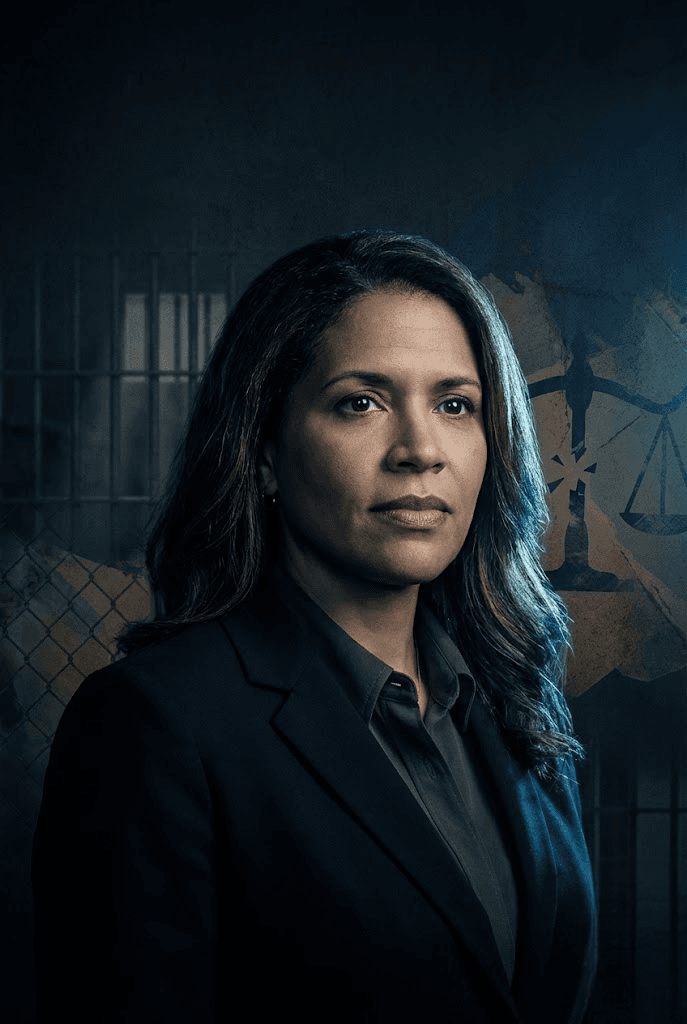
Michelle Alexander
The United States has not eradicated racial caste but merely redesigned it. Throughout American history, when one system of racial control collapses, another emerges to take its place within the existing legal and political frameworks. The death of slavery birthed the segregationist laws of the Jim Crow era, and the dismantling of Jim Crow during the Civil Rights Movement paved the way for mass incarceration. This current system functions as a comprehensive method of subjugation, relegating millions of Black and brown individuals to a permanent second-class status under the guise of criminal justice.
The perpetuation of racial hierarchy relies heavily on the political manipulation of working-class anxieties. Whenever a threat of cross-racial solidarity among the lower classes arises, political elites offer a racial bribe to poor white citizens. By prioritizing tough-on-crime rhetoric and launching the War on Drugs, politicians deliberately exploited the fears and vulnerabilities of white voters following the Civil Rights era. This strategy effectively dismantled potential class alliances by granting poor whites a marginal elevation in social status over marginalized minority populations.
The War on Drugs operates as the primary engine for the modern racial caste system. Initiated as a political strategy well before the crack cocaine crisis emerged in urban centers, the drug war deliberately targeted communities of color. Despite statistical evidence demonstrating that drug use and sales occur at similar rates across all racial groups, law enforcement aggressively focuses its sweeps and arrests on minority neighborhoods. This disproportionate enforcement ensures that the vast majority of individuals swept into the penal system are Black and Latino, effectively criminalizing entire communities.
To facilitate massive arrest numbers, the judicial system systematically dismantled Fourth Amendment protections against unreasonable searches and seizures. The courts granted police extraordinary discretion to conduct pretextual traffic stops and request consent searches without reasonable suspicion. Because few legal rules meaningfully constrain police behavior in drug enforcement, officers can rely on implicit racial biases to target minority drivers and pedestrians. This judicial deference to law enforcement transformed routine encounters into gateways for mass incarceration.
The exponential growth of the prison population is sustained by a vast infrastructure of financial incentives. Federal grant programs reward local law enforcement agencies based on the sheer volume of drug arrests they generate. Furthermore, asset forfeiture laws permit police departments to seize and keep cash, vehicles, and property suspected of involvement in drug crimes, even without securing a criminal conviction. These profit motives, combined with the influx of military-grade equipment to local precincts, militarized the domestic police force and turned neighborhoods into occupied territories.
The judicial system erected insurmountable barriers for defendants attempting to challenge racial bias within the criminal justice system. Through landmark rulings, the Supreme Court determined that statistical evidence of systemic racial disparities is insufficient to prove discrimination. Defendants must now prove conscious, intentional racial bias on the part of a specific prosecutor or police officer, a virtually impossible standard. This legal architecture effectively immunizes the criminal justice system from claims of institutional racism, allowing deeply discriminatory practices to flourish unchallenged.
The prevailing ideology of colorblindness serves to legitimize and protect the current racial caste system. Because the criminal justice system rarely uses explicit racial language, instead employing terms like criminal or felon, society at large views the resulting disparities as race-neutral. This framework allows a racially oppressive system to operate in plain sight, as the public assumes that massive disparities in incarceration are the natural result of individual choices rather than systemic design. Colorblindness masks the profound racial damage inflicted by the state, framing social control as crime control.
Mass incarceration functions through an interlocking network of laws, policies, and practices that trap individuals in a permanent cycle of marginalization. Examining any single law or practice in isolation obscures the design of the whole system, much like looking at a single wire of a birdcage makes it difficult to understand why the bird cannot escape. It is the cumulative effect of hyper-policing, aggressive prosecution, harsh mandatory minimum sentences, and lifelong post-release penalties that forms the inescapable cage of the modern racial undercaste.
The devastating impact of mass incarceration extends far beyond the duration of a prison sentence. Upon release, individuals branded with a felony conviction face a form of civil death that mirrors the legal discrimination of the original Jim Crow era. Former offenders are legally stripped of fundamental rights, facing legalized discrimination in employment, housing, education, and access to public assistance programs. Many are also permanently disenfranchised, losing their right to vote and serve on juries, which ensures their ongoing political and economic subjugation.
The modern civil rights establishment has largely failed to confront the crisis of mass incarceration due to its reliance on conventional legal strategies and the politics of respectability. By focusing heavily on affirmative action and litigation that benefits a select few, advocacy organizations have neglected the massive undercaste trapped in the penal system. Litigation cannot dismantle a deeply entrenched caste system that the Supreme Court has heavily insulated. Meaningful change requires abandoning piecemeal legal tinkering in favor of a massive, grassroots human rights movement.
Jump into the ideas before you finish the whole summary.