
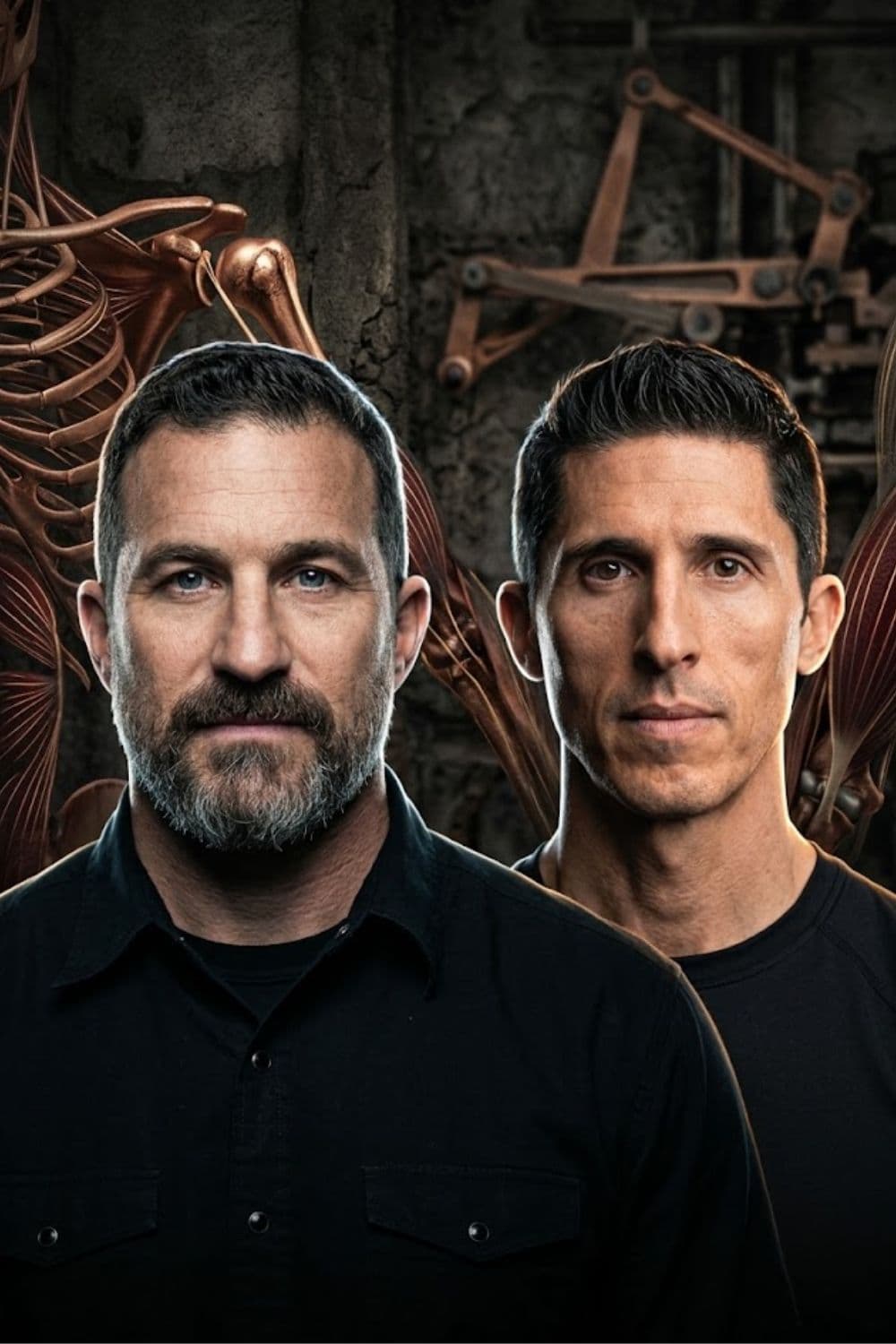
Andrew Huberman with Jeff Cavaliere
True joint longevity and lifting strength are built not on compound exercises alone, but on the often ignored stabilizer muscles that secure your shoulders, lower back, and feet.
Glute medius weakness is a primary driver of non-surgical lower back pain because a weak hip allows the pelvis to tilt, forcing the lumbar spine to adapt and spasm to create artificial stability.
Rotator cuff training should focus on centering the shoulder joint's ball in its socket to counteract the upward pull of the deltoids, which prevents painful impingement and tissue pinching during overhead movements.
To optimize biomechanical stability, athletes should prioritize training on their feet in a staggered, widened stance and integrate slight rotational movements like screwing down into the hip or shoulder girdle to create a firm base for generating force.